

 Travel Essentials
 Travel Essentials

Embark on a self-guided road trip exploring southern France's best-preserved Roman ruins, including Narbonne's artifacts, Nîmes' amphitheater, Pont du Gard, and Arles' theater.
 Travel Essentials
France’s southern regions, particularly Occitanie and Provence, boast some of the world’s most intact Roman monuments. This road trip itinerary guides you through key sites, blending history with scenic drives past vineyards and olive groves.
The Roman Empire left an indelible mark on what was once Gaul’s province of Narbonensis. From grand aqueducts to colossal arenas, these structures stand as testaments to engineering prowess. Modern travelers can trace the ancient Via Domitia, a vital road linking Spain to Italy.
Occitanie, formed by merging Languedoc-Roussillon and Midi-Pyrénées, preserves this legacy amid Mediterranean landscapes. Provence adds theatrical ruins and hilltop settlements, making it an open-air museum.
Start in Narbonne, accessible via high-speed trains from Paris or Montpellier. Rent a car for flexibility; expect 300-400km over 5-7 days. Best seasons are spring (April-June) or fall (September-October) to avoid summer crowds. Budget €50-100 daily for sites, fuel, and meals.
Begin in Narbonne, Rome’s first colony beyond the Alps, founded in 118 BC. The Horreum, underground warehouses from the 1st century AD, reveal barrel-vaulted chambers once storing grain and wine. Nearby, the Palais des Archevêques houses the Musée Archéologique with busts, mosaics, and frescoes depicting Gallo-Roman life.
Stroll the canal-lined old town, where Roman roads once converged. Don’t miss the cathedral’s unfinished facade, a medieval contrast to ancient stones.
Drive east 25km on D6009 to Oppidum d’Ensérune, a pre-Roman oppidum turned Roman outpost. Climb for views over the Via Domitia; explore tombs and pottery shards from this strategic hillfort.
Continue 125km to Nîmes (ancient Nemasus). Highlights include:
| Site | Description | Highlights |
|---|---|---|
| Les Arènes | 1st-century amphitheater, 6th largest in Empire | 24,000 seats; gladiator history; bullfights today |
| Maison Carrée | Best-preserved Roman temple | Corinthian columns; 3D film inside |
| Castellum Aquae | Aqueduct distribution tower | Water management marvel |
Walk shaded boulevards; the arena’s acoustics still echo ancient roars.
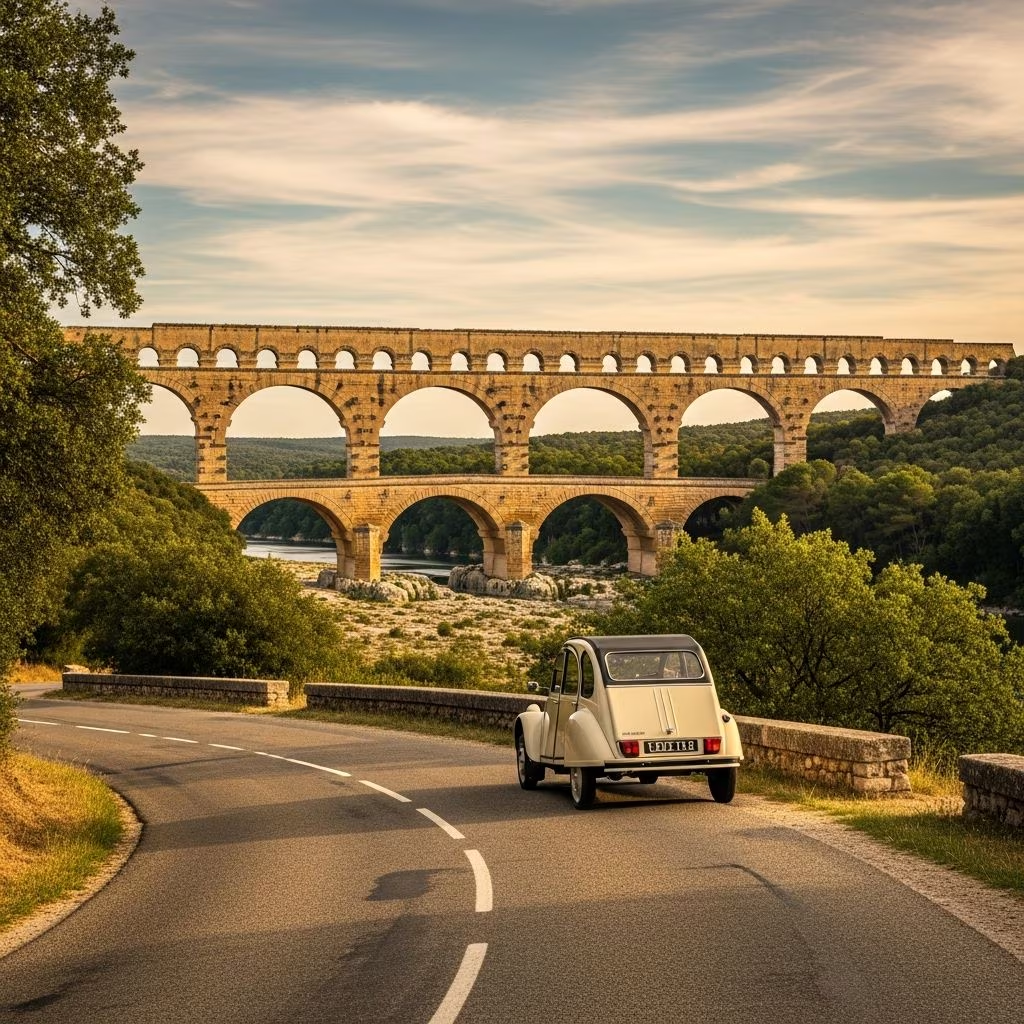
Head 25km northeast to Pont du Gard, a 50m-high aqueduct bridge carrying water 50km to Nîmes. Built circa 19 BC, its three tiers of 52 arches showcase precision stonework without mortar. Hike trails, swim in the Gardon River, or visit the museum on Roman hydraulics.
This UNESCO site draws 1.4 million visitors yearly, yet quiet paths offer solitude.
Drive 40km south to Arles, elevated by Julius Caesar post-civil war. The Théâtre Antique, 1st-century AD, seats 8,000; its stage hosted plays and Venus festivals. Nearby, the Alyscamps necropolis features sarcophagi-lined alleys.
Arles’ Roman circus remnants and baths evoke a bustling port rivaling Marseille.
Travel 30km east to Saint-Rémy-de-Provence. Glanum’s ruins include a 20 BC triumphal arch and cenotaph, marking a Gallo-Roman sanctuary. A sacred spring fed temples to Cybele and Apollo; hike to the Belvedere for Alpilles views.
Van Gogh fans note his nearby asylum, but ruins steal the show.
Detour 70km north to Vaison-la-Romaine, France’s largest Gallo-Roman site. Villas, a 1st-century bridge, and theater overlook medieval hills.
In Orange, 30km west, the Théâtre Antique’s 100m stage wall is the world’s tallest intact Roman facade.
Ongoing excavations, like Arles’ submerged bronzes, highlight active archaeology. New museums in Nîmes and Narbonne (opened post-2019) contextualize finds. Support by following trails, not straying.
Narbonne offers easy access and compact sites.
Partial access at arenas and Pont du Gard; check official sites.
No – spread over days for depth.
Yes, fewer crowds, but shorter days.
Yes, with kid-focused audio guides at major sites.
