

 Travel Essentials
 Travel Essentials

Comprehensive guide covering booking strategies, neighborhood exploration, dining traditions, climate considerations, and cultural insights for first-time Rome visitors.
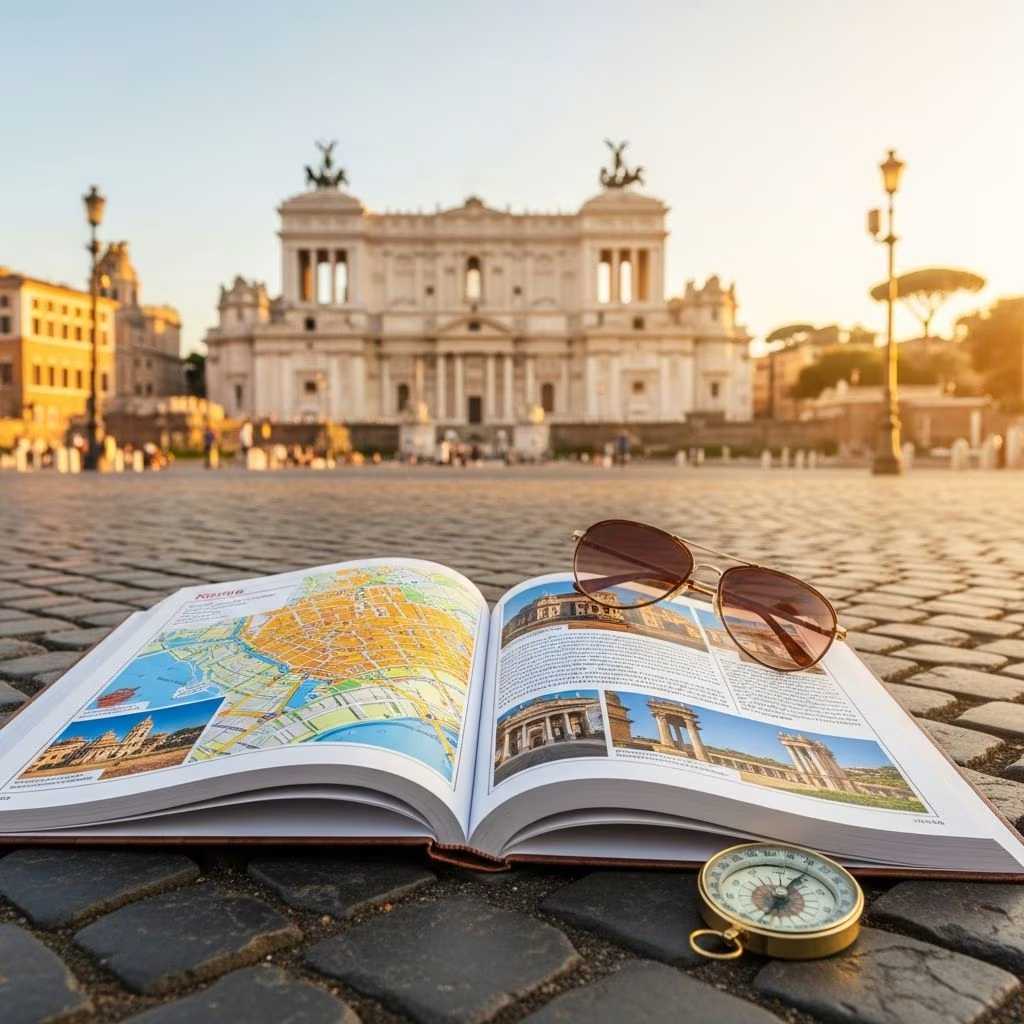 Travel Essentials
Rome represents one of the world’s most captivating destinations, where ancient history seamlessly blends with vibrant modern culture. Whether you’re visiting for the first time or returning to rediscover the Eternal City, understanding key planning principles and insider knowledge can dramatically enhance your experience. This comprehensive guide provides the practical information and strategic insights needed to navigate Rome confidently and create memories that will last a lifetime.
To truly appreciate Rome, it helps to understand that Italy as a unified nation is a relatively recent development in historical terms. Rome’s complex past encompasses thousands of years of empire, religious significance, and cultural evolution. This layered history means that virtually every corner of the city tells a story, from ancient Roman structures to Renaissance masterpieces to contemporary Italian life. Recognizing Rome not just as a museum but as a living city where people work, eat, and live alongside historical monuments creates a richer travel experience and helps visitors approach the city with appropriate respect and curiosity.
Rome’s Mediterranean climate provides mild weather throughout most of the year, with average temperatures typically hovering in the 60s Fahrenheit. Spring and autumn represent the optimal visiting seasons, offering pleasant temperatures and fewer extreme weather concerns. However, planning the length of your stay requires careful consideration of your priorities.
For first-time visitors aiming to experience Rome’s major attractions, a minimum of four days provides adequate time without rushing. The three-day minimum captures essential sites, but a fourth day allows for more thoughtful exploration and recovery time. Your itinerary should recognize that visiting major attractions like the Colosseum or Vatican Museums demands significant mental and physical energy—the Vatican requires hours indoors navigating extensive galleries, while outdoor ancient sites like the Colosseum and Roman Forum lack shade and involve substantial walking.
A strategic approach involves dedicating separate days to energy-intensive attractions. Schedule the Colosseum and Forum on one day, leaving your itinerary open during afternoon hours for neighborhood exploration, dining experiences, or rest. Reserve another day specifically for the Vatican Museums and St. Peter’s Basilica, ideally beginning very early in the morning to gain entry before crowds intensify. This scheduling principle prevents exhaustion from derailing your enjoyment and provides time for the authentic Rome experiences that distinguish memorable trips from rushed tours.
Modern Rome travel demands proactive planning months in advance, particularly for the three most visited attractions: the Colosseum and Roman Forum, Vatican Museums, and Borghese Gallery. Without reserved tickets, visitors face either substantial wait times or the disappointment of closed attractions during peak hours.
The Colosseum represents a case study in strategic visiting. Rather than stressing over gaining interior access if time or advance planning proved insufficient, visitors can experience the monument’s grandeur by exploring it from outside. Early morning or late evening visits reveal the Colosseum’s impressive architecture with minimal crowds, often providing more satisfying photographic opportunities and contemplative time than crowded interior tours. However, those committed to entering should book tickets weeks ahead.
For Vatican visits, the optimal strategy involves splitting experiences across days. Tour the Vatican Museums and Sistine Chapel very early in the morning on one day, returning to St. Peter’s Basilica on a separate occasion. This approach prevents overwhelming crowds and sensory fatigue while allowing deeper appreciation of each location’s significance.
Rome offers numerous world-class attractions beyond the most famous sites. While the Pantheon, Colosseum, Trevi Fountain, St. Peter’s Basilica, and Vatican Museums represent absolute must-sees for first-time visitors, exploring these alongside lesser-known alternatives creates a more nuanced understanding of the city.
Alternative ancient sites merit serious consideration. Castel Sant’Angelo combines architectural beauty with historical importance and typically attracts fewer visitors than Rome’s top-three attractions. The Baths of Caracalla showcase Roman engineering through preserved structures that surpass many tourists’ expectations. Ostia Antica, the ancient Roman port city, offers archaeological immersion in a significantly less crowded setting than central Rome attractions. The Domus Aurea (Nero’s Golden House) and Domus Romana beneath Palazzo Valentini provide fascinating glimpses into daily Roman life.
Art enthusiasts should prioritize galleries beyond the Vatican. The Galleria Doria Pamphilj houses remarkable Renaissance and Baroque works in a former aristocratic palace. Palazzo Barberini features an impressive collection in a stunning venue. For budget-conscious visitors, the Museo Barracco offers free admission and compact but high-quality holdings.
Beyond monument-focused itineraries lies Rome’s true character, expressed through distinct neighborhoods, each offering unique atmospheres and experiences. Trastevere, located across the Tiber River, embodies historic Rome with charming cobblestone streets, neighborhood trattorias, and ivy-covered buildings. A walk through Trastevere, particularly ascending toward Piazza Garibaldi with views overlooking the neighborhood, reveals how Romans live beyond tourist zones.
Testaccio represents another authentic neighborhood, historically working-class but increasingly sophisticated, where local restaurants serve traditional Roman cuisine without tourist markup. The Villa Borghese gardens provide peaceful respite from crowded streets, offering green space, museums, and neighborhoods like Parioli worth exploring. Neighborhoods beyond central Rome reward curious travelers with genuine interactions, affordable meals, and authentic cultural immersion impossible in heavily touristed areas.
Understanding Rome’s food culture enhances appreciation for this dimension of Italian life. Roman pasta dishes follow specific traditions worth experiencing authentically. Cacio e pepe combines only cheese and black pepper with pasta and rendered guanciale (cured pork jowl), creating a deceptively simple yet complex dish. Pasta alla gricia builds on cacio e pepe by adding guanciale and white wine. Pasta all’Amatriciana extends this family further with tomatoes and removes white wine, creating distinct flavor profiles.
Beyond pasta, Roman cuisine encompasses numerous specialties. Carbonara (often misunderstood outside Italy) features guanciale, eggs, cheese, and black pepper. Carciofi alla romana showcases artichokes prepared with herbs and garlic. Roman cuisine emphasizes quality ingredients prepared with respect for tradition rather than complicated techniques.
Coffee culture in Rome deserves specific attention. Espresso served standing at bars represents the standard Roman coffee experience—brief, intense, and social. Sitting at tables costs premium prices for the same beverage, making standing-bar espresso a cultural experience and financial optimization simultaneously.
Rome attracts enormous tourist volumes, meaning crowds pervade popular areas during standard visiting hours. Accepting this reality rather than fighting it leads to better experiences. Early morning visits to major sites significantly reduce crowds. Walking major attractions during early sunrise or after sunset provides superior photography opportunities and contemplative time.
Balancing structured sightseeing with unplanned wandering creates optimal experiences. Make initial plans for must-see attractions and reserve necessary tickets, but allow substantial flexibility for spontaneous discoveries. Rome’s historic layout means that wandering residential streets inevitably reveals charming piazzas, neighborhood churches, fountains, and cafes beyond guidebooks.
Physical preparation matters more than many visitors anticipate. Rome involves extensive walking on cobblestone streets, often without shade in warm months. Comfortable walking shoes, sun protection, and hydration represent essential elements of successful Rome visits. Building rest periods into itineraries prevents the fatigue and frustration that undermines enjoyment.
Spring (April-May) and autumn (September-October) offer optimal conditions with pleasant temperatures averaging in the 60s Fahrenheit and fewer extreme weather concerns. Summer brings heat and maximum crowds, while winter offers mild weather but occasional rain.
A minimum of three days captures essential sites, but four days provides comfortable pacing without exhaustion. Five or more days allows deeper neighborhood exploration and less famous attractions.
The exterior provides impressive architectural experiences, particularly during off-peak hours like early morning or evening. If interior access is unavailable, exploring other ancient sites like the Pantheon or Forum offers comparable historical experiences.
Experience traditional Roman pasta dishes (cacio e pepe, carbonara, pasta all’Amatriciana) at neighborhood trattorias, consume espresso standing at bars, and explore local specialties in authentic neighborhoods rather than tourist-oriented restaurants.
Yes, particularly for the Vatican Museums, Colosseum, and Borghese Gallery, which book out weeks ahead during peak seasons. Advance booking ensures access and often provides significantly shorter wait times.
Successful Rome visits balance structured planning with spontaneous exploration. Research major attractions and reserve necessary tickets months in advance. Create a rough itinerary identifying which attractions you absolutely must experience and which neighborhoods deserve exploration. However, maintain sufficient flexibility within this framework for unexpected discoveries, leisurely meals, spontaneous neighborhood walks, and simple sitting in piazzas observing daily Roman life.
This balanced approach honors both Rome’s historical significance and its contemporary reality as a living city. It allows you to experience iconic sites that shaped Western civilization while also discovering the neighborhoods, restaurants, and daily rhythms that make Rome genuinely feel alive rather than merely visited.
Rome rewards both meticulous planning and wandering spontaneity. By understanding these principles and approaching the city with both respect for its history and openness to discovery, you create the conditions for a transformative travel experience that will call you back to the Eternal City again and again.
