

 Travel Essentials
 Travel Essentials

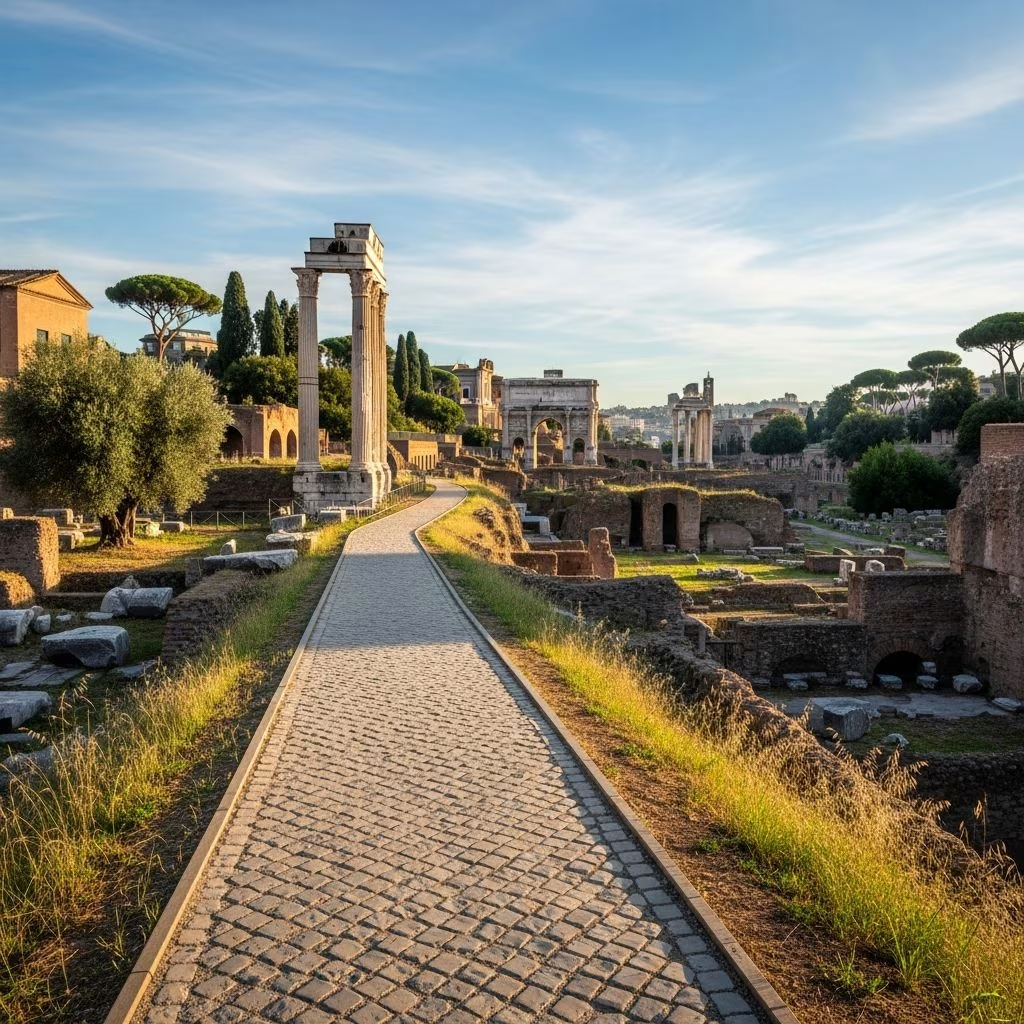
Explore Rome's innovative Nuova Passeggiata Archeologica, a pedestrian network linking the Forum, Colosseum, and more with elevated paths and gardens.
 Travel Essentials
Rome’s historic core is evolving with the launch of the Nuova Passeggiata Archeologica, a visionary project that stitches together the city’s iconic ancient landmarks into a seamless pedestrian loop. Designed by acclaimed studio Labics, this initiative transforms traffic-heavy zones into inviting walkways adorned with greenery, terraces, and elevated paths, offering unprecedented access to sites like the Roman Forum, Colosseum, and Circus Maximus.
The Nuova Passeggiata Archeologica emerged from an international design competition in October, where Labics outshone 22 rivals with their innovative proposal. Unveiled atop Trajan’s Forum, the €18.8 million plan creates a “large pedestrian ring” weaving through the Caelian, Palatine, and Capitoline hills, Baths of Caracalla, and beyond. This network prioritizes foot and bike traffic, reducing car dominance to amplify the archaeological experience.
Key to the design is reimagining public spaces: expect wider sidewalks, suspended boardwalks, and verdant belts that frame ruins without intrusion. Labics, known for subtle integrations like prior suspended walkways in Rome, ensures the modern additions harmonize with antiquity.
The journey kicks off along Via dei Fori Imperiali, where vehicular traffic yields to expansive promenades. Pedestrians gain elevated vantage points over the Forum of Augustus and Trajan’s Market, with less road space fostering safer, immersive strolls.
Construction phases begin in September, promising phased openings over years, with initial focus on Fori Imperiali.
Complementing the walk, the Belvedere Antonio Cederna reopened in 2026 after 12 years of Metro C disruptions. Perched above Via dei Fori Imperiali via Clivus Acilius, this terrace delivers unobstructed sights of the Basilica of Maxentius, Arch of Titus, Colosseum, and Forum. It embodies Rome’s CARME regeneration, prioritizing walkable heritage over cars.
Nearby, the Archaeological Park of the Celio and Museum of the Forma Urbis debuted adjacent to the Colosseum. The museum showcases a fragmented marble map from Emperor Septimius Severus (203-211 AD), laid flat under glass to evoke strolling ancient streets—only a tenth survives of the original 18×13-meter slab.
Additionally, the Horrea Piperataria—a pepper warehouse ruin—unveiled new roads and underground chambers in the Roman Forum, expanding accessible excavations.
Rome-based Labics excels in urban projects that respect heritage. Their winning entry incorporates:
| Feature | Description | Benefit |
|---|---|---|
| Raised Walkways | Suspended paths over ruins | Unobstructed views, minimal ground impact |
| Green Areas | Planted terraces and belts | Shade, biodiversity, aesthetic enhancement |
| Balconies & Terraces | Overlooks at key points | Photo ops, contemplation spots |
| Cycle Paths | Dedicated lanes | Inclusive for bikes, reduced congestion |
These elements draw from Labics’ 20-year-old suspended walkway projects, proving their expertise in non-intrusive design.
As phases roll out, visitors should plan strategically:
Wear comfy shoes—the terrain mixes ancient cobbles with modern paving. Download offline maps, as signage evolves.
Rome’s centro storico, a UNESCO site, grapples with overtourism and traffic. The pedestrian ring addresses this by fostering sustainable access, echoing ancient viae while combating climate impacts through greening. It aligns with Italy’s cultural ministry goals for heritage stewardship amid urban growth.
Post-Metro C completions, restored viewpoints like Cederna signal a pivot: from car-centric to human-scale. This enhances not just tourists but locals, promoting daily engagement with history.
Beyond the core ring, whispers of extensions to Appian Way or Aventine views hint at a grander network. Economically, it boosts tourism—Rome welcomed 40 million visitors pre-2026, with archaeology drawing 30%. Environmentally, reduced emissions from traffic cuts support EU green directives.
Challenges include construction disruptions and funding, but Labics’ track record instills confidence. By 2030, expect a fully realized greenbelt rivaling global models like Lisbon’s waterfront paths.
A pedestrian and cycle network linking Rome’s central ancient sites in a ring around the Forum and Colosseum, featuring walkways, gardens, and terraces.
Phased rollout begins September, with full completion over several years.
Yes, the paths are public; site entries like Colosseum require tickets.
Approximately 5-7 km, traversable in 2-3 hours at leisure pace.
Raised paths and ramps improve access; confirm with official apps for updates.
Belvedere Cederna, Celio Park, Forma Urbis Museum, and Horrea Piperataria.
This transformative project invites all to wander Rome’s eternal layers, where every step echoes millennia.
