

 Travel Essentials
 Travel Essentials

Explore Roosevelt Island's transformation from a 19th-century institutional hub to a thriving mixed-income neighborhood with unique attractions, historic landmarks, and contemporary urban living.
 Travel Essentials
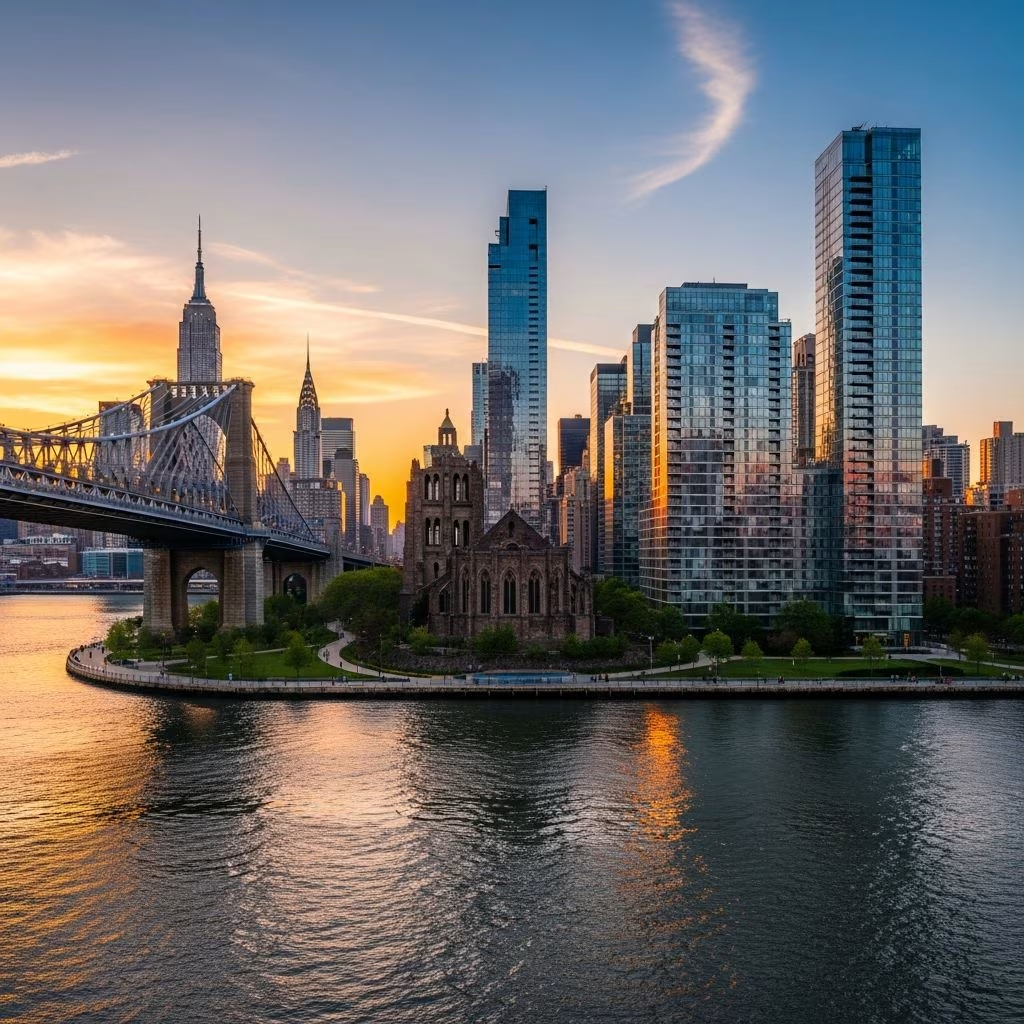
Nestled in New York City’s East River, Roosevelt Island represents one of the most dramatic urban transformations in American history. This 2-mile strip of land, measuring just 800 feet across at its widest point, has evolved from a century-long repository for the city’s most marginalized populations into a planned residential community that now houses approximately 12,000 residents. The island’s journey from isolation and institutional use to integrated urban living demonstrates the potential for thoughtful urban renewal and adaptive reuse of historic spaces.
Roosevelt Island occupies a unique position within Manhattan’s geography, situated in the East River between Manhattan and Queens. For centuries, this geographic isolation defined the island’s purpose and character. The surrounding waters, particularly the section known as Hell Gate to the north, were once treacherous with jagged rock formations and unpredictable currents that claimed approximately 1,000 ships annually before modern dredging and erosion management made the waterways safer.
Today, residents and visitors enjoy multiple transportation options that integrate the island seamlessly into the broader metropolitan area. A bridge connection to Queens, subway stations, and ferry services provide convenient access. However, the most distinctive transportation feature remains the Roosevelt Island Tramway, an aerial cable car system that connects the island directly to Midtown Manhattan. Opened in 1976, this red cable car offers not only a practical commuting solution but also serves as an iconic symbol of the island’s modern identity and provides visitors with spectacular views of the city skyline during transit.
The recorded history of Roosevelt Island extends back to 1637, when the Dutch West India Company established a European settlement on land previously inhabited by the Lenape people, who called it Minnehanonck. This early settlement capitalized on the island’s strategic position for accessing vital trade routes and facilitating commerce, particularly the lucrative fur trade that formed a cornerstone of Dutch economic interests in the New World.
By the end of the 17th century, the island had evolved into an essential center for trade and cultural exchange. However, the 19th and 20th centuries marked a dramatic shift in the island’s function. For nearly 150 years, the island transitioned from a trade hub into a designated site for institutions that the mainstream city wished to separate from urban centers—prisons, hospitals, asylums, and other facilities serving populations deemed marginal or dangerous.
The transformation accelerated in 1973, when the island received its current name in honor of President Franklin Delano Roosevelt. This naming symbolized a fundamental reimagining of the island’s purpose and potential. In 1976, the opening of the Roosevelt Island Tramway marked the beginning of serious redevelopment efforts. By the mid-1970s, the city began constructing residential apartments, schools, and parks, establishing the infrastructure for a planned community. The dedication of Four Freedoms Park in 2006 further cemented the island’s identity as both a cultural and recreational destination, while subsequent expansions through 2010 and beyond added schools, cultural institutions, and recreational amenities that reinforce the island’s role as an integral component of New York City’s urban fabric.
The redevelopment of Roosevelt Island embodied modernist architectural principles that sought to integrate residential spaces with public amenities and green areas. Designers prioritized enhancing quality of life for residents while maintaining connections to the island’s unique historical legacy. Contemporary materials and designs complement the natural landscape, creating a distinctive aesthetic within New York City’s broader architectural context.
The planned community approach ensures that the island provides comprehensive urban services within a relatively contained area. Current residents benefit from:
One of the island’s most striking structures is the Octagon Tower, originally constructed as the entrance to the New York City Lunatic Asylum in 1839. The asylum itself featured two wings constructed from locally quarried Fordham gneiss stone and, at its operational peak, held 1,700 inmates—twice its intended capacity. The main octagonal building, a product of 19th-century institutional architecture, has been meticulously preserved and repurposed as a luxury residential complex. The structure and two new flanking buildings now comprise the Octagon, offering contemporary accommodations while maintaining the original building’s architectural integrity. Visitors can view the interior, though photography is restricted, allowing residents privacy while permitting public appreciation of the architectural achievement.
At the island’s northern tip stands the Blackwell Island Lighthouse, a Gothic Revival structure completed in 1872. This octagonal lighthouse, measuring 50 feet tall and designed by the renowned architect James Renwick, guided ships through the dangerous Hell Gate waters. The lighthouse has been restored to its original condition, with the surrounding area developed into a tranquil park. A contemporary tribute to investigative journalist Nellie Bly, titled “The Girl Puzzle” and created by artist Amanda Matthews, now occupies space near the lighthouse, creating a dialogue between the lighthouse’s 19th-century functionality and modern artistic expression. Designated as both a national and local landmark, the lighthouse anchors a peaceful environment where Roosevelt Island divides the East River.
The Blackwell House, constructed between 1796 and 1804 for James Blackwell, stands as one of the city’s few remaining farmhouses from that era. Located along Main Street, this structure represents the island’s pre-institutional phase when it functioned as agricultural property. The Blackwell family, who originally owned the island, left an indelible mark on the landscape through their name—the island was known as Blackwell’s Island before its 1973 renaming.
Perhaps the most haunting reminder of the island’s institutional past is the Renwick Ruins, the deteriorating remains of a former smallpox hospital. This structure, designed by architect James Renwick, stands as a poignant monument to the medical and social challenges of the 19th century. The ruins tell an extraordinary story intertwining themes of disease, immigration, urban health crisis response, and the medical history of New York City. Unlike the preserved and restored Octagon or Lighthouse, these ruins deliberately remain partially deteriorated, creating a stark visual representation of the era they represent. The ruins serve as a compelling attraction for visitors interested in understanding the island’s more difficult historical chapters.
Along Main Street stands the Chapel of the Good Shepherd, an Episcopal church constructed in 1889. This structure represents the spiritual infrastructure that accompanied the island’s institutional functions, providing religious services to asylum inmates and hospital patients during the height of institutional development.
At the island’s southern terminus lies Four Freedoms Park, a masterwork of contemporary American landscape architecture designed by the renowned architect Louis Kahn. The park occupies four square acres and represents a fundamental reorientation of the island’s purpose toward celebration of democratic values. The focal point is a monumental bronze bust of Franklin Delano Roosevelt, positioned to command attention as visitors approach. Behind the bust stand two large cement rectangles engraved with the text of Roosevelt’s “Four Freedoms”—freedom of speech and expression, freedom of worship, freedom from want, and freedom from fear—principles that form the philosophical foundation of the park.
The approach to the bust guides visitors through a carefully designed garden lined with trees, which Kahn conceived as a “gathering of nature.” The architect believed every element of the park served a specific purpose, contributing to an overall aesthetic and experiential design. Despite requiring 38 years from conception to completion, the park’s beauty and tranquility justify the extended development timeline. The park’s location offers a unique vantage point overlooking the East River, with views extending toward the United Nations building to the east and downtown Brooklyn to the south, creating spaces for both public programming and family-friendly events as well as intimate reflection.
Most visitors begin their Roosevelt Island exploration at the southern end, dedicating 60 to 90 minutes to a comprehensive tour. A logical itinerary would include:
Those with additional time may extend their visit to explore the northern residential neighborhoods more thoroughly, experiencing how contemporary families and individuals have established community life on the island.
Roosevelt Island today functions as a fully integrated urban neighborhood within New York City. Approximately 12,000 residents representing mixed-income households make their homes in the planned community. The island’s contemporary identity encompasses both its historical significance and its role as a modern residential destination. Public institutions, commercial establishments, and recreational facilities ensure that residents enjoy the benefits of urban living while maintaining the island’s distinctive character and relative quietness compared to busier Manhattan neighborhoods.
The island’s transformation demonstrates successful urban renewal principles: adaptive reuse of historic structures, integration of green spaces and public amenities, commitment to economic diversity through mixed-income housing, and preservation of historical narratives even as new functions emerge. For visitors, Roosevelt Island offers a unique opportunity to experience multiple layers of New York City history—from Dutch colonial settlement through 19th-century institutional development to 21st-century urban revitalization.
The Roosevelt Island Tramway from Midtown Manhattan provides the most iconic access route. Additionally, the F train subway line serves Roosevelt Island stations, a bridge connects to Queens, and ferry services operate seasonally. Each transportation option offers different perspectives on the island and surrounding waterways.
While Roosevelt Island is accessible year-round, spring and fall offer pleasant weather for extended outdoor exploration. Summer months are warm but can be crowded, while winter weather may limit comfortable outdoor touring. Four Freedoms Park hosts public programming throughout the year.
Yes, most major historic sites are accessible to visitors. Four Freedoms Park welcomes the public with free admission. The lighthouse and surrounding park are open to visitors. The Octagon complex permits interior viewing though photography is restricted. The Renwick Ruins can be viewed from exterior areas.
A comprehensive visit covering major landmarks and parks typically requires 2 to 3 hours. Extended visits exploring residential neighborhoods and additional details may require 4 to 6 hours.
Yes, the island’s parks, pathways, and historical attractions appeal to family visitors. Four Freedoms Park offers family-friendly programming and events. The relatively compact geography and low traffic make it accessible for visitors of various mobility levels.
