

 Travel Essentials
 Travel Essentials

Explore Rotterdam's journey of constant evolution, from modernist reconstruction to cutting-edge sustainability projects, redefining urban living in the Netherlands.
 Travel Essentials
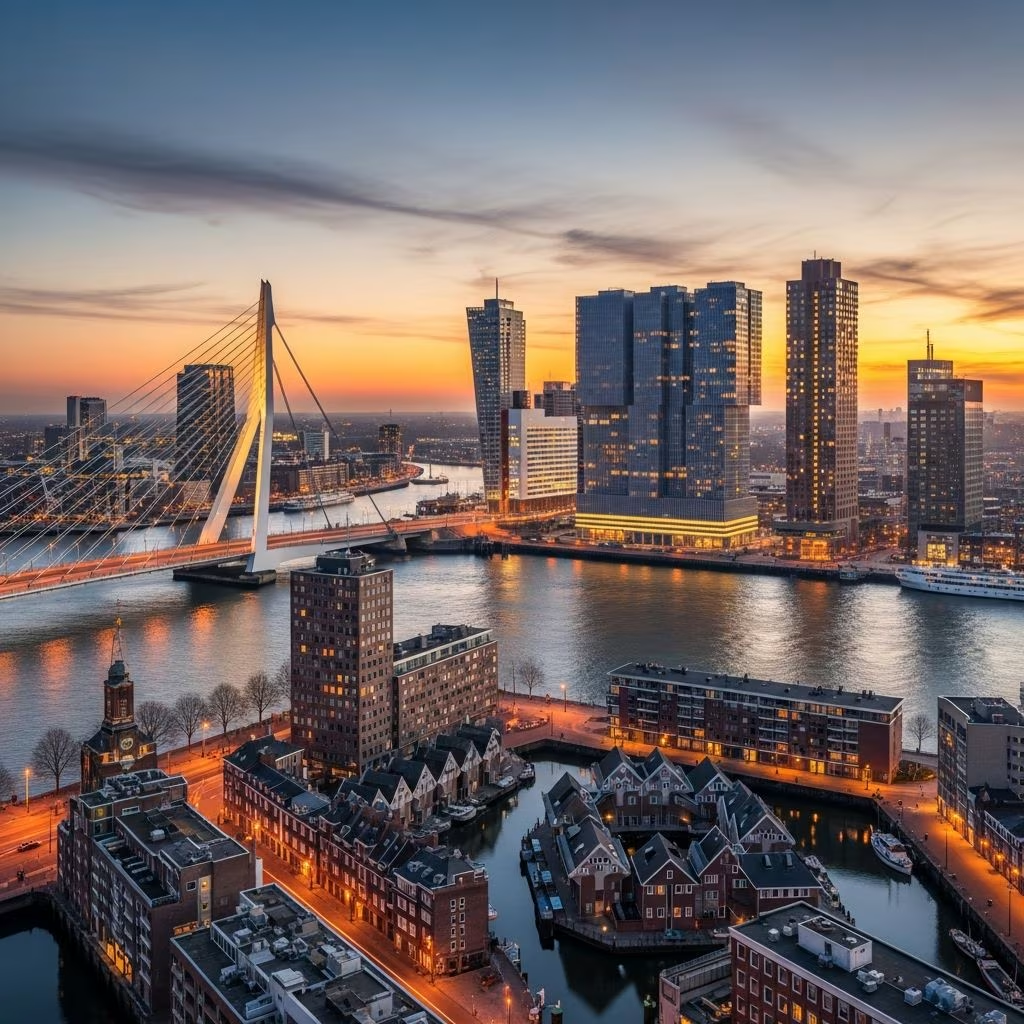
Rotterdam stands as a testament to resilience and forward-thinking urban planning in the Netherlands. Unlike the picturesque, historic charm of Amsterdam or Utrecht, this port city has embraced radical change since its near-total destruction in World War II, evolving into a laboratory for modern architecture, sustainability, and community-driven development.
The city’s story begins with devastation. In 1940, German bombings obliterated Rotterdam’s medieval core, leaving a blank canvas for postwar reconstruction. Rather than restoring the past, planners opted for a modernist vision: functional zoning, elevated infrastructure, and high-rise structures that prioritized efficiency over nostalgia. This approach created a skyline of bold concrete forms, setting Rotterdam apart as the Netherlands’ modern outlier.
Postwar efforts focused on separating residential, commercial, and office spaces while emphasizing vehicular flow. The result was a city center that became a symbol of pragmatic innovation. By the 1970s and 1980s, local governance shifted toward public-private partnerships, repurposing derelict harbor zones to integrate water with urban life. Waterfronts transformed into hubs for upscale housing, offices, and cultural venues, boosting the city’s international profile.
By the early 2000s, Rotterdam recognized the need for human-centered spaces. Designated as the European Capital of Culture in 2001, it launched initiatives to reclaim public areas from automobiles. Pedestrian bridges and elevated walkways emerged, reconnecting fragmented neighborhoods bisected by highways and tracks. A standout example is a vibrant yellow bridge dubbed the ‘air canal,’ crowdfunded by citizens—the world’s first such public infrastructure feat—linking districts and fostering connectivity.
These projects reflect a broader philosophy: cities thrive when designed for people, not vehicles. Rotterdam’s strategies have inspired similar pedestrian-focused revamps across Europe.
Affordable housing and progressive policies are drawing residents from pricier Amsterdam, positioning Rotterdam as a hub for **circularity**—a model where waste becomes resource. Rents remain competitive, attracting startups focused on zero-waste solutions. A prime example is the repurposed Tropicana leisure center on the Nieuwe Maas riverbank. Once a dilapidated pool facility, it’s now BlueCity, an incubator for eco-entrepreneurs experimenting with closed-loop systems, from water recycling to upcycled materials.
BlueCity exemplifies Rotterdam’s shift toward regenerative urbanism. Startups here develop products like insect-based proteins and biogas from food scraps, proving sustainability can be profitable and practical.
| Project | Focus Area | Impact |
|---|---|---|
| BlueCity | Circular Incubation | Hosts 50+ startups; diverts 100 tons of waste annually |
| Shift Landmark | Immersive Experiences | €240M investment; promotes circular living via hotels, conferences |
| Rijnhaven Rewilding | Waterfront Ecology | Restores marine habitats; adds floating parks |
The upcoming Shift Landmark in Waterkant district amplifies this ethos. This €240 million complex will feature immersive exhibits, a hotel, conference center, and sustainable food hall across 25,000–30,000 m². Designs by firms like Heatherwick Studio envision ‘Urban Reef’ structures mimicking ecosystems, fostering biodiversity and climate awareness.
Rotterdam’s architecture is unapologetically experimental. High-profile icons like the cube houses and the Erasmus Bridge (known as ‘The Swan’) draw global visitors. New viaduct-topped parks and riverfront green zones are underway, converting industrial relics into leisure havens. Rijnhaven harbor sees seabed elevation to revive tidal flows, supporting marine life, alongside bankside gardens and jetty-accessed floating parks.
These developments align with the ‘New Dutch’ movement, emphasizing 21st-century resilience against climate threats like rising seas. Rotterdam’s port heritage informs adaptive strategies, blending maritime prowess with green innovation.
Culture fuels reinvention. Museums undergo expansions, new venues pop up, and city-wide programs champion sustainability. Unlike preservation-heavy cities like Copenhagen, Rotterdam repurposes industrial sites into vibrant districts—echoing transformations in Carlsberg Byen. This experimental spirit treats the city as a canvas for design and planning boundary-pushers.
Events like ‘City in the Making’ position Rotterdam as a collaborative space producer, using Situationist-inspired methods to evolve common areas organically.
Over a dozen initiatives promise further metamorphosis. Elevated rail parks, expanded waterfronts, and mixed-use towers will redefine livability. As global challenges mount—climate change, urbanization—Rotterdam’s adaptability positions it as a model. Its blend of pragmatism, creativity, and entrepreneurship ensures enduring relevance.
Its modernist postwar rebuild contrasts with historic cores elsewhere, emphasizing innovation over tradition.
Yes, leading in circular economy with projects like BlueCity and Shift Landmark.
Spring or fall for mild weather and festivals showcasing new builds.
Use the air canal bridge and waterfront paths; rent bikes for efficiency.
Shift Landmark and Rijnhaven rewilding, opening soon.
