

 Travel Essentials
 Travel Essentials

Master Route 66 travel planning with timing strategies, state breakdowns, must-see attractions, and insider tips for experiencing America's legendary Mother Road.
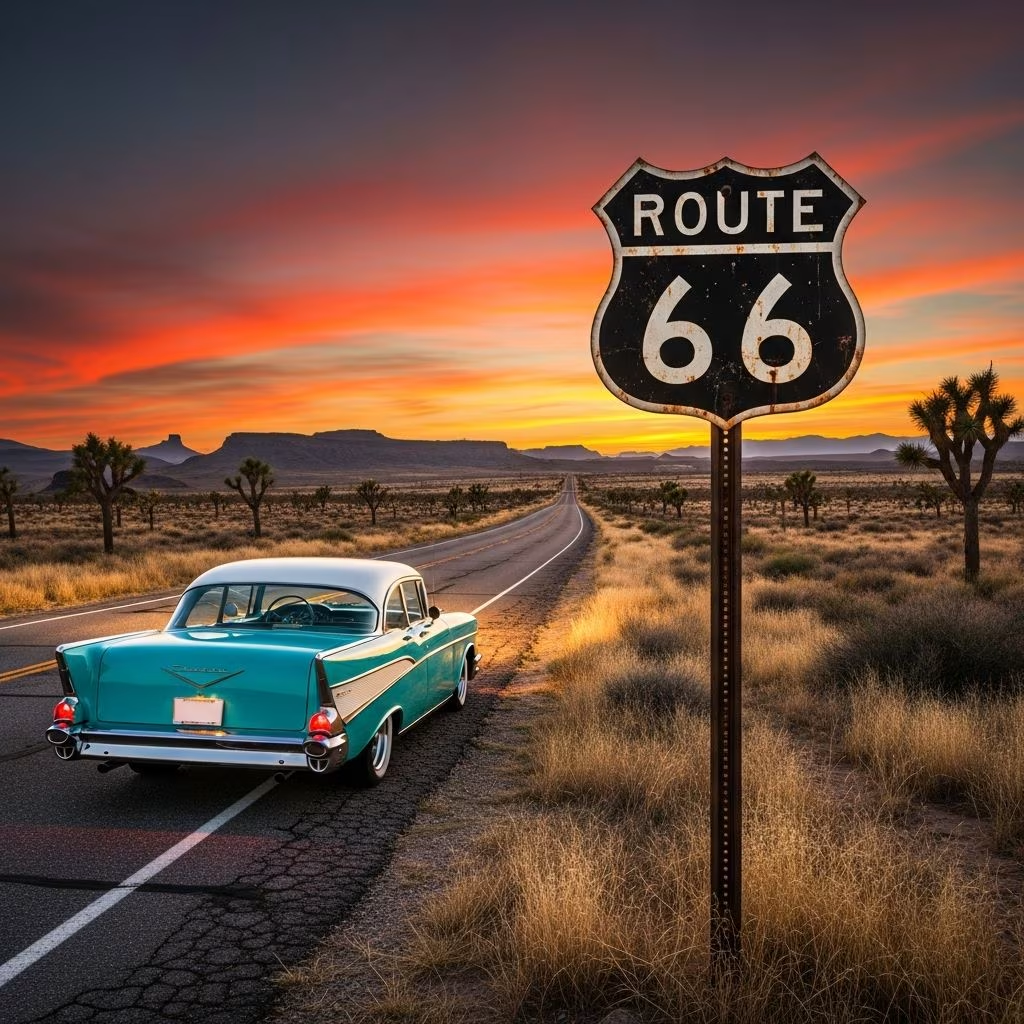 Travel Essentials
The Mother Road, officially commissioned on November 11, 1926, represents one of America’s most transformative infrastructure achievements. Stretching 2,448 miles from Chicago to Santa Monica, Route 66 earned nicknames including “The Main Street of America” and “The Will Rogers Highway.” This legendary highway served as the shortest, year-round route connecting the Midwest with the Pacific Coast, fundamentally shaping westward migration and American commerce throughout the twentieth century.
When Route 66 first opened, only 800 miles featured paved surfaces, with remaining sections composed of graded dirt, gravel, bricks, or wooden planks. The complete paving of the entire route took eleven additional years, solidifying Route 66 as one of the nation’s first continuous stretches of modern paved highway. Today, more than 250 buildings, bridges, road alignments, and historic sites along the corridor are recognized on the National Register of Historic Places, preserving the route’s cultural and architectural significance.
Selecting the appropriate duration for your Route 66 journey fundamentally shapes your experience. The highway’s vast geography demands strategic time allocation to balance driving with meaningful exploration.
Extended Journey (14-21 Days): This leisurely approach suits travelers prioritizing comprehensive exploration and detours. With 2-4 hours of daily driving, you’ll navigate small towns, roadside attractions, and side quests like the Grand Canyon or Las Vegas. This pace allows deep engagement with each state’s unique character and culture.
Moderate Exploration (7-10 Days): A balanced option covering primary highlights while maintaining reasonable daily driving distances. This timeline accommodates major attractions without requiring constant repositioning.
Expedited Route (5-6 Days): Completing Route 66 in under a week remains possible but sacrifices much of the authentic roadside experience that defines the journey.
Travel planners recommend minimum three-week allocations for comprehensive coast-to-coast experiences, particularly when incorporating significant detours.
Route 66 traverses eight distinct states, each offering unique landscapes, attractions, and cultural experiences. Understanding the state-specific mileage distribution helps travelers plan realistic daily itineraries.
| State | Miles | Character |
|---|---|---|
| Illinois | 301 | Urban starting point and Midwest plains |
| Missouri | 317 | Gateway region with historic bridges |
| Kansas | 13 | Brief prairie crossing |
| Oklahoma | 432 | Longest segment; Art Deco architecture and neon |
| Texas | 186 | Panhandle attractions and roadside icons |
| New Mexico | 487 | Desert landscapes and vintage neon towns |
| Arizona | 401 | Grand Canyon proximity and desert scenery |
| California | 314 | Beach destination and final coastal reach |
The total distance spans 2,448 miles, though contemporary travelers frequently incorporate scenic byways and detours that expand actual journey length.
Route 66 commences at Chicago’s Art Institute, marking the official beginning of the Mother Road in Illinois. From this urban epicenter, the highway extends westward through diverse American landscapes toward its Pacific terminus at the Santa Monica Pier in California.
The journey transitions dramatically from metropolitan infrastructure to small-town Americana, wide plains, and southwestern desert environments. Chicago’s skyscrapers contrast sharply with the sun-soaked beaches of California’s coast, encapsulating the continental diversity that defined Route 66’s historical significance.
Successful Route 66 travels incorporate strategic stops capturing the highway’s essence and cultural heritage.
Begin your journey at Chicago’s historic starting point, then progress toward St. Louis’s Chain of Rocks Bridge, an architectural landmark representing early twentieth-century engineering innovation.
Oklahoma contains the most extensive original Route 66 alignment, featuring over 400 preserved miles and representing roughly 432 total route miles. Travelers can explore Tulsa’s Art Deco downtown, admiring period architecture and neon signage that characterizes the era. Shamrock’s U-Drop Inn stands as an iconic example of vintage roadside design.
Texas welcomes travelers to Cadillac Ranch in Amarillo, a famous roadside sculpture attraction, and the Route 66 Midpoint in Adrian, serving as the mathematical center of the entire route.
Tucumcari showcases incredible neon sign collections representing mid-century American design, while the state’s extensive desert mileage (487 total miles) creates dramatic southwestern scenery.
Arizona’s 401-mile segment delivers some of Route 66’s most memorable experiences. The state’s proximity to the Grand Canyon provides exceptional detour opportunities for travelers with extended timelines. The Wigwam Motel exemplifies period accommodation architecture, while Oatman’s wild burros roaming downtown streets create unique photo opportunities.
Roy’s Motel & Café in Amboy represents preserved mid-century roadside hospitality, while the famous “End of the Trail” sign at Santa Monica Pier marks your westward completion.
Modern Route 66 travel requires acknowledging historical route changes. Multiple alignments or “versions” of Route 66 evolved throughout its operational history, with some sections deteriorating or being decommissioned. Contemporary travelers mixing original road stretches with scenic byways create personalized itineraries balancing authenticity with accessibility.
Printed maps and dedicated smartphone applications help travelers navigate different alignments and identify which road segments remain drivable. This knowledge prevents frustration when encountering abandoned sections or modern highway replacements.
Successful Route 66 journeys require appropriate vehicle selection before departure. Multi-day road trips demand reliable transportation suited for varied road conditions and long-distance comfort. Planning your route utilizing comprehensive trip planners enables advance booking of accommodations and identification of upcoming attractions.
Strategic stop planning differentiates memorable Route 66 experiences from exhausting cross-country sprints. Averaging 2-4 hours of daily driving leaves sufficient time for two to three meaningful stops per day, allowing genuine connection with roadside attractions, small-town communities, and cultural landmarks.
Oklahoma presents an ideal weekend escape for travelers with limited time, offering substantial original alignment mileage traversable within 8 hours from state to state.
2026 marks Route 66’s centennial, celebrating 100 years of the Mother Road serving traveling public and supporting American commerce and culture. This milestone year offers exceptional opportunities to experience renewed interest in the historic highway, with renewed efforts preserving remaining structures and promoting heritage tourism.
Route 66 spans 2,448 miles in its traditional alignment. However, contemporary travelers incorporating scenic detours and side quests often drive longer total distances.
The Mother Road travels through eight states: Illinois, Missouri, Kansas, Oklahoma, Texas, New Mexico, Arizona, and California.
Spring and fall offer ideal weather conditions. Summer brings heat, particularly in southwestern sections, while winter can impact northern segments.
While possible at 5-6 days minimum, compressed timelines significantly reduce exploration opportunities. Seven to ten days balances driving efficiency with meaningful stops.
Must-see destinations include Cadillac Ranch, the Wigwam Motel, Tucumcari’s neon signs, and the Santa Monica Pier terminus.
Route 66 endures as America’s most mythologized highway, embodying westward ambition, technological progress, and cultural evolution. Whether planning a leisurely three-week exploration or strategic week-long journey, the Mother Road rewards travelers willing to venture beyond modern interstate highways and discover authentic Americana preserved along 2,448 miles of historic asphalt. The route’s 100-year legacy continues inspiring travelers to experience the transformative power of American road travel.
