

 Travel Essentials
 Travel Essentials

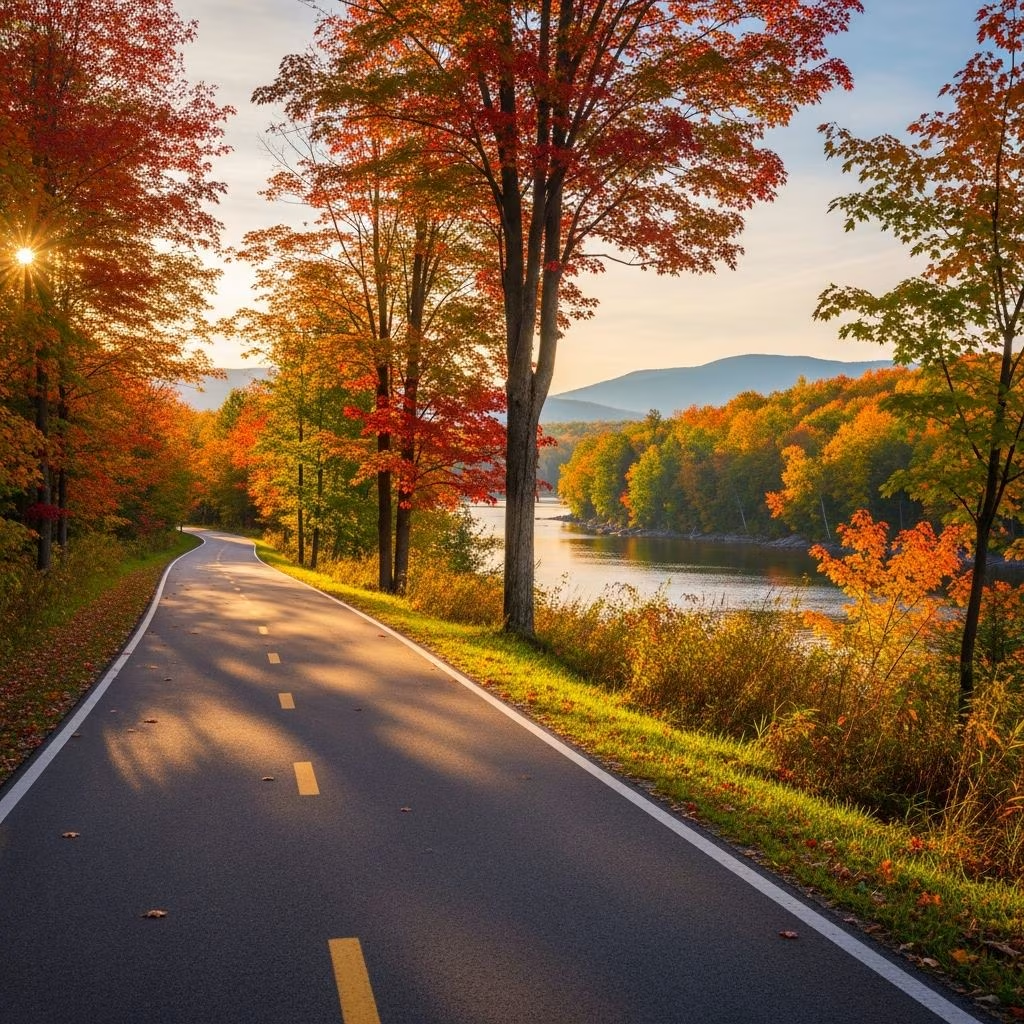
Explore Quebec's Route Verte, a world-class cycling network covering 5,000+ km through diverse landscapes, charming towns, and vibrant cities across the province.
 Travel Essentials
In the late 1980s, a visionary cycling advocacy organization called Vélo Québec conceived an ambitious plan to transform how people experience the province. Drawing inspiration from successful cycling routes across Europe and the United States, Vélo Québec developed a comprehensive strategy that would eventually become one of North America’s most celebrated recreational cycling networks. This initial concept was formalized in 1992 when the organization presented its “Plan du Québec cyclable et des corridors verts de l’an 2000” at the Conférence Vélo Mondiale held in Montreal, establishing the foundation for what would become Route Verte.
The vision extended beyond simple recreational infrastructure. Provincial government officials recognized that such a project could serve a dual purpose: attracting younger demographics to Quebec while simultaneously advancing broader societal benefits through active transportation and tourism development. This alignment of tourism promotion with sustainable transportation goals proved instrumental in securing the political and financial support necessary to bring the initiative to life.
When construction commenced in 1995, developers faced the practical challenge of creating a cohesive network across diverse terrain and existing settlement patterns. The implementation strategy proved flexible and pragmatic. Rather than constructing an entirely new system from scratch, Route Verte incorporated approximately 310 miles of pre-existing bicycle trails that already served local communities. These heritage routes provided both established pathways and cultural continuity.
The network’s development involved multiple infrastructure approaches suited to different geographic contexts:
This multifaceted approach accelerated development during the mid-1990s, allowing the network to expand rapidly while maintaining quality standards and safety considerations. Today, Route Verte has evolved into an extensive system spanning over 5,000 kilometers—equivalent to approximately 3,100 miles—making it definitively the longest cycling itinerary in North America.
The current Route Verte network demonstrates impressive provincial coverage and integration. The cycling system crosses through 16 administrative regions, encompasses 81 municipal regional counties, and connects 382 municipalities throughout Quebec. This extraordinary geographic breadth means that communities from the Atlantic coast to the Ontario border, and from the American border regions northward toward the boreal forest, all benefit from connection to the larger network.
Beyond Route Verte itself, Quebec has developed a more expansive cycling infrastructure ecosystem comprising over 10,000 kilometers of designated cycle routes. This broader network positions Quebec as a genuine leader in cycling infrastructure development across North America, reflecting decades of consistent investment and planning.
Route Verte currently accounts for 48.5% of the Trans Canada Trail system within Quebec, underscoring its significance as both a provincial and national cycling resource. This role as a critical component of continental cycling infrastructure demonstrates how local investment can contribute to broader international recreational networks.
The cycling tourism generated by Route Verte and related provincial infrastructure has developed into a substantial economic driver. In 2024, cycling tourism throughout Quebec generated $803 million in direct expenditure, reflecting the substantial visitor attraction and economic value these pathways create. This economic return validates the original strategic vision of using cycling infrastructure as an economic development tool.
Beyond measurable economic metrics, Route Verte has fundamentally transformed recreational patterns and cultural attitudes toward cycling in Quebec. Morning commuters and weekend recreational cyclists alike have adopted the network as essential infrastructure. Urban planners point to Quebec’s early and sustained investment in cycling infrastructure—beginning in the 1990s when most North American regions overlooked such initiatives—as a primary factor enabling this behavioral and cultural shift.
Route Verte has achieved remarkable international prominence among cycling destinations. National Geographic recognized the network’s extraordinary qualities, featuring it in their “Journeys of a Lifetime” guide in May 2009 with the headline “The Route Verte: Best Biking Trail in the World.” This prestigious recognition from one of the world’s most respected travel publications significantly elevated the network’s profile among international cyclists and adventure travelers.
The international cycling community regularly celebrates Quebec’s cycling infrastructure, recognizing the province’s commitment to sustainable transportation and recreational access. Major cycling publications and travel organizations consistently rank Route Verte among the world’s premier cycling networks, placing it alongside celebrated European routes and specialized cycling regions globally.
Route Verte’s appeal derives partly from its remarkable geographic diversity. Rather than following a monotonous flat corridor, the network traverses dramatically varied landscapes reflecting Quebec’s natural and cultural geography. Cyclists encounter:
This variety ensures that cyclists of different experience levels, fitness capabilities, and scenic preferences can find suitable sections within the broader network. Weekend riders seeking gentle countryside routes, competitive cyclists pursuing challenging mountain passes, and multi-week touring cyclists planning comprehensive journeys can all find appropriate options.
The network’s scale means that cyclists rarely attempt the complete 5,000-kilometer journey in a single expedition. Instead, most travelers select specific sections aligned with their time availability, fitness level, and scenic preferences. Popular multi-day segments range from relatively modest 150-kilometer journeys requiring four to five days of cycling to more ambitious 500-kilometer tours spanning two or three weeks.
First-time Route Verte visitors frequently begin with established popular corridors offering excellent infrastructure, amenities, and scenic rewards without requiring exceptional endurance or technical cycling skills. These introductory sections provide opportunities to experience the network’s distinctive character while building confidence for potentially more ambitious future cycling adventures.
Quebec’s continental climate creates distinct seasonal cycling opportunities. Spring through autumn generally offers optimal cycling conditions, with summer providing the warmest weather and longest daylight hours. Early autumn presents particularly attractive conditions combining comfortable temperatures with spectacular foliage. Winter cycling remains possible in some southern Quebec regions but requires specialized equipment and skills.
Route Verte’s development across 382 municipalities means that substantial support infrastructure exists throughout the network. Cyclists encounter bicycle shops for repairs and equipment, accommodations ranging from budget camping facilities to upscale country inns, restaurants offering regional cuisine including traditional French-influenced specialties, and information centers providing route guidance and local recommendations.
Route Verte cycling experiences often extend beyond physical activity into cultural and gastronomic exploration. Cycling through charming Quebec villages provides organic opportunities to discover regional food traditions, local artisan producers, and cultural attractions. The leisurely pace of bicycle travel—typically 20-50 kilometers daily depending on terrain and preferences—allows cyclists to pause, interact with communities, and experience destinations rather than merely passing through them.
The cycling tourism infrastructure has developed to celebrate these cultural dimensions. Small-town bakeries, cheese producers, cider mills, and farmers markets along Route Verte corridors have adapted their services to welcome cycling tourists, creating mutually beneficial relationships between rural communities and recreational cyclists seeking authentic experiences.
Route Verte represents more than recreational infrastructure; it embodies a broader commitment to sustainable transportation and environmental stewardship. By providing safe, appealing alternatives to automobile travel, the network supports reduced carbon emissions, improved air quality, and diminished transportation infrastructure costs. The network’s integration with urban transit systems in Montreal and other major cities enables multimodal transportation strategies combining cycling with public transit.
The network’s existence also influences broader transportation planning and urban design decisions. Planners recognize that high-quality cycling infrastructure generates demand and transforms how people conceptualize mobility options. Route Verte’s success has informed transportation decisions throughout Quebec, contributing to expanded cycling networks in urban areas and enhanced safety for commuter cyclists.
Quebec’s cycling infrastructure continues evolving through strategic planning and ongoing investment. Recent cycling tourism strategies address emerging priorities including expanded connectivity, enhanced accessibility for cyclists of varying abilities, integration with emerging transportation technologies, and adaptation to climate change impacts. The network’s proven success creates political momentum for sustained public investment.
Planners recognize that Route Verte’s achievements during its first three decades provide foundation for ongoing enhancement rather than completion of development. Emerging technologies, evolving recreational preferences, and changing demographic patterns will likely shape how the network serves future generations of Quebec cyclists and visitors.
Completing the entire 5,000-kilometer network typically requires 150-200 cycling days depending on pace, fitness level, and daily distance preferences. Most cyclists divide this experience across multiple seasons or focus on specific regional sections rather than attempting the entire network consecutively.
Summer months (June through August) offer warm weather and longest daylight hours. Early autumn (September through October) provides comfortable temperatures and spectacular foliage. Spring remains viable but involves variable weather patterns. Winter cycling is possible in southern regions but requires specialized preparation.
Yes, numerous Route Verte sections accommodate varying experience levels. Flatter, well-developed urban and suburban corridors offer gentle introductory cycling, while mountain sections and rural routes provide greater challenges for experienced cyclists.
Accommodation options span camping facilities, youth hostels, bed-and-breakfast establishments, and full-service hotels in villages and towns throughout the network. Most sections offer multiple accommodation options accommodating different budgets and comfort preferences.
