

 Travel Essentials
 Travel Essentials

Explore Rwanda's diverse outdoor adventures including cycling trails, kayaking, forest canopy walks, and volcano trekking in this comprehensive guide.
 Travel Essentials
Rwanda stands as one of Africa’s most compelling destinations for travelers seeking immersive outdoor experiences. Despite its modest geographic size, this East African nation presents an extraordinary array of natural attractions and adventure opportunities that cater to diverse interests and fitness levels. From mountain biking through rural countryside to kayaking pristine lakes and exploring lush rainforests, Rwanda combines accessibility with authentic wilderness encounters. The country’s commitment to conservation has preserved remarkable ecosystems that remain largely undiscovered by mainstream tourism, offering visitors the chance to experience authentic African landscapes and cultures.
One of Rwanda’s premier cycling routes, the Congo Nile Trail represents a multi-day adventure that combines physical challenge with cultural immersion. This 227-kilometer pathway stretches along the western shoreline of Lake Kivu, one of Africa’s most significant bodies of water, connecting the communities of Gisenyi and Kamembe through mountainous terrain. The trail utilizes a network of interconnected rural pathways, unpaved roads, and accessible tracks that wind through the Kivu Region’s distinctive landscape.
Cyclists can expect to complete the entire route in approximately five days, though customized itineraries accommodate various time constraints and ability levels. The journey passes through continuously evolving scenery, including rolling hills dotted with extensive coffee plantations, dense tropical forests, and consistently spectacular lake vistas. Beyond the physical experience of cycling, the trail facilitates meaningful interactions with local communities, creating opportunities to participate in traditional activities such as artisan crafting, honey collection, visits to agricultural estates specializing in tea and coffee production, and even overnight fishing expeditions targeting sambaza, a locally important small fish species.
The trail presents moderate technical difficulty and does not require exceptional athletic conditioning, though participants benefit from reasonable cardiovascular fitness and prior training before attempting the full route. Professional operators including specialized Rwanda-focused adventure companies provide well-maintained bicycles, including electric-assist options, along with experienced guides who possess comprehensive knowledge of both the terrain and local communities. Traveling independently remains possible, though guided experiences substantially enhance safety and cultural understanding.
Beyond surface-level adventures, Rwanda’s geological formations present fascinating underground exploration opportunities. The region surrounding Musanze, formerly known as Ruhengeri, contains numerous caves that showcase Rwanda’s volcanic past and unique ecological features. These subterranean spaces harbor significant populations of bats, creating dynamic ecosystems within darkness. Additionally, structural collapses within cave systems have created towering apertures through which daylight penetrates in spectacular shafts of colored illumination, generating extraordinary photographic opportunities.
Cave exploration in Rwanda does not demand extreme technical climbing abilities or specialized mountaineering experience. Professional guides accompany visitors throughout cave environments, ensuring safety while providing geological and ecological interpretation. The combination of biological interest and dramatic natural architecture makes cave exploration an accessible adventure activity for participants with varying experience levels.
For adventurers seeking less-commercialized experiences, Lake Ruhondo and Lake Burera present exceptional opportunities for backcountry exploration. Located on the periphery of Musanze, these substantial water bodies remain relatively undeveloped from a tourism infrastructure perspective, though this absence of commercial development preserves their authentic character. The lakes’ shorelines feature extensive agricultural terracing and cultivation patterns that create visually dramatic landscapes, while the Virunga volcanic range forms an imposing backdrop.
Access to these lakes typically involves navigating unpaved road networks, making personal transportation advantageous. Visitors possessing sufficient physical fitness can approach exploration entirely on foot. Local fishermen operating traditional vessels remain accessible for arranging waterborne excursions, providing authentic glimpses into subsistence livelihoods while enabling visitors to appreciate each lake’s full environmental context.
Suspended approximately 70 meters above the rainforest floor within Nyungwe Forest National Park, an engineering marvel offers unprecedented perspectives on tropical forest ecosystems. This 160-meter-long elevated pathway traverses through the canopy of one of Africa’s most pristine mountain rainforests, representing one of the world’s most dramatic canopy walk constructions. The walkway ranks among the only canopy-level experiences available in East Africa, providing unique opportunities for observing rainforest biodiversity from perspectives typically reserved for arboreal fauna.
Accessing the canopy walkway requires approximately 30 minutes of uphill hiking through forest environments, during which visitors encounter butterflies, orchid species, and endemic bird populations. The elevated walk itself offers comprehensive views across uninterrupted forest canopy and surrounding landscape features. The experience combines moderate physical exertion with genuinely transformative environmental perspectives, making it accessible for participants with reasonable fitness but limited mountaineering experience.
As Rwanda’s largest freshwater body, Lake Kivu supports diverse recreational opportunities suited to varying adventure preferences. Gisenyi, the primary lakeside resort community, attracts visitors seeking conventional beach experiences, though water sports enthusiasts discover more engaging pursuits through guided kayaking expeditions.
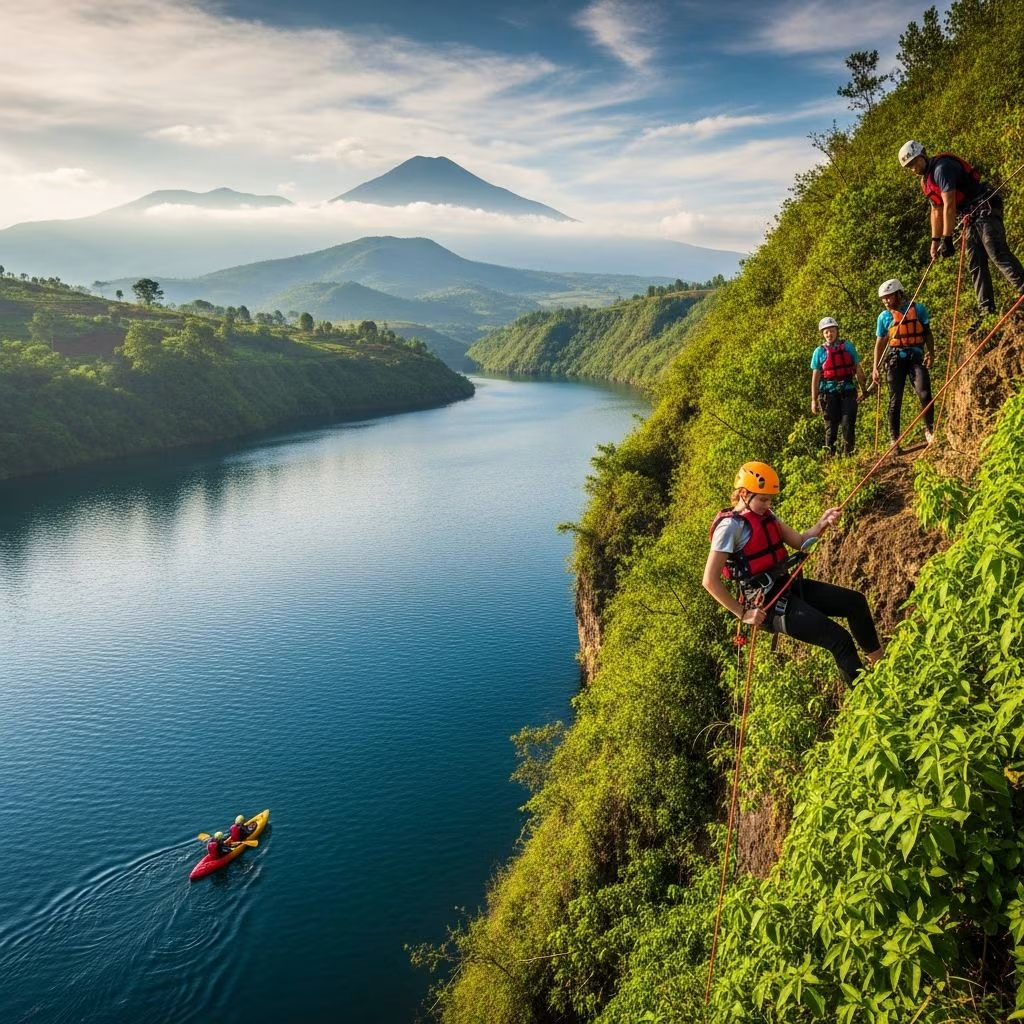
Kayak-based exploration enables visitors to approach Lake Kivu’s clear, blue waters from intimate perspectives while surveying scenic shoreline features. Day excursions permit investigation of smaller islands dotting the lake, with picnic stops offering opportunities for leisurely relaxation. For participants desiring deeper immersion, overnight camping on uninhabited islands provides Robinson Crusoe-style wilderness experiences unique to Rwanda.
Lake exploration also facilitates encounters with traditional fishing communities. Visitors may observe and approach local fishermen operating ancestral wooden vessels, frequently encountering coordinated paddling accompanied by rhythmic vocalizations representing cultural practices extending across generations. These interactions create meaningful cross-cultural connections while supporting local economies through respectful tourism engagement.
| Activity Type | Duration | Physical Intensity | Best For |
|---|---|---|---|
| Day Kayaking | 4-6 hours | Moderate | Island exploration, photography |
| Overnight Island Camping | 24 hours+ | Low-Moderate | Immersive wilderness experiences |
| Traditional Boat Tours | 2-4 hours | Low | Cultural engagement, relaxation |
Volcanoes National Park encompasses the Rwandan portion of the Virunga Mountain range, a volcanic system straddling international borders between Rwanda, Uganda, and the Democratic Republic of Congo. While mountain gorilla observation dominates visitor interest, the park contains numerous independent trekking and climbing opportunities. The Virunga system encompasses six active volcanoes and three extinct summits, each offering distinct trekking experiences across varied elevation zones.
Volcano trekking adventures traverse through remarkable vegetation transitions spanning from dense bamboo forests and giant lobelia to alpine meadows at higher elevations. Favorable weather conditions reward climbers with expansive panoramic vistas encompassing the entire mountain chain. The gateway community of Musanze, positioned two hours northward from Rwanda’s capital Kigali, serves as the primary access point for Volcanoes National Park and its associated trekking opportunities.
Beyond established trails and developed attractions, Rwanda’s protected forest reserves harbor exceptional biological diversity. Nyungwe National Park, situated within the Great Rift Valley and recognized as Africa’s largest protected mountain rainforest, contains endemic species rarely encountered elsewhere. The forest ecosystem supports 13 distinct primate species, 300 bird varieties, and elaborate botanical communities including wild orchids and specialized tree species. Such environmental richness supports extended hiking expeditions allowing visitors to encounter wildlife in authentic habitats while contributing to conservation-oriented tourism models.
Wildlife reintroduction initiatives throughout protected areas, particularly at Akagera National Park, have successfully restored populations of the “Big Five” (lion, leopard, rhinoceros, elephant, and Cape buffalo) alongside numerous other species. These conservation successes demonstrate Rwanda’s commitment to environmental preservation alongside sustainable tourism development.
Adventure activity accessibility in Rwanda varies across seasonal cycles. Dry seasons (June through September and January through February) provide optimal conditions for most outdoor pursuits, with reduced rainfall minimizing trail mud and enhancing visibility for photography. Rainy seasons bring lush vegetation and fewer crowds, creating different but equally rewarding experiences for well-prepared adventurers.
Most outdoor activities require no specialized mountaineering certifications or extreme athletic abilities. Professional operators provide essential equipment including properly maintained bicycles, kayaks, and safety apparatus. Guides enhance experiences through geological knowledge, wildlife identification expertise, and cultural interpretation. Many activities accommodate flexible duration options, permitting customization based on individual schedules and physical capacities.
Rwanda’s rural landscape, nicknamed the “Land of a Thousand Hills” for its characteristic topography, encompasses more than mere natural scenery. Agricultural traditions spanning tea and coffee cultivation create living landscapes reflecting centuries of human adaptation and environmental stewardship. Community-based tourism initiatives throughout rural areas enable visitors to participate in traditional village life, engage with local practitioners of traditional crafts, and understand subsistence agricultural practices firsthand.
Such experiential tourism models provide economic benefits to rural communities while enabling visitors to develop genuine understanding of contemporary Rwandan culture and historical resilience. Adventure activities increasingly incorporate community engagement elements, transforming outdoor pursuits into comprehensive cultural learning experiences.
While the trail does not demand exceptional athletic abilities, participants benefit from moderate cardiovascular fitness and prior cycling experience. Professional guides can customize pace and routing to accommodate various fitness levels.
Yes, cave exploration does not require technical climbing expertise. Professional guides accompany visitors throughout cave environments, ensuring safety for participants with minimal caving experience.
Dry seasons from June through September and January through February offer optimal conditions, though rainy seasons provide alternative experiences with reduced crowds and lush vegetation.
While some activities can be self-directed, professional guides substantially enhance safety, cultural understanding, and experience quality. Guides provide ecological knowledge, wildlife expertise, and local cultural interpretation.
Most operators provide essential equipment. Visitors should bring appropriate footwear, weather-appropriate clothing, sun protection, hydration supplies, and a camera for documenting experiences. Spare dry clothing proves particularly valuable for water-based activities.
Rwanda has positioned itself as a conservation-focused destination where tourism revenue directly supports environmental preservation. Protected area entrance fees fund ranger programs, habitat restoration, and wildlife monitoring initiatives. By selecting established operators and respecting environmental guidelines, visitors contribute to conservation efforts while enjoying authentic adventure experiences.
The country’s relatively small size and excellent infrastructure accessibility distinguish Rwanda from many African adventure destinations. Kigali’s international airport provides convenient entry, with national parks positioned within reasonable driving distances. This accessibility, combined with genuine wilderness experiences and authentic cultural encounters, establishes Rwanda as a uniquely rewarding adventure destination for diverse traveler preferences and experience levels.
