

 Travel Essentials
 Travel Essentials

Discover Rwanda's rich culture through its museums, royal palaces, community rituals like umuganda, traditional dances, and modern preservation efforts.
 Travel Essentials
Rwanda, known as the Land of a Thousand Hills, boasts a profound cultural legacy shaped by resilience, community bonds, and a commitment to progress. This East African nation has transformed remarkably over recent decades, emerging as one of Africa’s cleanest and safest destinations while preserving its ethnic harmony and reversing environmental challenges like poaching. Visitors find a gateway to authentic experiences through museums, living villages, royal heritage sites, and participatory traditions that reveal the heartbeat of Rwandan identity.
Museums across Rwanda serve as vital repositories of the nation’s past, offering insights into pre-colonial life, colonial influences, and post-independence evolution. These institutions house artifacts, reconstructions, and interactive exhibits that bring history alive.
The **National History Museum**, originally called the Kandt House Museum, stands as a cornerstone in Kigali. Built during German colonial times as the residence of Dr. Richard Kandt, Rwanda’s first colonial governor, it now chronicles the country’s natural history, ethnography, and political shifts. Exhibits detail life before, during, and after colonial rule, featuring geological specimens, wildlife displays, and historical documents.
In Huye (formerly Butare), the **Ethnographic Museum** ranks among Africa’s premier collections. Gifted by Belgium in 1987 to commemorate Rwanda’s 25th independence anniversary, its seven galleries explore traditional tools, farming implements, brewing methods, poetry, dance instruments, and hunting gear. Visitors gain a deep understanding of Rwanda’s social structures, daily practices, and artistic expressions from pre-colonial eras.
Rwanda’s monarchical history captivates through reconstructed palaces that highlight the grandeur of its kings. These sites preserve the pomp of royal ceremonies and the symbolic role of livestock in governance.
The **King’s Palace Museum** near Nyanza, outside Kigali, recreates traditional royal compounds. Here, explore thatched residences, courtyards, and the iconic Inyambo cattle—long-horned beasts bred exclusively for kings. These animals, symbols of prestige, participate in demonstrations of their ceremonial roles, trotting in rhythmic displays that echo ancient rituals.
Further afield in Nyungwe Forest National Park, the **Kitabi Cultural Center** features another royal palace built by Rwanda’s last king as an alternative to Nyanza’s. Nestled at the park’s entrance, it draws trekkers en route to chimpanzee spotting, blending cultural immersion with natural adventures.
Beyond static displays, Rwanda’s cultural villages pulse with daily life, inviting tourists to engage directly with communities and artisans.
These villages emphasize Rwanda’s hospitable spirit, where greetings like Muraho (hello) open doors to shared stories and laughter.
At the core of modern Rwandan society lies umuganda, a monthly community service day held on the last Saturday. Entire neighborhoods unite for tasks like street cleaning, infrastructure repairs, and home-building for the vulnerable. Tourists are encouraged to join, experiencing firsthand the discipline and unity that underpin Rwanda’s progress. This tradition, rooted in pre-colonial cooperation, now symbolizes national healing and development.
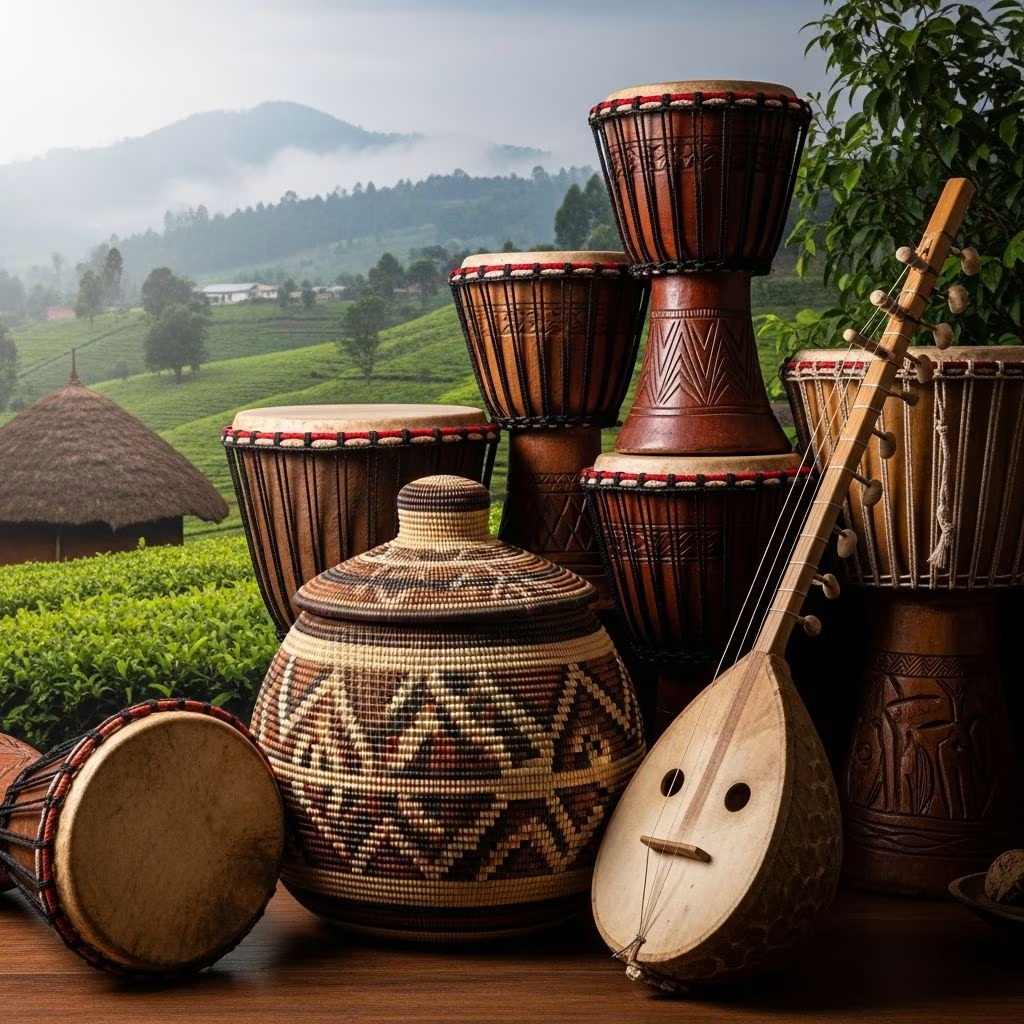
Rwanda’s creative expressions shine in dance, music, and handicrafts, blending ancient forms with contemporary flair.
Intore Dance, the national dance, features energetic leaps, rhythmic drumming, and grass-adorned crowns symbolizing warriors’ valor. Performers at cultural centers narrate history through movement, captivating audiences.
| Traditional Craft | Description | Where to Experience |
|---|---|---|
| Inkoni Walking Sticks | Carved symbols of authority, pride, and respect | Cultural villages, markets |
| Basket Weaving | Colorful, intricate designs for storage and decor | Inema Art Center, cooperatives |
| Imigongo Art | Geometric cow-dung paintings on walls | Rwesero Art Museum |
| Wood Carvings | Figurines of daily life and royalty | Ethnographic Museum |
These crafts not only preserve skills but also fuel local economies via artisan marketplaces.
Rwanda fuses tradition with technology through initiatives like the Digital Heritage Preservationists (DHP) platform, or Irage.rw. Led by young innovator Elisha Clever Rukundo, this online portal virtualizes museums, offers artisan sales, and connects global users to Rwanda’s heritage. Targeting a February 2026 launch, it includes 3D tours of sites like Kandt House and promotes youth engagement.
Government surveys show 76% cultural awareness among citizens, bolstered by digital tools and grassroots programs.
To respectfully engage with Rwanda’s culture:
Umuganda is mandatory monthly community service on the last Saturday, involving cleaning, building, and repairs. Visitors can participate.
At Iby’Iwacu, Inema Art Center, and cultural villages near national parks.
Yes, Rwanda is among Africa’s safest, with clean cities and low crime.
Kandt House Museum and King’s Palace Museum for history and royalty.
Through Irage.rw, a platform for virtual museum access and artisan markets.
Rwanda’s cultural landscape invites deep immersion, from royal echoes to communal rhythms, revealing a nation forward-looking yet rooted in tradition.
