

 Travel Essentials
 Travel Essentials

Delve into the world of sake: its origins from primitive rituals to refined artistry, step-by-step brewing process, classifications, pairings, and sacred traditions in Japanese society.
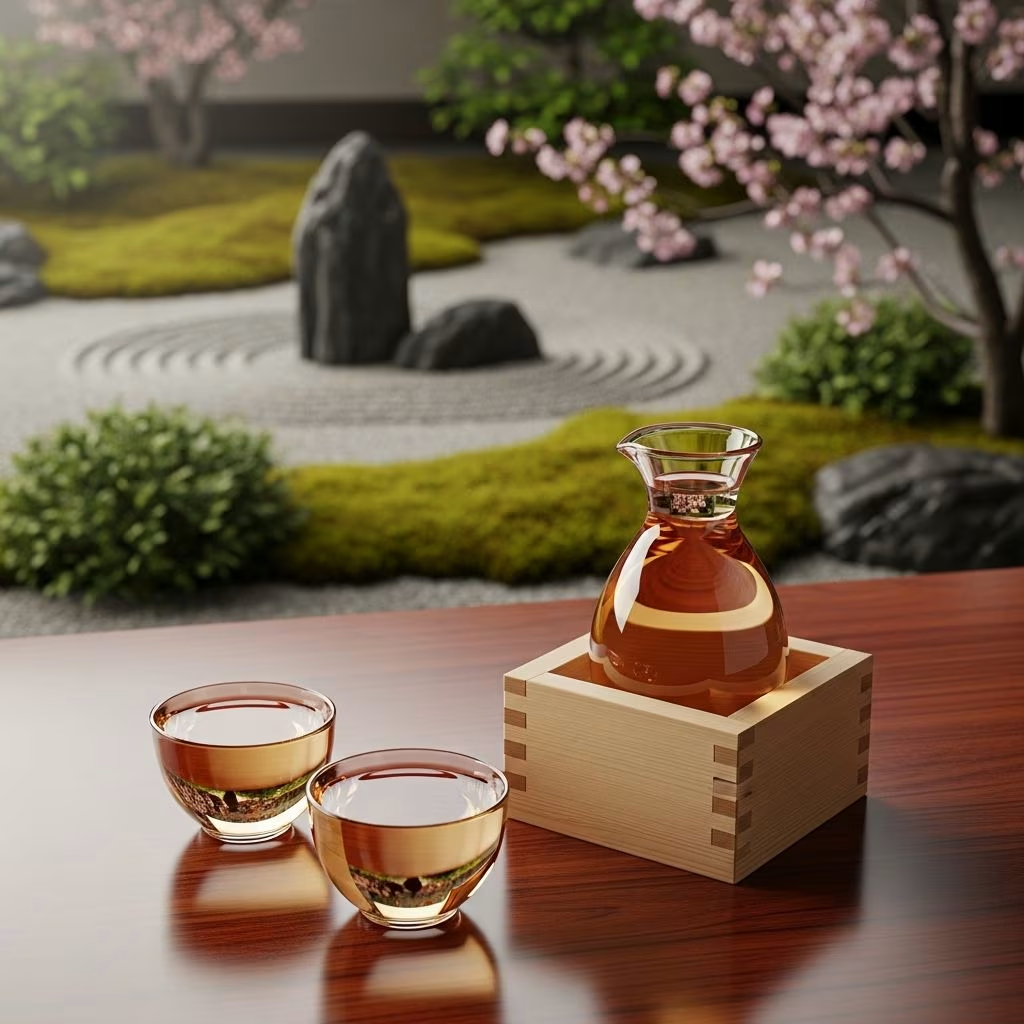 Travel Essentials
Sake, often called Japan’s national spirit, is more than a beverage—it’s a testament to centuries of innovation, spirituality, and culinary mastery. Crafted from rice through a unique fermentation process, this elegant drink balances subtlety and complexity, inviting enthusiasts to appreciate its nuances alongside meals or in ceremonial settings.
The story of sake begins with the arrival of rice cultivation in Japan during the Yayoi period, around the 3rd century BCE, when agricultural practices spread from mainland Asia. Early production methods were rudimentary, involving communal chewing of rice to release enzymes that initiated fermentation—a practice known as kuchi-kami no sake, or mouth-chewed sake. Villagers would spit the masticated rice into vats, allowing natural saliva enzymes to convert starches into fermentable sugars, producing a cloudy, porridge-like brew.
By the Nara period (710–794 CE), techniques evolved dramatically. Brewers documented the use of kōji mold (Aspergillus oryzae), a breakthrough that replaced human saliva and enabled more controlled, scalable production. Sake transitioned from a rustic offering to a sophisticated libation favored by the imperial court. Over time, production shifted to Shinto shrines and Buddhist temples, where it served as a divine intermediary, before commercial breweries emerged in the Edo period.
Post-World War II, sake production surged due to advancements in rice polishing technology and returning soldiers’ exposure to global influences. This era marked a shift toward premium varieties, emphasizing fruity and floral profiles over rustic flavors.
Sake production demands precision, blending elements of brewing, winemaking, and distillation. It starts with selecting shuzō-kōtekimai, specialized rice varieties like Yamada Nishiki, prized for their starchy cores and minimal fat or protein in outer layers.
Only four ingredients—rice, water, yeast, and kōji—create this diversity, but regional water chemistry profoundly influences flavor profiles.
Sake is categorized by rice polishing ratio, alcohol adjustment, and flavor profile. Premium grades prohibit added alcohol, emphasizing pure fermentation.
| Grade | Polishing Ratio | Characteristics |
|---|---|---|
| Daiginjō | ≤50% | Ultra-premium; aromatic, fruity, silky texture. |
| Ginjō | ≤60% | Refined, floral notes; versatile for pairings. |
| Junmai | No limit (pure rice) | Full-bodied, earthy; no added alcohol. |
| Honjōzō | ≥70% | Light, crisp; subtle added distilled alcohol. |
| Futsū-shu | Varies | Table sake; most common, affordable. |
Styles like nigori (unfiltered, cloudy), sparkling, or aged varieties add further variety. Dry (karakuchi) sakes suit savory dishes, while sweet (amakuchi) ones complement desserts.
Beyond the table, sake permeates Japan’s spiritual life. Referred to as miki in ancient texts—combining characters for ‘god’ and ‘wine’—it purifies spaces, honors deities, and fosters community. Shinto rituals use sake in omikuji offerings and shubō ceremonies at breweries, where new batches bless the year.
Weddings feature san-san-kudo, where couples sip sake thrice from three cups, symbolizing unity. Festivals like matsuri pour sake to invoke prosperity. Temples historically brewed it, blending monastic discipline with fermentation artistry.
With 15–20% ABV akin to wine, sake shines with food. Its umami enhances seafood, grilled meats, and vegetables.
Serve chilled (5–15°C) for premiums, warmed (40–50°C) for robust types. Use wine glasses to release aromas.
Sake’s amino acids from rice offer skin benefits. Brewers’ hands stay supple due to constant exposure, inspiring sake baths in historical beauty regimens. Modern cosmetics incorporate sake ferments for hydration and anti-aging.
Consumed moderately, its antioxidants support health, though it’s no miracle cure—balance is key.
Japan boasts over 1,200 breweries, many family-run for generations. Regions like Nada-Gogō (Kobe) and Fushimi (Kyoto) excel due to ideal water. Craft trends experiment with native yeasts and organic rice, echoing post-WWII innovation.
Globally, sake appreciation grows, with breweries in the US and Europe adapting techniques. Events like brewery tours in Kobe immerse visitors in this heritage.
Sake is brewed via parallel fermentation, unlike soaked rice wines; it’s clearer and more alcoholic.
Yes, robust types warm beautifully, enhancing earthiness; avoid overheating premiums.
Pure sake (junmai) is, as it’s rice-based; check labels for additives.
Chilled, 1–2 weeks; refrigerate to preserve flavors.
Dai-ginjō for elegance or junmai for approachability.
