

 Travel Essentials
 Travel Essentials

Explore Samhain celebrations in Ireland, from ancient fire festivals to modern events. Learn traditional customs, major festivals, and how to celebrate this significant cultural occasion.
 Travel Essentials
For nearly two millennia, Ireland has observed Samhain, one of the most significant festivals in the Celtic calendar. This ancient celebration marks a profound transition point in the Irish cultural and agricultural year, blending spiritual significance with community-centered festivities. Today, Samhain remains deeply woven into Irish identity, with celebrations more vibrant and widespread than at any point in recent decades, reflecting a renewed commitment to preserving Celtic heritage.
Samhain occupies a unique position within Ireland’s seasonal framework as one of four major Gaelic festivals that structure the year. Pronounced “Sow-wen,” this ancient observance translates to “Summer’s End” and represents far more than a simple seasonal marker. The festival acknowledges a fundamental philosophical shift—the transition from the lighter, more productive half of the year into the darker, more introspective winter months.
Historically celebrated around October 31st and November 1st, Samhain carries profound spiritual dimensions rooted in pre-Christian Celtic belief systems. In ancient Ireland approximately 2,000 years ago, the festival represented the division point between two halves of existence itself. More significantly, Celtic tradition held that during Samhain, the boundary between the material world and the otherworldly realm became exceptionally permeable, allowing spirits, ancestors, and supernatural entities to cross into the living world.
This cosmological understanding shaped virtually every ritual and tradition associated with the festival. Rather than viewing this liminal period as purely dangerous, Celtic peoples recognized it as a time of exceptional spiritual potency—a window for divination, communication with ancestors, and transformation. The festival thereby functioned simultaneously as a practical agricultural marker, a spiritual observance, and a community-binding celebration.
Samhain exists within a carefully balanced quadrant of annual festivals that organized Celtic life according to natural rhythms and spiritual significance:
These festivals remain so culturally significant that each corresponds with a public holiday in contemporary Ireland, allowing modern citizens to honor ancient traditions while maintaining their practical benefits. The Samhain holiday typically falls on the last Monday in October, giving locals extended time to participate in celebrations.
While often used interchangeably in contemporary discourse, Samhain and Halloween represent distinct yet interconnected observances. This distinction carries cultural importance for those seeking to understand and respectfully engage with Irish traditions.
In Irish language and culture, “Oíche Shamhna” refers specifically to October 31st—what English speakers call Halloween. Historically, however, the Samhain festival traditionally centered on November 1st, with preparations and ritual observances beginning the previous evening. November itself carries the Irish name “Samhain,” further cementing the festival’s association with this transitional month.
Modern interpretations sometimes extend Samhain to encompass a broader season stretching from November 1st through December 21st—the winter solstice. However, this extended timeframe remains more closely associated with contemporary neo-pagan interpretations than with historically documented ancient practices.
Understanding traditional Samhain practices provides insight into how Celtic communities engaged with spiritual and social dimensions of this critical festival:
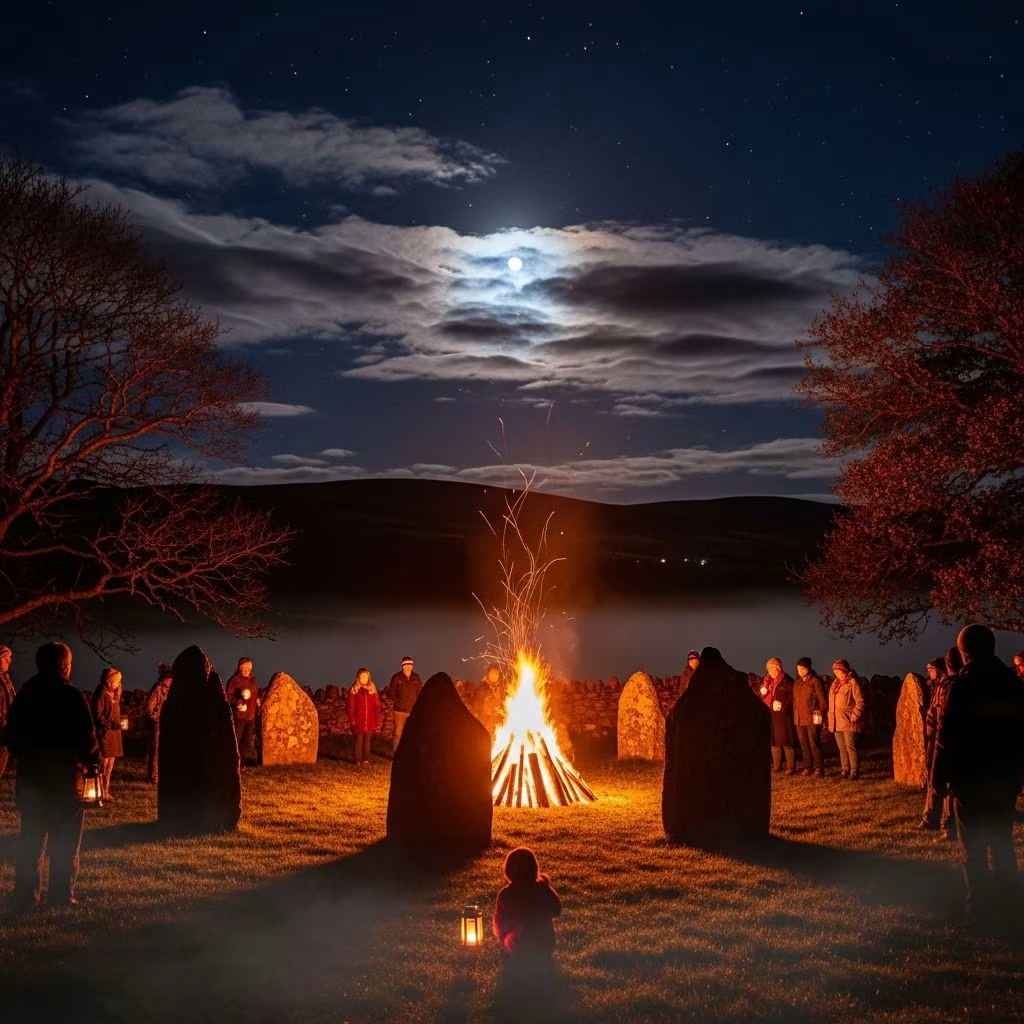
Bonfires functioned as the ceremonial centerpiece of Samhain celebrations, particularly in rural regions. Communities would gather at hilltops to ignite massive fires believed to possess protective and cleansing properties. These weren’t merely festive gatherings but spiritually significant rituals designed to usher in the new season while establishing spiritual boundaries against malevolent forces and otherworldly intrusions.
Young people participated in flame-leaping ceremonies, a practice believed to confer protective blessings and ensure good fortune throughout the winter. The ashes from these ceremonial fires would be carefully collected and scattered across agricultural fields, a practice reflecting the belief that residual spiritual power from the flames would enhance fertility and crop yields in the following growing season.
Samhain held reputation as an exceptionally auspicious time for divination practices. The thinned boundary between worlds supposedly enhanced the accuracy and power of fortune-telling rituals. Young people, particularly women, engaged in various divination games to glimpse aspects of their futures, especially regarding matrimonial prospects.
Apple-based divinations proved especially popular. Peeling an apple in a single unbroken strip and tossing it over one’s shoulder would supposedly create a shape matching the initial letter of one’s future spouse’s name. Hazelnuts and other traditional divination items served similar purposes, making these practices accessible to families without requiring specialized knowledge or materials.
More elaborate divination ceremonies involved arranging stones in circles around bonfires, each stone representing a community member. The following morning, community members would inspect these stones to identify any that had been displaced or altered—a sign supposedly indicating that the person represented by that stone would not survive until the following Samhain.
For centuries, Irish communities maintained traditions of wearing costumes while traveling door to door requesting food. These weren’t casual Halloween-style costume parties but ritualized community practices often involving performance in exchange for provisions. Participants would sing, recite poetry, tell stories, or perform entertainment to warrant the hospitality they requested.
This practice reinforced community bonds while allowing individuals to adopt alternative identities during this spiritually liminal period. The tradition reflected broader beliefs that Samhain’s permeable boundaries allowed for temporary identity transformation and spiritual experimentation.
Contemporary Ireland offers numerous opportunities to experience Samhain celebrations, from large-scale organized festivals to intimate community gatherings. Here are five significant events worth planning around:
Held annually in Trim and Athboy, the Púca Festival celebrates what local tradition designates as “the birthplace of Halloween.” This multi-day celebration features ceremonial bonfire lighting, dramatic processions incorporating drums, live music, fire performers, and remarkably designed oversized puppets. The festival expands beyond festive entertainment to include meditation sessions, divination workshops, foraging education, and talks exploring Samhain’s spiritual dimensions. Comedy performances, circus acts, and contemporary musical acts complement the traditional elements, creating a celebration that honors ancient customs while engaging modern audiences.
Self-proclaimed as Europe’s largest Halloween festival, Derry’s four-day celebration attracts visitors seeking immersive festive experiences. The event emphasizes family participation, featuring extensive arts and crafts programming designed to engage children. Interactive activities include creating custom Halloween video games, crafting decorations, and participating in age-appropriate entertainment. Fireworks displays and elaborate carnival parades provide visual spectacle throughout the festival period, making it particularly appealing to families and those seeking large-scale organized celebrations.
This two-day event in Uisneach focuses on preserving authentic Samhain traditions within a historically significant landscape. Uisneach itself holds particular cultural importance as an ancient ceremonial and spiritual center in Irish prehistory. Festival highlights include the ceremonial lighting of the traditional Samhain bonfire, preceded by elaborate processions featuring fire dancers, Irish wolfhounds, and ceremonial horses. Participants experience traditional storytelling, fortune-telling sessions, and guided haunted tours of the sacred landscape. The following morning features yoga sessions and sunrise tours emphasizing the site’s historical and spiritual significance.
Originating as a grassroots community art initiative, this unique parade features an enormous dragon emerging from underground passages to traverse Cork City’s streets. Fire performers, skilled puppeteers, and elaborate artistic elements accompany the dragon’s journey, while spectators are invited to join the procession. Following the parade, live performances on Cork’s riverside quays extend the celebration, blending traditional festival elements with contemporary artistic expression.
Beyond major organized festivals, Samhain celebrations manifest throughout Irish communities in diverse forms. Local pubs host costume parties, restaurants create special harvest-themed pop-up menus, neighborhood trick-or-treating persists as a cherished tradition, and family gatherings center on traditional foods and games. Though technically illegal in some contexts, fireworks displays light Irish skies, particularly throughout Dublin and other urban centers, adding visual drama to evening celebrations.
Those unable to attend organized festivals can still engage meaningfully with Samhain traditions within domestic settings:
Barmbrack, a traditional Irish fruit bread, plays a particularly important role in domestic Samhain celebrations. Families bake this rich bread incorporating symbolic items: coins, peas, and rings. Each piece of barmbrack is distributed to family members, and the items found in individual slices supposedly prophesy that person’s fortune for the coming year. A ring indicates marriage prospects, a coin suggests financial improvement, and a pea traditionally foretells remaining single for another year.
While commercial barmbracks sold throughout Ireland during the Samhain period typically contain only rings, homemade versions maintain the full traditional variety, creating an element of surprise and symbolic meaning with each serving.
| Planning Element | Consideration | Recommendation |
|---|---|---|
| Travel Timing | Peak festival dates | Aim for late October; book accommodations 2-3 months in advance |
| Clothing | Traditional costume expectations | Costumes reflect Celtic traditions; consider historical or mystical themes |
| Dietary Needs | Festival food offerings | Traditional foods include apples, hazelnuts, and hearty autumn fare |
| Spiritual Preparation | Meaningful engagement | Research festival-specific traditions; consider intentions for the new season |
| Photography | Capturing memories | Large festivals welcome photography; ask permission before photographing individuals |
Samhain is pronounced “Sow-wen,” with emphasis on the first syllable. This pronunciation reflects Irish Gaelic language conventions and is preferred by those seeking to respectfully engage with the tradition.
Samhain traditionally occurs on October 31st and November 1st. However, the precise astronomical calculation places Samhain at the midpoint between the Autumn Equinox and Winter Solstice, which varies slightly year to year but typically falls between November 6th and 8th.
While historically and spiritually distinct, Samhain and Halloween have become culturally intertwined. Halloween (Oíche Shamhna in Irish) refers specifically to October 31st, while Samhain encompasses broader festival traditions centered on the seasonal transition from autumn to winter.
Yes. Samhain originated in pre-Christian Celtic spirituality and retains significant spiritual meaning. Contemporary practitioners include neo-pagans, Wiccans, and others who view Samhain as a sacred time for honoring ancestors, engaging in divination, and acknowledging death as part of life’s natural cycle.
Absolutely. Irish communities and festival organizers welcome visitors of all backgrounds. Respectful participation—learning about traditions, engaging thoughtfully with cultural practices, and honoring the festival’s significance—is encouraged.
Samhain celebrations have experienced remarkable renewal over recent decades, reflecting broader societal interest in preserving and revitalizing traditional culture. This renaissance extends beyond nostalgic recreation; it represents genuine cultural renewal where younger generations actively choose to participate in ancestral traditions, infusing them with contemporary creativity while respecting historical authenticity.
The festival now attracts international visitors, academic researchers, cultural enthusiasts, and spiritual practitioners alongside local communities maintaining multigenerational participation. This convergence of ancient tradition with modern celebration creates unique opportunities for cultural exchange while ensuring these meaningful practices continue enriching Irish life and identity.
