

 Travel Essentials
 Travel Essentials

Explore the Sami people's ancient customs, reindeer herding practices, unique music, crafts, and spiritual beliefs shaping their identity in northern Norway.
 Travel Essentials
The Sami represent one of Europe’s oldest indigenous groups, inhabiting the northern reaches of Norway, Sweden, Finland, and Russia’s Kola Peninsula. In Norway, their presence spans from the Arctic Circle northward, where they have forged a profound bond with the rugged landscapes for millennia. This article delves into their cultural practices, historical journey, and contemporary adaptations, highlighting how traditions like reindeer management and vocal artistry continue to thrive amid modernization.
The Sami’s roots trace back to Stone Age hunter-gatherers, evolving into a distinct people through centuries of adaptation to subarctic conditions. Archaeological evidence links them to ancient northern European societies, with oral histories preserving tales of migration and survival. By the Viking era, alliances such as the legendary marriage between Norwegian king Harald Hårfagre and Sami princess Snøfrid underscored early interactions, embedding Sami lineage into Norway’s royal narrative.
Colonization brought profound challenges. From the 17th century, Norwegian authorities imposed assimilation policies, including forced Christianization that suppressed shamanistic rituals and destroyed sacred drums. Missionaries targeted symbols like the goavddis drum and women’s hats, viewing them as pagan. 20th-century “Norwegianization” efforts aimed to eradicate Sami languages and customs, relocating communities and restricting land use. Despite this, resilience prevailed; post-WWII activism led to legal recognitions, including the 1987 establishment of the Sami Parliament in Norway, granting cultural autonomy.
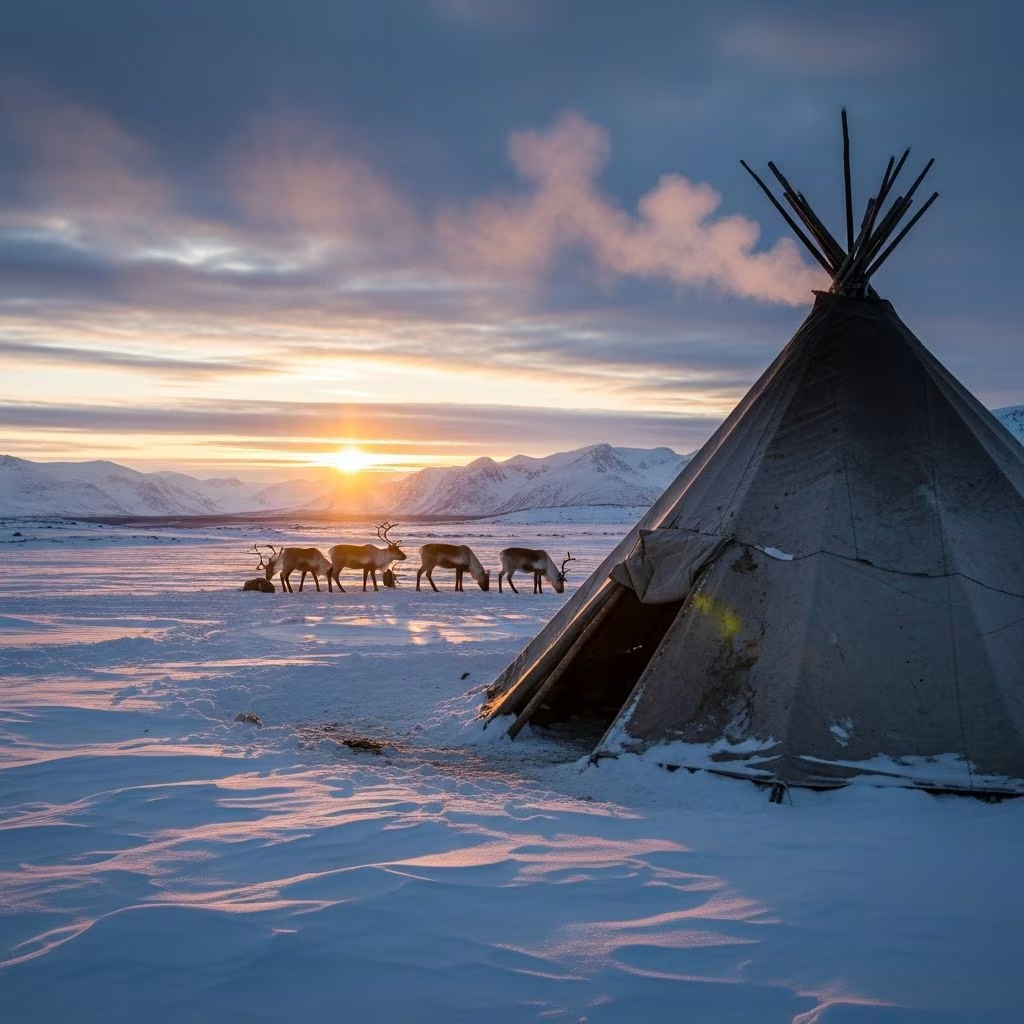
Central to Sami existence is reindeer husbandry, practiced by about 10% of the population, or roughly 2,800 individuals full-time in Norway as of recent estimates. This semi-nomadic pursuit involves seasonal migrations: winter in coastal or forested lowlands, summer in mountain pastures. Herders move in family-based units, using snowmobiles today alongside traditional methods.
Reindeer provide multifaceted sustenance: meat for dishes like bidos stew, hides for clothing and tents, bones for tools, and historically milk. Lasso skills remain vital for rounding herds. Legally reserved for Sami with herding lineage, this practice faces modern pressures from mining, wind farms, and climate change, which alter grazing routes.
| Season | Location | Activities |
|---|---|---|
| Winter | Lowlands/Fjords | Calving protection, fishing supplements |
| Spring | Mid-elevations | Herd migration, lambing |
| Summer | Mountains | Grazing, community gatherings |
| Autumn | Coastal areas | Slaughtering, preparation |
Visitors to areas like Tromsø can engage in feeding sessions, sledding, or lavvu campfires, often paired with storytelling.
Traditional homes reflect ingenious engineering. The lavvu, a conical tent of reindeer hides over wooden poles, withstands fierce winds and cold, similar to a Native American tipi but optimized for Arctic blasts. Historically, gamme turf huts offered insulated permanence during settlements. Today, herders blend these with modern cabins, maintaining mobility.
Subsistence diversified beyond reindeer: fishing salmon-rich fjords, hunting, and small-scale farming. Crafts from hides produce shoes, cushions, and utensils, embodying resourcefulness.
The gákti, or kofte, is iconic attire worn at festivals, herding, and ceremonies. Hand-stitched from wool or leather, patterns denote family, village, marital status, and region—red for unmarried men, blue for married, for instance. Women’s aprons feature intricate geometric designs.
Duodji handicrafts extend this: knives with carved roots, silver jewelry, woven baskets. These preserve skills passed generationally, now marketed ethically to tourists.
Joik stands as Europe’s oldest musical form, a vocal improvisation sans instruments, evoking people, animals, landscapes, or emotions through rhythmic chants and yodels. Unlike lyrics, it’s impressionistic— a joik for a friend captures their essence. Performed solo or in groups, it accompanies rituals, joys, and laments. UNESCO recognizes it as intangible heritage. Experiences in Tromsø often feature joik by firesides with bidos.
Pre-Christian beliefs were animistic: every rock, animal, river holds a spirit. Noaidi shamans mediated via goavddis drums, flutes, or joiks, entering trances for healing or prophecy. Drums mapped cosmic realms. Christianization curtailed this, but folklore endures, like Northern Lights as otherworldly foxes’ tails.
Today, neo-shamanism revives amid cultural reclamation, though mainstream Sami are Lutheran.
Over 50,000 Sami live in Norway, integrated into society as teachers, politicians, artists—only a minority herd reindeer. They speak nine languages/dialects, with Northern Sami dominant. Sápmi, their cultural region, fosters unity via media like NRK Sápmi broadcasts.
Revival accelerates: Sami National Day (February 6) features parades in gákti. Education mandates Sami language in northern schools. Challenges persist—land rights disputes, youth urbanization—but pride surges through festivals like Riddu Riđđu.
In tourism, ethical encounters abound: lavvu dinners, herding tours above the Arctic Circle. Tromsø operators offer winter activities October-March, aligning with migrations.
Northern Norway, especially Finnmark and Troms, beckons. Key sites:
Respect protocols: seek permission for photos, support licensed guides. Best winter for auroras and sledding, summer for midnight sun hikes.
Reindeer herders are semi-nomadic, migrating seasonally; most Sami live settled in towns.
Yes, via guided tours: feeding, sledding, lavvu stays, often with cultural talks.
A traditional, wordless vocal expression mimicking life’s essences, sung improvisationally.
In Norway, yes—legally restricted to those with Sami herding ancestry for cultural preservation.
Through oral traditions, family transmission, activism, and institutions like the Sami Parliament.
Sami heritage endures via education, law, and global awareness. Climate threats demand action, but their adaptability— from lavvu to policy advocacy—signals vitality. Engaging respectfully amplifies their voice in Sápmi.
