

 Travel Essentials
 Travel Essentials

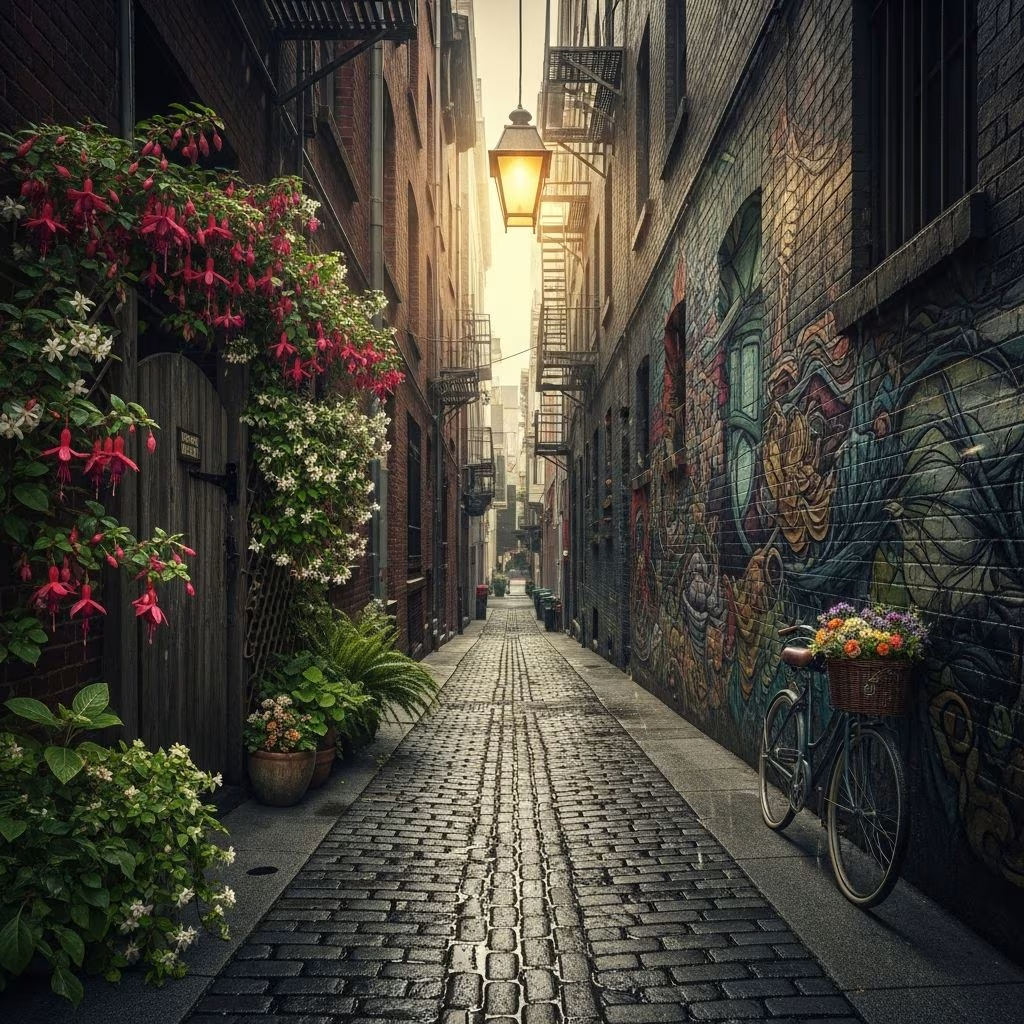
Explore San Francisco's lesser-known alleyways that showcase vibrant street art, historical significance, and authentic local culture away from tourist crowds.
 Travel Essentials
San Francisco’s reputation as a world-class destination rests largely on its iconic landmarks—the Golden Gate Bridge, Cable Cars, and Victorian architecture. Yet beneath this celebrated surface lies a parallel city of intimate passages, hidden courtyards, and tucked-away treasures that reveal the true character of this dynamic metropolis. The city’s network of alleyways represents far more than mere pedestrian shortcuts; these narrow corridors function as living galleries, historical archives, and gathering spaces where the authentic spirit of San Francisco continues to flourish away from the conventional tourist trail.
What makes San Francisco’s alleyways particularly remarkable is their dual nature. By day, they serve as efficient circulation pathways, subdividing city blocks and providing essential access for goods, services, and foot traffic. Yet when night falls or when visitors venture beyond the well-trodden sidewalks, these same passages transform into venues for artistic expression, cultural storytelling, and genuine human connection. Whether you’re a first-time visitor seeking authentic experiences or a seasoned traveler hungry for discovery, San Francisco’s back streets offer unparalleled opportunities to experience the city on a more intimate and meaningful level.
Understanding the transformation of San Francisco’s alleys requires examining their historical origins. During the city’s formative decades, alleys primarily served utilitarian purposes—providing rear access to buildings, facilitating goods movement, and offering discreet service corridors where the mechanics of commerce could operate away from public view. This practical design reflected social conventions of earlier eras, where businesses maintained formal street-facing facades while relegating functional operations to hidden spaces.
However, San Francisco’s unique geography and cultural trajectory fundamentally altered this trajectory. The city’s rich history of counterculture movements, artistic innovation, and marginalized communities gradually transformed alleyways into sanctuaries for underground expression. Throughout the 19th and 20th centuries, these concealed passages hosted everything from speakeasies during Prohibition to pivotal gathering spaces for the gay leather scene, punk rock communities, and electronic music pioneers. This underground heritage established alleyways as inherently creative territories where unconventional voices could flourish beyond mainstream surveillance and control.
Today, San Francisco’s alleys stand as testament to this evolutionary arc, bearing witness to the city’s progressive values and artistic legacy while maintaining their original practical functions. They represent physical embodiments of San Francisco’s commitment to pluralism, creative expression, and cultural diversity.
San Francisco’s most visually striking alleyways function as open-air galleries, with walls transformed into vibrant storytelling mediums. The city has cultivated a distinctive street art tradition that diverges significantly from graffiti culture, instead employing murals as vehicles for social commentary, historical documentation, and community dialogue.
The Mission District houses the city’s most concentrated collection of murals, with two alleyways serving as primary focal points for this artistic movement. Balmy Alley emerged as a pioneering site when murals first appeared during the mid-1980s, initiated as visual protests against human rights violations and political corruption occurring in Central America. These early works established a precedent for using public walls as platforms for marginalized voices, transforming a previously overlooked passage into a powerful statement about social justice.
The murals adorning Balmy Alley represent diverse artistic approaches to similar themes. Individual works demonstrate varying technical mastery and conceptual depth, with some pieces achieving iconic status within the broader San Francisco art community. One particularly notable mural, “La Llorona’s Sacred Waters,” combines aesthetic beauty with profound emotional weight, addressing environmental degradation and the lived experiences of indigenous women. This integration of personal narrative with political consciousness characterizes the most compelling works within the alley.
Clarion Alley, located between 17th and 18th streets, represents the logical evolution of Balmy Alley’s model. Established through the Clarion Alley Mural Project (CAMP) in 1992, this corridor has become the city’s most dynamic artistic incubator. The alley hosts more than 700 murals created since its founding, reflecting continuously evolving artistic responses to community concerns regarding social, economic, and environmental justice. Unlike institutional galleries with fixed collections, Clarion Alley functions as a living, breathing archive where new works regularly replace older installations, ensuring the space remains responsive to contemporary issues and artistic innovations.
Beyond their aesthetic contributions, San Francisco’s alleyways serve crucial functions as social infrastructure. The intimate scale and enclosure of these passages create what urban planners recognize as “urban rooms”—spaces that naturally encourage gathering, conversation, and community formation. When thoughtfully activated through cultural programming, dining establishments, or artistic events, alleyways generate a distinctive atmospheric quality absent from broader thoroughfares.
Claude and Belden lanes exemplify this potential, having been successfully transformed into festive dining destinations where restaurant seating extends wall-to-wall beneath decorative lighting, creating improvisational outdoor venues that capture the essence of Mediterranean alfresco culture. These activated alleyways demonstrate how inherited urban infrastructure can be repurposed to enhance quality of life without requiring massive capital investments or architectural interventions.
San Francisco’s famously challenging topography has necessitated the construction of numerous stairway passages throughout residential neighborhoods. Filbert Street Steps represents one of the most extraordinary examples, featuring over 400 stairs ascending San Francisco’s steep hills while offering accumulated vistas of the bay and surrounding cityscape. Rather than treating these stairways as purely functional elements, the city has enhanced the experience through strategic landscaping and horticultural improvements.
The Grace Merchant Gardens, positioned along the Filbert Street passage, provides botanical respite during the strenuous climb, while the presence of wild parrots—a unique San Francisco phenomenon—adds unexpected wildlife encounters to the physical challenge. These layered experiences transform what might otherwise be an exhausting climb into a multisensory journey combining exercise, nature immersion, and aesthetic appreciation.
The summit of Filbert Street provides additional attractions, positioning hikers within proximity of Coit Tower, an iconic 1930s-era landmark featuring WPA murals documenting California’s social and economic history. Visitors can either ascend the tower’s elevator or navigate additional stairs to reach the observation deck, while the murals within the tower’s base provide cultural context regardless of visitors’ physical capabilities.
While Mission District alleys dominate conversations about San Francisco’s artistic character, residential neighborhoods contain their own distinctive passages offering respite from urban intensity. Macondray Lane, situated within the affluent Russian Hill neighborhood, exemplifies how even densely populated urban environments can contain pockets of tranquility. This residential alleyway provides pleasant vistas of the city and, on clear days, panoramic views of Alcatraz Island, offering escape routes for residents and visitors seeking momentary refuge from street-level activity.
Kerouac Alley, named after the Beat Generation author and his literary peers who frequented the adjacent Vesuvio Cafe, functions as a quiet sanctuary for travelers and passersby desiring peaceful contemplation. This passage commemorates San Francisco’s significant role in American literary history while providing contemporary spaces for similar reflection and creative thought.
From an urban planning perspective, alleyways serve critical infrastructure functions that support broader city operations. These narrow passages function as what urban theorists term “capillaries” within the city’s circulation system—the smallest conduits through which movement proceeds at deliberate pace while exchange and interaction intensify. By subdividing city blocks into shorter segments, alleys provide route alternatives and frequent pathway options, enhancing pedestrian choice and reducing dependence on primary thoroughfares.
The design characteristics that define these passages—their enclosure, intimate scale, and relative separation from primary streets—create distinctive microclimates and social dynamics. Where wide avenues dominate urban landscapes, alleyways provide spatial exceptions that relieve monotony and invite exploration. This differentiation proves psychologically significant for urban dwellers, offering respite from standardized environments and opportunities for discovery.
San Francisco’s alleyways face ongoing pressures from gentrification, increased foot traffic, and maintenance concerns. Balmy and Clarion alleys have become destinations for both tourists and community members, creating tension between accessibility and preservation of authentic character. The Clarion Alley Mural Project has responded by establishing community governance structures that prioritize artist participation and local stakeholder input in determining which works remain or are replaced.
Urban planners increasingly recognize alleyways as valuable assets requiring intentional stewardship. Projects like Mint Plaza—which transformed a seedy passage into a viable public gathering space—demonstrate alleyways’ potential for community benefit when properly reimagined. These interventions balance preservation of historical character with contemporary functional needs, creating spaces that serve multiple constituencies.
| Alleyway Name | Primary Characteristics | Best For | Physical Demands |
|---|---|---|---|
| Balmy Alley | Historic murals, social justice themes | Art appreciation, cultural learning | Minimal |
| Clarion Alley | Contemporary murals, community-driven | Modern street art, community engagement | Minimal |
| Filbert Street Steps | Bay views, botanical gardens, wildlife | Scenic experiences, exercise | Moderate to High |
| Macondray Lane | Quiet residential passage, Alcatraz views | Peaceful retreats, photography | Minimal |
| Kerouac Alley | Literary history, Beat Generation legacy | Historical exploration, quiet reflection | Minimal |
San Francisco’s alleyways possess distinctive character due to the city’s historical embrace of counterculture movements, strong artistic traditions, and topographical peculiarities. The concentration of socially conscious muralism, literary heritage, and functional passages like stairways creates a comprehensive network of experiential opportunities unavailable in most comparable urban environments.
Most alleyways remain safe during daylight hours, particularly those featuring prominent murals and regular foot traffic. However, visitors should exercise standard urban caution and avoid isolated passages late at night. Traveling with companions enhances both safety and enjoyment through shared discovery.
Street art exists in public space, but commercial use requires consideration of artist rights and potential model release requirements if individuals appear in images. Always verify local regulations and seek appropriate permissions before publishing commercially.
Mural rotation varies based on community consensus and artistic submissions through the Clarion Alley Mural Project. While some works remain semi-permanent, the space maintains its characterization as continually evolving rather than static.
Balmy Alley, Clarion Alley, Macondray Lane, and Kerouac Alley all provide relatively level surfaces suitable for visitors with mobility challenges. Filbert Street Steps presents substantial elevation changes and stair navigation, requiring significant physical capability.
