


 Food & Culture
Food & Culture
San Francisco’s Historic Gay Bars Face Closure Amid Cultural Loss
San Francisco's legendary gay bars, including The Stud and The Gangway, have closed after decades of serving the LGBTQ+ community through economic hardship and cultural shifts.
 Food & Culture
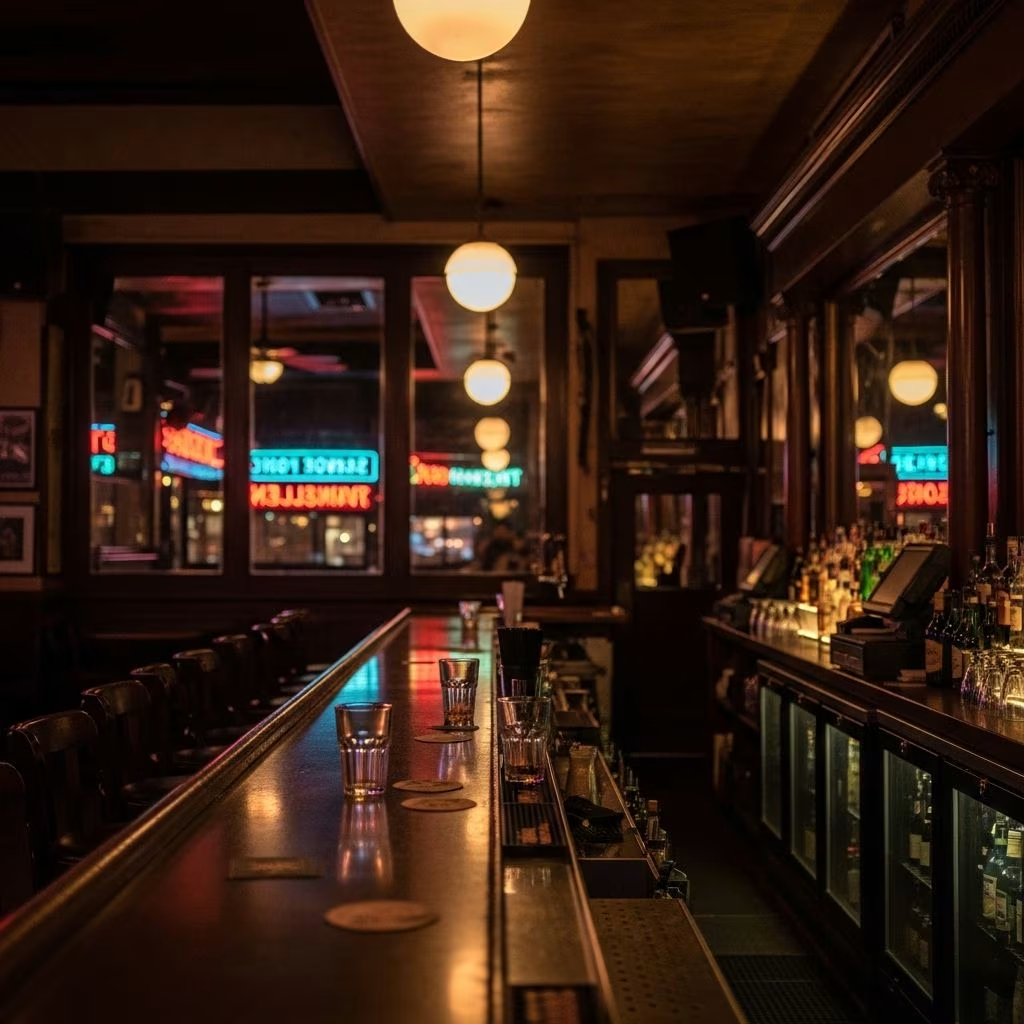
San Francisco has long been recognized as a beacon for LGBTQ+ communities across the United States, with its vibrant nightlife and cultural institutions serving as gathering places for generations. Yet in recent years, the city’s most storied gay bars have faced an uncertain future, with several beloved establishments closing their doors permanently. The closure of these venues represents far more than the end of business operations; it marks the loss of spaces that fostered community, provided refuge, and anchored the social fabric of San Francisco’s queer culture.
The Historical Significance of San Francisco’s Gay Bar Scene
San Francisco’s gay bar culture emerged during a transformative period in American LGBTQ+ history. These establishments served purposes beyond entertainment, functioning as safe havens where individuals could express themselves freely during eras when such public expression faced legal and social persecution. The bars became epicenters of activism, artistic expression, and community organizing, playing instrumental roles in pivotal moments such as the Stonewall-era movements and subsequent Pride celebrations.
The longevity of these venues speaks to their cultural resilience. Many survived multiple recessions, faced discriminatory zoning laws, and persisted through the devastating AIDS crisis of the 1980s and 1990s when the community desperately needed spaces for gathering, mourning, and mutual support. These bars transformed into informal community centers, hosting memorial events, fundraisers, and political organizing meetings that strengthened the social bonds of San Francisco’s LGBTQ+ population.
The Stud: Five Decades of Community Building
The Stud stands as a particularly significant example of San Francisco’s gay bar legacy. Opening its doors in 1966, The Stud established itself as the country’s first cooperatively owned LGBTQ+ venue, a distinction that reflected its commitment to community ownership and collective decision-making. For over five decades, the bar maintained its position as a cornerstone of San Francisco’s queer nightlife, surviving dramatic shifts in urban geography, economics, and social attitudes.
The venue’s relocation to the corner of 9th and Harrison Street in the South of Market neighborhood in 1987 anchored it in what became one of San Francisco’s most vibrant queer districts. For 33 years at this location, The Stud hosted countless events, from drag performances to dance nights that drew crowds from across the Bay Area and beyond. The bar’s cooperative structure meant that decisions were made collectively, allowing the venue to remain responsive to community needs and values rather than purely profit-driven motives.
Navigating Economic and Health Crises
Throughout its existence, The Stud demonstrated remarkable adaptability. The establishment weathered multiple economic recessions, navigating periods when consumer spending declined and entertainment venues faced significant financial pressure. More profoundly, The Stud became a sanctuary during the AIDS epidemic when the disease devastated San Francisco’s LGBTQ+ community. While other businesses distanced themselves from queer spaces, The Stud remained committed to serving its community, hosting memorials, benefit events, and providing a gathering place for those processing collective grief.
The bar’s ability to survive these crises established it as more than a commercial enterprise. Co-owners and staff recognized their responsibility to maintain a space for community resilience and cultural continuity. This ethos sustained The Stud through decades of social and economic upheaval, earning it reverence among San Francisco’s LGBTQ+ population.
The Impact of the Pandemic Era
The global pandemic of 2020 and its extended aftermath created unprecedented challenges for venues dependent on indoor gatherings and social interaction. Unlike previous crises that affected economic conditions but allowed businesses to operate, pandemic restrictions imposed direct operational constraints. With capacity limitations, social distancing requirements, and periods of complete closures, bars that depended on crowded dance floors and intimate gatherings found themselves unable to function according to their fundamental business model.
The Stud faced mounting financial pressures as months passed without revenue while expenses accumulated. Co-owners described the situation as untenable, noting that continuing operations under these conditions meant accruing unsustainable debt. The decision to close represented not a failure of management or community support, but rather the reality that no business model could survive indefinitely without operational capacity.
The Broader Threat to LGBTQ+ Venues
The Stud’s closure was not an isolated incident. San Francisco and other cities experienced closures of multiple LGBTQ+ establishments during this period, suggesting a systemic threat to these cultural institutions. Industry observers and Pride organization leaders acknowledged that The Stud likely would not be the final gay bar to shutter, with economic conditions and pandemic aftermath creating a precarious landscape for venue operators.
This wave of closures raised concerns about the long-term sustainability of LGBTQ+ nightlife infrastructure. Young people entering the community would find fewer physical spaces for gathering, organizing, and cultural expression. The loss accumulated across multiple cities, eroding a network of institutions that had taken decades to establish.
The Gangway: Another Historical Loss
Concurrent with The Stud’s closure, San Francisco experienced the abrupt shutdown of another historic venue, The Gangway, which had operated for 107 years as a queer bar. The Gangway’s closure came suddenly, with community members discovering through social media that the establishment had ceased operations without formal announcement. The lack of planned transition or closure ceremony underscored the emergency nature of many venue closures during this period.
The Gangway’s closure reflected broader patterns in San Francisco’s real estate market, where properties holding historic cultural significance faced pressures from developers and changing neighborhood demographics. Speculation about the property’s future use indicated uncertainty, as previous plans to convert the space into commercial enterprises had stalled. The loss of The Gangway meant that San Francisco’s LGBTQ+ community lost another physical anchor, another place where history had accumulated in the form of relationships, memories, and cultural traditions.
Community Response and Attempted Preservation
The closure announcements sparked significant community response. For The Stud, organizers planned a virtual memorial event to allow people whose lives were shaped by the venue to gather and share stories. This online mourning ceremony acknowledged that while the physical space closed, the relationships and memories formed there persisted. The event represented an effort to ritualize loss and maintain community continuity despite geographic displacement.
Additionally, The Stud initiated a fundraising campaign to support reopening efforts in a new location. Rather than accepting permanent closure, the cooperative structure enabled community members to continue organizing toward restoration. The Save the Stud Stabilization Fund represented collective commitment to eventually reconstituting the physical space and community gathering place, even if in a different geographic location.
Systemic Factors Beyond the Pandemic
While pandemic restrictions provided the immediate trigger for closures, deeper structural issues had been destabilizing LGBTQ+ venues for years. San Francisco’s escalating real estate costs and speculative development pressures affected all small businesses but particularly impacted entertainment venues with narrow profit margins. Property owners, facing opportunities to sell or redevelop parcels, sometimes chose to close long-standing tenancies in favor of more lucrative uses.
Changing demographics and cultural patterns also influenced venue viability. Younger LGBTQ+ people increasingly socialized through digital platforms and informal gatherings rather than traditional bar scenes. While this reflected positive social progress—less need for bars as refuge from hostile environments—it also meant reduced foot traffic for established venues that had built their models around reliable customer bases.
Additionally, San Francisco’s transformation into a technology hub attracted transient populations with different cultural priorities than longtime residents. The community that had built and sustained gay bars over decades dispersed as housing costs made long-term residence unaffordable for many. This demographic shift eroded the steady customer base these venues required for survival.
The Broader Implications for LGBTQ+ Cultural Infrastructure
The loss of San Francisco’s historic gay bars raises important questions about how communities preserve cultural heritage and maintain physical spaces for gathering and organizing. These venues provided more than entertainment; they offered crucial infrastructure for social movements, artistic development, and community resilience.
- Cultural continuity: Younger LGBTQ+ people lose opportunities to learn directly from elders and experience spaces shaped by community history
- Artistic venues: Gay bars historically hosted emerging performers, DJs, and artists who found limited opportunities elsewhere
- Organizing infrastructure: These spaces facilitated grassroots activism, political organizing, and mutual aid networks
- Economic ecosystems: The bars supported surrounding businesses and neighborhoods through steady customer traffic and community events
Digital Alternatives and Their Limitations
In response to physical closures, some venues attempted to maintain community connection through online platforms. The Stud’s commitment to an online presence and virtual events represented adaptation to pandemic constraints. However, digital alternatives, while valuable for maintaining some connection, cannot fully replicate the embodied experience of physical gathering spaces.
Online events lack the sensory richness of dancing to live music, the spontaneous conversations that occur in physical proximity, and the subtle social processes through which community bonds strengthen and cultural knowledge transfers. Digital spaces serve important functions but represent a different category of experience than in-person venues.
Potential Pathways Forward
Despite closures, possibilities for cultural preservation and restoration exist. Government and civic leaders acknowledged responsibility for supporting LGBTQ+ venue owners and pledged assistance in identifying new locations for reopened establishments. This political support, while insufficient to prevent initial closures, suggested potential pathways for restoration as conditions improved.
Community fundraising efforts demonstrated sustained investment in maintaining these cultural institutions. Rather than accepting permanent loss, LGBTQ+ communities and allies organized financial support for reopening initiatives, treating preservation as a collective responsibility rather than solely a business matter.
Long-term sustainability might require new models that combine traditional bar operations with alternative revenue streams, such as event hosting, community programming, and cultural preservation initiatives. Venues could emphasize their historical and cultural significance to attract grant funding and philanthropic support, positioning themselves as cultural institutions rather than purely commercial enterprises.
Frequently Asked Questions
Why were San Francisco’s gay bars so culturally significant?
These venues served as safe spaces where LGBTQ+ individuals could gather openly during periods when such visibility faced legal and social persecution. They functioned as community centers for organizing, artistic expression, and mutual support, particularly during crises like the AIDS epidemic.
What was unique about The Stud’s ownership structure?
The Stud operated as the country’s first cooperatively owned LGBTQ+ venue, meaning decisions were made collectively by members rather than through traditional hierarchical business structures. This model prioritized community needs alongside financial viability.
Could pandemic relief have prevented these closures?
Government support programs provided some assistance, but they often proved insufficient for venues with seasonal revenue patterns and narrow margins. Extended closures meant accumulated debt that relief efforts did not fully offset.
Are there efforts to restore closed venues?
Yes. The Stud initiated fundraising and restoration efforts, with community leaders and government officials pledging support for identifying new locations. However, restoring physical spaces remains challenging given San Francisco’s high real estate costs.
What does the loss of these venues mean for younger LGBTQ+ people?
Younger community members lose access to historically significant gathering spaces and reduced opportunities to learn community history directly from elders. This represents a break in cultural transmission and experiential knowledge about LGBTQ+ resilience and organizing.
Conclusion: Preserving Community Legacy
San Francisco’s historic gay bars represent more than commercial establishments; they embody decades of community resilience, cultural creativity, and collective identity. While pandemic-era closures delivered devastating blows to these institutions, the ongoing efforts to preserve and restore them reflect enduring community commitment. The challenge ahead involves finding sustainable models that honor these venues’ historical significance while adapting to changed economic and social conditions. Whether through physical restoration, digital preservation, or hybrid approaches, maintaining cultural memory and community gathering spaces remains essential for LGBTQ+ communities navigating an uncertain future.
References
- The Stud, SF’s oldest Gay Bar, to Permanently Close Location After Decades in SoMa — The Stud SF Official. 2020. https://www.studsf.com/closed
- San Francisco’s oldest gay bar closes its doors for good — KTVU News. 2020. https://www.ktvu.com/news/san-franciscos-oldest-gay-bar-closes-its-doors-for-good
- The STUD, San Francisco’s Oldest Gay Bar Closes — YouTube. 2020. https://www.youtube.com/watch?v=IE4FzXvCL28
- SF’s Oldest Gay Bar, The Gangway, Has Abruptly Closed — Broke-Ass Stuart. 2024. https://brokeassstuart.com/p/sfs-oldest-gay-bar-gangway-abruptly-closed
On This Page
The Historical Significance of San Francisco's Gay Bar Scene The Stud: Five Decades of Community Building The Impact of the Pandemic Era The Gangway: Another Historical Loss Community Response and Attempted Preservation Systemic Factors Beyond the Pandemic The Broader Implications for LGBTQ+ Cultural Infrastructure Digital Alternatives and Their Limitations Potential Pathways Forward Frequently Asked Questions Conclusion: Preserving Community Legacy← Previous
Seoul’s Hanok Hotel Revival: Luxury Stays in Bukchon
Next →
Shanghai Metro Surpasses 900 km with 27 New Stations
Related Reading
More in Food & Culture
Food & Culture Food & Culture
 Food & Culture
Best Places to Eat in Rome: Neighborhood Dining Guide
 Food & Culture
 Food & Culture