

 Travel Essentials
 Travel Essentials

Complete travel guide to San Marino covering iconic towers, UNESCO heritage sites, outdoor activities, and practical visitor information for exploring this unique micronation.
 Travel Essentials
Nestled entirely within Italy’s borders, the Republic of San Marino represents one of the world’s most extraordinary travel destinations. Claiming status as Europe’s oldest surviving republic, this micronation covers just over 20 square miles of rolling hillside terrain. What makes San Marino truly exceptional is not merely its size, but rather its preservation of centuries-old traditions, architectural heritage, and independence that has endured through centuries of European political upheaval.
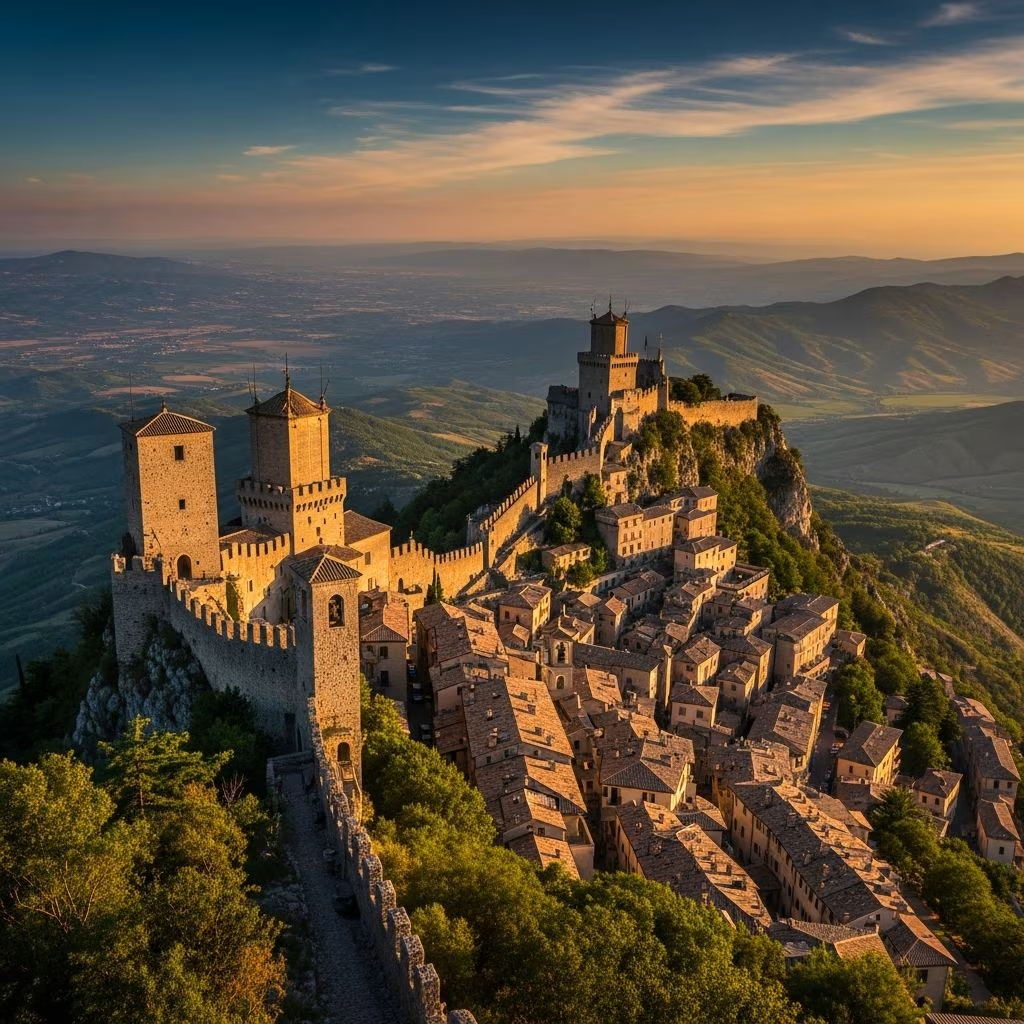
The country’s entire historic center has earned recognition as a UNESCO World Heritage Site, a distinction reflecting the significance of its medieval urban planning and architectural ensemble. Perched dramatically atop Mount Titano at an elevation of 739 feet, the capital city commands sweeping vistas across the Adriatic landscape and the surrounding Italian countryside. This elevated positioning has historically served as both a defensive advantage and a defining characteristic of the nation’s unique geography and settlement patterns.
Since San Marino is completely surrounded by Italy with no direct international border crossings or airports within its territory, travelers must pass through Italian territory to reach this independent nation. The closest major transport hub is Rimini, an Italian coastal city approximately 20 kilometers away. Several transportation options exist for making this journey:
It is important to note that a railway connection once existed between San Marino and Rimini but was destroyed during World War II and never reconstructed. Therefore, contemporary visitors have no rail option for reaching the country. All travelers must obtain valid Italian entry documentation and should confirm their passport requirements well in advance of travel.
The defining symbols of San Marino are undoubtedly the three distinctive towers that crown Mount Titano. These medieval fortifications are so culturally significant that they appear prominently on the national flag and coat of arms. Each tower tells a different story and served different defensive and administrative purposes throughout the centuries.
The Guaita Tower represents the oldest of the three fortifications and served as the original stronghold of the settlement. This tower welcomes visitors and provides dramatic perspectives of the surrounding territory. From its battlements and observation points, visitors gain comprehensive views extending across the Adriatic Sea and deep into the Italian interior. The tower’s construction reflects medieval military architecture, with thick stone walls and strategic positioning designed to provide maximum defensive advantage.
Located on the highest peak of Mount Titano, the Cesta Tower houses the fascinating Museum of Ancient Arms. This collection spans centuries of weaponry, from medieval implements through contemporary pieces, effectively documenting San Marino’s military history and cultural evolution. The museum’s exhibits reveal how this tiny nation navigated wars, cultural transformations, and political complexities while maintaining its remarkable independence. The tower’s elevated position provides perhaps the most expansive vistas available from any point in the country.
The smallest of the three towers, Montale stands as a monument to San Marino’s past but remains closed to public access. Historically serving as a prison facility, this structure is not maintained for visitor tours. From vantage points surrounding the tower, visitors can appreciate its architectural profile and understand its role in the country’s defensive network without entering the structure itself.
San Marino City itself functions as an open-air museum, with its narrow cobblestone streets, medieval architecture, and car-free zones creating an immersive historical experience. The compact nature of the city makes exploration on foot not just advisable but essential. The ancient street layout follows patterns established centuries ago, with pathways winding upward and downward across the mountainous terrain.
Liberty Square (Piazza della Libertà) serves as the vibrant heart of San Marino City. This historic plaza features the Statue of Liberty and hosts numerous shops, restaurants, and cafes. The square serves as an excellent starting point for city exploration and provides an ideal location for observing local life and occasionally witnessing ceremonial activities.
Palazzo Pubblico functions as the town hall and represents one of San Marino’s most iconic buildings. When not in active governmental use, visitors can enter this structure without charge to observe the beautiful chamber of the Grand and General Council. The building’s balcony offers exceptional city views and photo opportunities.
San Marino Basilica holds profound spiritual and historical significance. Beneath its altar rest the remains of Saint Marinus, the republic’s legendary founder. The basilica attracts both religious pilgrims and those interested in the country’s foundational mythology and architectural heritage.
Beyond the famous towers, San Marino maintains an impressive array of cultural institutions and artistic spaces. The Museum of Ancient Arms within Cesta Tower provides one focal point, but additional museums and galleries offer diverse perspectives on the nation’s heritage.
Visitors benefit from combined museum passes that provide economical access to multiple cultural institutions. These passes can be obtained through official tourism channels and enable comprehensive cultural immersion without excessive expense.
While San Marino’s reputation rests primarily on its historical and cultural attractions, the country offers meaningful opportunities for outdoor recreation and nature engagement. The Parco Naturale del Monte Titano encompasses natural areas with maintained hiking trails that provide perspectives on both the local ecosystem and broader landscape features.
Hiking trails of varying difficulty levels accommodate different physical capabilities and time constraints. These paths often lead to viewpoints offering panoramic vistas and opportunities for photography. Early morning and evening hours provide optimal lighting conditions and generally feature fewer crowds, creating more contemplative exploration experiences.
Adventure activities including rock climbing, suspended trails, and zip-lining are available through specialized operators for visitors seeking more active engagement with the mountainous terrain. Electric bicycle rentals represent another contemporary option for exploring beyond the city center while accommodating the challenging topography.
Nearby Borgo Maggiore offers additional natural features and historic elements worth investigating. The San Marino Lake located in Faetano provides recreational opportunities and scenic enjoyment for those willing to venture beyond the capital city.
Visitors must acknowledge that San Marino’s mountainous location and medieval street layout involve significant elevation changes. Comfortable walking shoes with strong grip are absolutely essential. The entire city involves constant uphill and downhill transitions, making appropriate footwear not merely recommendable but necessary for safe and enjoyable exploration.
San Marino uses the Euro as its official currency, facilitating easy transactions for travelers from the Eurozone. The country maintains a tax-free shopping designation for visitors, making purchases of luxury goods potentially more economical than in surrounding European locations. This advantage attracts many shopping-focused travelers to the country’s numerous boutiques and specialty retailers.
Early morning hours and evening periods offer multiple advantages for San Marino visitors. These times feature fewer tourist crowds, allowing for more peaceful exploration and superior photography opportunities. The lighting conditions during these periods create particularly attractive visual presentations of the medieval architecture and natural landscape features. Additionally, the temperature tends to be more moderate, making physical exertion more comfortable on the country’s steep streets.
While San Marino maintains distinct political independence, its cultural and economic fabric remains closely woven with the surrounding Italian region. Visitors often combine San Marino exploration with visits to nearby Italian destinations, particularly the coastal city of Rimini. This regional integration provides travelers with flexibility in planning multi-destination itineraries and experiencing diverse aspects of Mediterranean culture and geography.
| Category | Details |
|---|---|
| Official Language | Italian |
| Currency | Euro |
| Distance from Rimini | Approximately 20 kilometers |
| Area | Just over 20 square miles |
| Mount Titano Elevation | 739 feet |
| UNESCO Status | Historic center designated World Heritage Site |
| Transportation to Country | Shuttle bus or rental vehicle only |
No, San Marino is completely surrounded by Italian territory and has no international airports or direct transportation routes independent of Italy. All visitors must pass through Italy to reach San Marino.
Only the Guaita and Cesta towers are open to public visitation. The Montale Tower remains closed to tourists and is inaccessible due to its historical use as a prison and current preservation status.
A thorough exploration of the capital city typically requires a full day. Visitors interested in outdoor activities, multiple museums, and surrounding areas might benefit from two days within the country.
The medieval city center involves significant elevation changes and cobblestone streets that may present challenges for visitors with mobility limitations. Those with concerns should plan accordingly and consult accessibility information provided by official tourism resources.
San Marino claims status as Europe’s oldest republic, maintaining continuity of governance and territorial identity through centuries of European political transformation. Its complete enclosure within Italy while maintaining political independence represents a distinctive geopolitical phenomenon.
