

 Travel Essentials
 Travel Essentials

Experience the San's hunter-gatherer lifestyle, masterful tracking skills, foraging expertise, and healing rituals in the heart of the Kalahari through a transformative two-day adventure.
 Travel Essentials
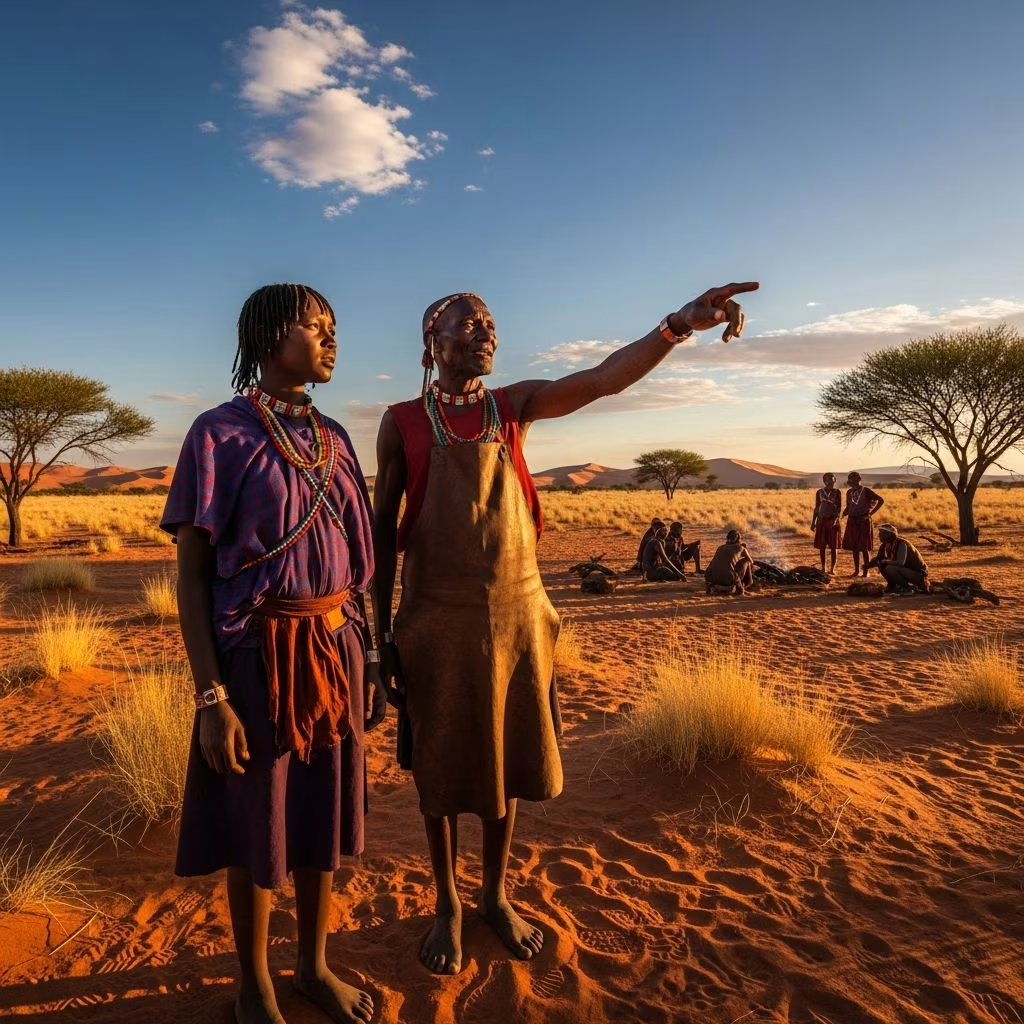
The Kalahari Desert, a sprawling expanse of red sands and sparse vegetation, cradles one of humanity’s oldest cultures: the San people. Often called Bushmen—a term now seen as outdated—these hunter-gatherers have thrived in southern Africa’s harsh environment for over 20,000 years, embodying resilience and deep ecological knowledge. This article recounts a transformative two-day experience living alongside a San community, revealing their tracking mastery, foraging ingenuity, spiritual practices, and enduring way of life.
As the first light pierces the horizon, the Kalahari awakens. Our journey begins at sunrise, the optimal hour for tracking when the sun’s low angle etches shadows into every footprint, turning the sand into a living ledger of the night. Guided by seasoned San trackers, we step into their world, where every disturbance in the dunes tells a story.
San men, renowned for their acute senses, decipher spoor with precision that borders on the supernatural. From a single print, they discern species, gender, age, and even emotional state—whether a lion prowls hungrily or lounges sated, or if a springbok flees injured. This skill, honed over millennia, ensured survival in a landscape where water and game dictate life.
We mimic their crouch, eyes scanning for micro-signs: a bent grass blade, displaced pebble, or faint urine scent. One tracker points to a lioness trail, her pads broad from recent feasting. Hours later, we verify it at a distant waterhole, affirming their uncanny accuracy.
While men pursue game, San women command the plant realm, harvesting over 100 edible species. Their baskets brim with roots, berries, bulbs, and melons—nutritious staples in this arid realm. Nursing infants strapped to backs, they traverse miles, squeezing moisture from tubers or cracking nuts with rhythmic songs.
We join a foraging expedition, unearthing mongongo nuts rich in protein and devil’s claw tubers for hydration. Women demonstrate ostrich eggshell flasks, ingeniously storing sips of life. Their knowledge extends to medicinal plants: one root soothes fevers, another induces trance for healing rites.
| Plant | Use | Preparation |
|---|---|---|
| Mongongo Nut | Food/Energy | Roasted and ground into butter |
| Devil’s Claw | Water Source | Scraped and squeezed |
| Hoodia | Appetite Suppressant | Chewed raw |
| Sceletium | Mood Enhancer | Fermented leaves |
This gendered division—men hunt, women gather—fosters efficiency in small bands of 25 or fewer, migrating seasonally without domesticating animals or farming.
Morning brings the thrill of a hunt simulation. Trackers test wind with tossed dust, approaching prey downwind on bellies, shielding with brush. Though modern ethics curb actual kills during cultural tours, we witness arrow-craft: poison-tipped shafts from beetle larvae and plant sap, paralyzing swiftly. No waste marks San ethos—sinew for bows, hides for cloaks, marrow from cracked bones.
Nightfall ignites the camp with the trance dance, a communal rite for healing and harmony. Women encircle a fire, clapping and chanting in click-filled dialects—languages marked by ! and / sounds. Men shuffle clockwise then counter, building intensity until hyperventilation induces trance, channeling n/om, supernatural energy to cure ailments.
Participants enter altered states, sweating profusely, slapping bodies to release potency. Observers feel the palpable energy; one dancer collapses in ecstasy, rising renewed. This ritual, alongside rain dances, binds the group, addressing illness or discord.
Our group witnesses a session invoking rain in the dry season, drums echoing under stars. The San’s spiritual worldview sees all as interconnected—animals, plants, ancestors.
Descending from Early Stone Age forebears, San roamed from mountains to coasts in migratory clans, sheltering in rock overhangs or quick-built grass huts. Rock art in caves depicts their hunts, dating to 25,000 BC. Never warlike, they crafted no weapons of conquest, living peacefully.
Today, concentrated in Botswana, Namibia, and South Africa’s northwest, many retain practices amid modernization. Semi-permanent mud homes replace beehives near waterholes. Political advocacy secures land rights, blending tradition with economic strategies like guiding tourists.
Yet stereotypes persist: romanticized as ‘primitive’ or childlike, ignoring their sophisticated ecology. True immersion dispels myths, revealing innovators adapting resiliently.
To replicate this, book ethical tours via Kalahari reserves in Botswana or South Africa. Expect rustic camps, guided walks, and cultural evenings. Respect protocols: no photos without consent, support community funds.
The San are southern Africa’s indigenous hunter-gatherers, the world’s oldest culture, with click languages and vast environmental knowledge.
No, ‘San’ is preferred; ‘Bushmen’ is derogatory.
They identify species, age, sex, injury, and track age from prints, excelling at dawn.
Tourism emphasizes demos; actual hunts are rare, regulated.
Many live semi-sedentary, advocating rights while preserving rituals.
Two days with the San transcend tourism, offering lessons in sustainability. Their non-wasteful harmony—every part used, nothing owned—challenges consumer excess. As climate shifts parch the Kalahari, their water-wisdom from roots and eggshells grows vital. Engaging respectfully supports preservation, ensuring stories etched in sand endure.
