

 Travel Essentials
 Travel Essentials

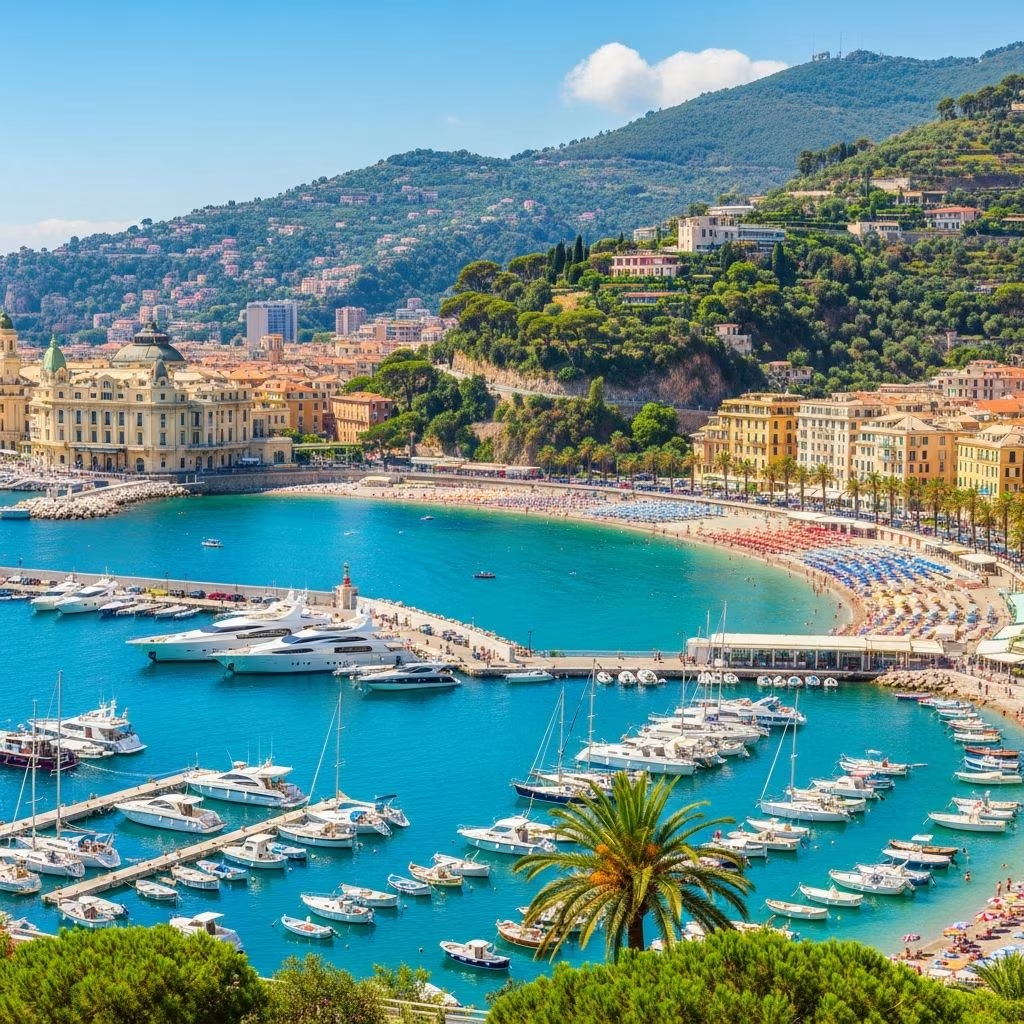
Explore San Remo, Italy's premier coastal destination offering stunning beaches, historic architecture, and vibrant culture at more accessible prices than its French neighbor.
 Travel Essentials
When most travelers think of Mediterranean coastlines, the French Riviera typically dominates their imagination. Yet along Italy’s northwestern shore lies a destination that deserves equal—if not greater—attention: San Remo. Nestled in the Liguria region and positioned just 15 miles east of the Franco-Italian border, this coastal jewel combines Old World elegance with contemporary vitality, offering visitors an experience that rivals its French counterpart while maintaining a distinctly Italian character and more reasonable price points.
San Remo’s reputation has evolved significantly since its 19th-century heyday as a playground for European royalty and aristocracy. Today, it stands as one of the Italian Riviera’s most compelling destinations, drawing visitors who appreciate the fusion of historical significance, natural beauty, and cultural richness that defines the Ligurian coast.
San Remo occupies a strategic position within the broader Italian Riviera landscape, specifically within the Riviera Ponente—the western stretch of the Ligurian coastline. The Italian Riviera itself encompasses the entire coastline of Liguria, stretching from the French border southeastward to the boundary with Tuscany, encompassing the famous Cinque Terre and numerous charming port towns. This positioning makes San Remo an ideal base for exploring both the western and central sections of this renowned coastline.
The town’s exceptional location offers several advantages for contemporary travelers. The coastal proximity creates a mild climate that persists throughout the year, making San Remo accessible and enjoyable regardless of season. This Mediterranean climate, combined with the town’s elevation and microclimate characteristics, produces the distinctive conditions that historically made the region so appealing to northern European visitors seeking winter refuge.
San Remo’s contemporary identity is deeply rooted in its illustrious past. During the late 19th and early 20th centuries, the town emerged as a fashionable destination for Europe’s elite. Notable residents and visitors included Russian nobility, with Tsarina Maria Aleksandrovna among those who graced the town with their presence. Princess Sissi of Austria and Alfred Nobel, the inventor of the Nobel Prize, also established residences here, with Nobel constructing a distinctive villa that reflected his eccentric architectural tastes.
This aristocratic heritage shaped San Remo’s architectural and aesthetic development. The result is a townscape characterized by Belle Époque and Art Nouveau structures that line the elegant streets and waterfront areas. The whimsical Russian Orthodox church with its iconic onion dome stands as a physical reminder of the cosmopolitan character this destination once possessed and maintains today.
San Remo’s most distinctive characteristic is its identity as Italy’s flower capital, earning its nickname “City of Flowers” through both historical flower cultivation and contemporary floral displays. This reputation reflects a centuries-old agricultural tradition centered on the cultivation and commerce of flowers, a heritage visible throughout the region in the abundant botanical gardens and landscaped public spaces.
The town’s horticultural emphasis extends throughout the surrounding region, which locals refer to as the costa dei fiori—the coast of flowers—an apt description for an area where flower cultivation has historically formed the economic and aesthetic foundation. Today, visitors encounter this floral legacy through numerous channels:
This floral richness creates a visual and aromatic landscape that distinguishes San Remo from other coastal Mediterranean destinations.
While San Remo has earned recognition for its flowers and historical significance, its contemporary cultural identity is inseparable from music. The Sanremo Music Festival represents Italy’s most prestigious annual song competition, a tradition dating back to 1951 when Nilla Pizzi won the inaugural festival with “Grazie dei fior.” The festival has become so integral to Italian popular culture that it influences national trends in music and entertainment annually, typically occurring in early February.
The festival’s prominence reflects San Remo’s transformation into a center of Italian musical expression and innovation. Rather than diminishing the town’s other attractions, the festival enhances its cultural profile, drawing international media attention and visitors who wish to experience this pivotal moment in Italy’s entertainment calendar.
However, prospective visitors should note that February visits, particularly early in the month during the festival, significantly impact accommodation availability and pricing. Those seeking to experience San Remo’s quieter character may prefer visiting during other seasons.
Beyond its cultural reputation, San Remo offers diverse recreational opportunities suitable for various interests and travel styles. The Casino di Sanremo operates as one of Italy’s most prestigious gaming establishments, featuring multiple floors of gaming facilities and regularly scheduled poker tournaments throughout the year. This historic institution adds to the town’s air of refined entertainment and sophistication.
The beaches represent another significant draw, particularly for families and those seeking outdoor recreation. San Remo’s coastline features both organized bathing establishments with facilities and completely free, wide sandy beaches. The shallow sandy shores and clean water have earned recognition from environmental organizations, with the beaches receiving two Sails designation from the Italian Touring Club and Legambiente for environmental quality and sustainability.
The Corso Imperatrice, the town’s elegant seaside promenade, provides visitors with a quintessential Mediterranean experience. Lined with palm trees and offering commanding views of the Ligurian Sea, this walkway epitomizes the refined coastal atmosphere that characterized the region during its golden era.
The character of San Remo extends beyond its refined beachfront into the historic old town district known as La Pigna, literally meaning “pinecone” due to its shape when viewed from above. This centuries-old neighborhood features winding carrugi passageways—narrow medieval alleyways that characterize many Italian coastal towns—creating an atmospheric environment for exploration and discovery.
The pedestrian mall streets throughout the old town provide safe, car-free passage through areas where traditional architecture, local shops, and family-operated restaurants coexist with contemporary establishments catering to visitors. This mixture of historical preservation and modern convenience creates an environment where different eras of the town’s development remain visible and accessible.
San Remo’s accessibility from major European cities and other Italian destinations makes it a practical choice for various travel itineraries. Train service connects San Remo to major cities including Genoa and Nice, offering scenic coastal routes even for travelers with young children. The railway connection to nearby Ventimiglia, just 10 miles away, provides access to other western Italian Riviera destinations and connecting services.
For those preferring independent transportation, driving is an option, though parking can prove challenging during peak seasonal periods. An innovative alternative gaining popularity involves renting bicycles to traverse the 24-kilometer pista ciclabile—a dedicated biking path that follows an old railway line and traces the coastal landscape.
The region’s mild year-round climate means San Remo remains accessible during all seasons. However, seasonal variations affect the visitor experience. Early February coincides with the Sanremo Music Festival, attracting significant crowds and commanding premium prices for accommodations. Summer months bring beach-focused visitors and families, creating busier conditions at coastal facilities.
Spring and autumn typically offer ideal conditions, combining pleasant weather with reduced crowd levels compared to peak summer months. Winter months, despite mild temperatures relative to northern Europe, see fewer international visitors, offering those seeking quieter experiences an opportunity to appreciate San Remo’s character with minimal crowds.
San Remo’s position as a western anchor point for the Italian Riviera makes it an ideal base for exploring complementary destinations. Ventimiglia, positioned 10 miles west and representing the first significant town over the border from France, attracts substantial French visitor traffic, particularly during summer months and weekend market visits. This historic port town features remains of a Roman amphitheater and other archaeological sites in its old town district, adding historical dimensions to coastal exploration.
To the east, the Riviera Ponente stretches toward Genoa, encompassing numerous picturesque fishing villages, protected coves, and historically significant settlements. The broader Italian Riviera network provides connections to Cinque Terre, the maritime museums of Camogli, and other culturally rich destinations through efficient rail connections.
A significant distinction between San Remo and its French Riviera counterparts involves pricing and value. While not inexpensive by global standards, San Remo offers comparable experiences—elegant accommodations, refined dining, cultural attractions, and natural beauty—at costs noticeably lower than those charged at equivalently positioned French Riviera destinations like Nice or Cannes.
This economic advantage extends across accommodation, dining, and entertainment sectors. Visitors frequently report experiencing sophisticated Mediterranean coastal life with meaningful cost savings compared to French alternatives, a consideration particularly relevant for extended visits or family travel.
While San Remo maintains an aura of sophistication and historical refinement, contemporary travel reports emphasize its accessibility and appeal for families with children. The long sandy beaches, palm-lined promenades, manicured green spaces, and comprehensive musical offerings create an environment where children and adults enjoy complementary activities. The absence of aggressive crowds outside festival periods and the pedestrian-friendly design of central areas contribute to a welcoming atmosphere for family visitors.
San Remo’s mild climate makes it accessible year-round. Spring and autumn typically offer ideal conditions with pleasant weather and moderate crowds. Summer months bring beach season but also peak tourism. Early February features the Sanremo Music Festival, which attracts significant crowds. Winter remains pleasant relative to Northern Europe but sees fewer international visitors.
San Remo offers similar Mediterranean coastal experiences—elegant architecture, beautiful beaches, cultural attractions, and fine dining—at more accessible price points. While it maintains a quieter, more Italian character compared to the French Riviera’s cosmopolitan intensity, this distinction appeals to visitors seeking refined experiences without overwhelming crowds or premium pricing.
Key attractions include the floral gardens and Villa Ormond, the Casino di Sanremo, the Sanremo Music Festival (February), the historic La Pigna old town district, the Corso Imperatrice promenade, sandy beaches, and the Russian Orthodox church.
Yes. San Remo is recognized as one of the Italian Riviera’s most kid-friendly destinations. The long sandy beaches, palm trees, manicured gardens, and lack of overwhelming crowds create a welcoming environment for families. The scenic train rides and biking paths also appeal to children.
San Remo benefits from efficient train service connecting to major cities including Genoa and Nice, with scenic coastal routes. Bus services complement rail options. Ventimiglia, 10 miles away, provides connections to wider transportation networks.
San Remo represents a Mediterranean coastal destination where historical significance, cultural vibrancy, and natural beauty converge to create a compelling alternative to more frequently visited French Riviera destinations. The combination of 19th-century elegance, contemporary cultural attractions, horticultural heritage, beautiful beaches, and more accessible pricing positions San Remo as an increasingly attractive option for discerning travelers seeking authentic Mediterranean experiences without excessive crowds or premium costs.
Whether pursuing cultural immersion through the Sanremo Music Festival, aesthetic appreciation of historic gardens and architecture, beach recreation, or simply the experience of sophisticated Italian coastal life, San Remo delivers diverse satisfactions. For those willing to venture slightly beyond the most famous European coastal destinations, this Italian gem rewards exploration with experiences that rival better-known alternatives while maintaining a distinctly authentic character.
