

 Travel Essentials
 Travel Essentials

Explore Santa Fe's 400-year cultural heritage, world-class museums, galleries, authentic cuisine, and outdoor adventures in this comprehensive destination guide.
 Travel Essentials
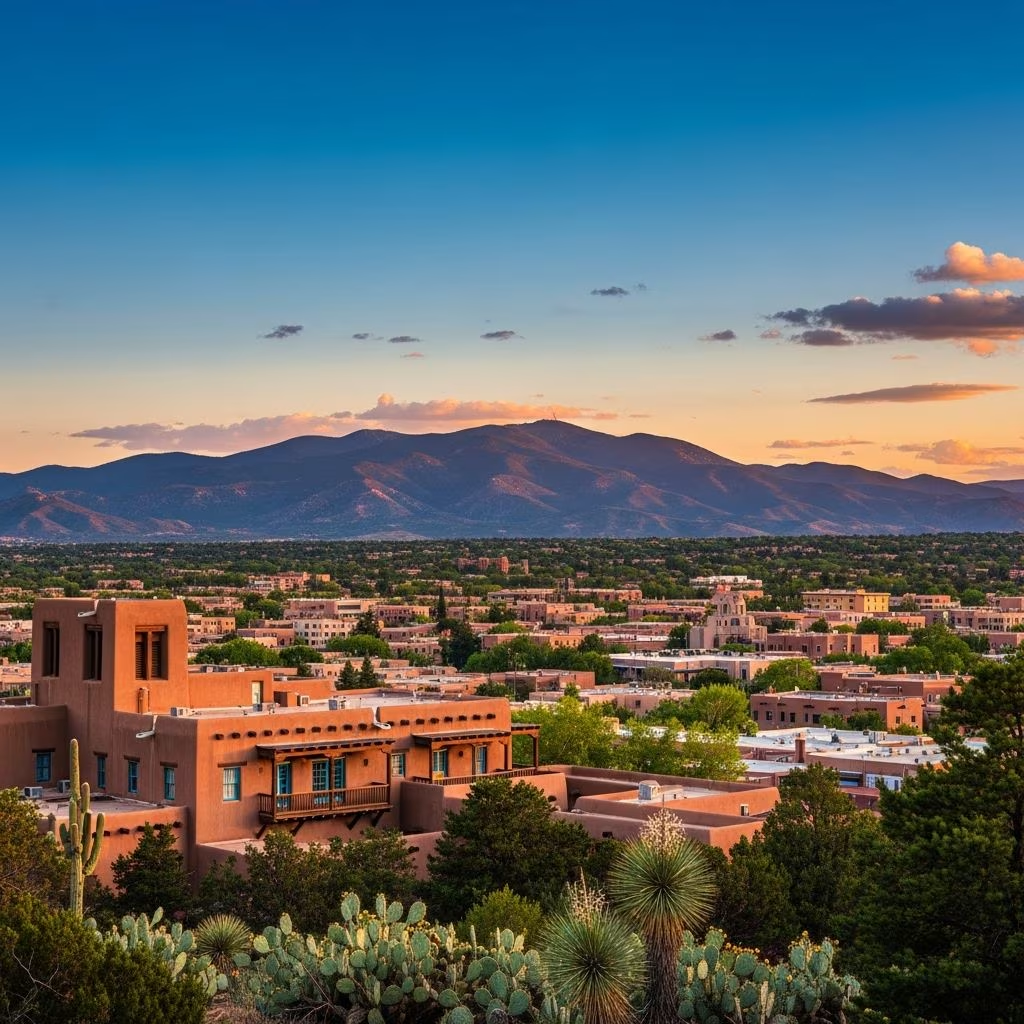
Perched at 7,000 feet above sea level between three mountain ranges, Santa Fe stands as one of the nation’s most distinctive destinations. The capital of New Mexico has cultivated a reputation spanning more than 400 years as a convergence point for indigenous traditions, Spanish colonial heritage, and contemporary artistic expression. This unique blend creates an atmosphere unlike anywhere else in the American Southwest, where adobe architecture painted in earth tones frames cobblestone streets, and the aroma of roasted green chiles drifts from virtually every corner. Whether you’re drawn to world-class galleries, innovative cuisine, outdoor exploration, or simply the contemplative energy of high-altitude mountain living, Santa Fe offers a multifaceted experience that rewards both the casual visitor and the devoted enthusiast.
Most visitors find that three to four days provides an optimal timeframe for experiencing Santa Fe’s principal attractions without feeling rushed. This duration allows adequate time to explore the historic downtown core, visit several museums and galleries, enjoy the local culinary scene, and potentially venture on a day trip to nearby attractions like Bandelier National Monument or the artists’ community of Taos. The city’s compact, walkable downtown means you can navigate much of the central area on foot, though having a vehicle enables exploration of surrounding natural areas and the scenic highways that wind through the Sangre de Cristo Mountains.
The high elevation of Santa Fe affects visitors differently depending on individual acclimation. Arriving a day early to adjust to the altitude, staying hydrated, and pacing physical activities accordingly helps minimize potential discomfort. Spring and fall offer ideal weather conditions, with mild temperatures and lower humidity, though summer brings vibrant festivals and cultural events, and winter transforms the landscape with occasional snow and a serene holiday atmosphere.
The Plaza represents Santa Fe’s geographic, cultural, and emotional center, a four-hundred-year-old gathering space that has witnessed centuries of transformation. This grassy square, surrounded by historic structures and lined with strings of dried red chiles hanging from lampposts, serves as the natural starting point for any downtown exploration. The Portal, which runs along the north side of the Plaza, showcases local artisans who are selected by lottery each day to display their turquoise jewelry, pottery, textiles, and other handcrafted wares.
Radiating outward from the Plaza, you’ll discover galleries, boutiques, restaurants, and museums within a few blocks’ walk. The Palace of the Governors, an adobe structure that served as both the New Mexico capitol and the governor’s residence during the Spanish Colonial era, stands as a tangible connection to the region’s multifaceted past. Inside, you’ll find exhibits exploring the territory’s complex history through indigenous, Spanish, Mexican, and American perspectives. The surrounding buildings maintain the architectural continuity that defines Santa Fe’s distinctive aesthetic, with thick adobe walls, wooden carved details, and windows framed by traditional corbels.
Santa Fe’s churches represent architectural and spiritual significance that extends far beyond their religious functions. The Cathedral Basilica of Saint Francis of Assisi, constructed in the mid-nineteenth century, showcases Romanesque Revival styling that seems transplanted from Spain. Upon entering, visitors encounter New Mexico folk art adorning the walls, reflecting the region’s cultural synthesis. The exterior sculptures and surrounding plazuela provide both spiritual contemplation and photographic opportunity.
Just a short distance away, the Loretto Chapel draws visitors with its famous spiral staircase—a mysterious architectural marvel that remains the subject of ongoing fascination and expert debate. The staircase’s origins, construction method, and the identity of its builder have confounded engineers and historians for generations. The chapel offers audio tours that delve into its enigmatic history, while an on-site gift shop provides locally-made jewelry, books on regional history, and art pieces. Continuing up Old Santa Fe Trail leads to San Miguel Chapel, recognized as the oldest church in the continental United States, adding another layer to the city’s deep historical narrative.
Santa Fe’s artistic reputation rests upon both its abundance and its diversity. The city hosts over 250 art galleries and 19 world-class museums, offering everything from traditional Southwestern paintings to contemporary installations and experimental multimedia work. This concentration of creative venues makes Santa Fe one of America’s premier art destinations, attracting collectors, artists, and enthusiasts from around the globe.
The Georgia O’Keeffe Museum stands among the most celebrated institutions, housing an extensive collection of works by the groundbreaking artist whose New Mexico residence profoundly influenced her artistic evolution. The museum provides context for understanding how the region’s landscape, light, and cultural atmosphere shaped one of America’s most significant artistic voices.
Beyond individual museums, the gallery scene divides into distinct geographic zones, each offering its own character and focus:
The artistic output visible throughout Santa Fe ranges from traditional to experimental. Galleries specialize in turquoise jewelry featuring traditional indigenous designs, native-made artwork and handicrafts, contemporary paintings, and outdoor sculptures. This diversity reflects Santa Fe’s role as a meeting point where ancestral traditions persist alongside cutting-edge creative practice.
Santa Fe’s restaurant scene—exceeding 400 establishments—showcases the region’s distinctive culinary traditions while embracing contemporary techniques and global influences. The city’s food culture revolves around indigenous and Spanish colonial ingredients, particularly the green and red chiles that define New Mexican cooking.
To structure your gastronomic exploration, Santa Fe Tourism has created several self-guided food trails that combine culinary stops with sightseeing opportunities:
Signature Santa Fe dishes include blue corn enchiladas topped with red or green chile sauce, house-made pozole (a hearty hominy stew), and chile rellenos (roasted poblano peppers stuffed with cheese). These dishes appear across the price spectrum, from casual neighborhood establishments to fine dining venues. For hands-on culinary engagement, the Santa Fe School of Cooking offers classes where participants learn to prepare tamales, chile rellenos, and various salsas under professional instruction.
The Santa Fe Farmers Market, held Saturdays in the Railyard district, provides access to locally-grown produce, artisanal goods, honey, and specialty items including locally grown spices and dried beans. The market’s artisanal section features local artisans selling handmade art and jewelry, creating a hybrid shopping and cultural experience.
Santa Fe offers opportunities for active engagement beyond traditional sightseeing. The Tumbleroot Pottery Pub invites visitors to combine craft cocktails with hands-on pottery making, providing both creative expression and relaxation. Those interested in culinary skills can take cooking classes that teach traditional New Mexican techniques and recipes.
For nature enthusiasts, the Santa Fe National Forest Scenic Byway offers stunning drives through mountainous terrain, with October providing particularly spectacular fall foliage displays across the aspen groves. Trailheads and picnic areas dot the route, enabling hiking and outdoor recreation at varying difficulty levels. This accessible gateway to the surrounding wilderness provides welcome contrast to downtown’s concentrated cultural experiences.
Santa Fe’s compact downtown encourages pedestrian exploration, with most primary attractions accessible within blocks of each other. A logical walking route begins at the Plaza, proceeds to the Palace of the Governors, continues to the Cathedral Basilica of Saint Francis of Assisi, and extends along Old Santa Fe Trail toward the Loretto Chapel and San Miguel Chapel. Along the way, you’ll encounter historic buildings, contemporary sculptures, galleries, and cafes that reward wandering and curiosity.
The walk encounters frequent photo opportunities, from pueblo-style architecture and mosaic tile stoops to dramatic displays of chile peppers and architectural details. The journey typically unfolds differently for each visitor, as individual interests determine which galleries warrant extended exploration and which restaurants appeal for lunch or refreshment.
| Category | Details |
|---|---|
| Elevation | 7,000 feet above sea level |
| Best Time to Visit | Spring (April-May) and Fall (September-October) for ideal weather |
| Recommended Duration | 3-4 days for comprehensive experience |
| Cultural Institutions | 19 world-class museums, 250+ galleries |
| Restaurants | 400+ dining establishments ranging from casual to fine dining |
| Primary Currency | US Dollars; many markets and vendors cash-only |
Three to four days allows proper exploration of major attractions, cultural venues, dining experiences, and surrounding areas without rushing. However, shorter visits can focus on highlights like the Plaza, major museums, and Canyon Road galleries.
Yes. The historic downtown is highly walkable, with most primary attractions within several blocks of each other. However, visiting some outlying areas like Canyon Road and the Farmers Market benefits from having a vehicle.
Santa Fe sits at 7,000 feet elevation, which affects some visitors. Arriving early to acclimate, staying hydrated, and pacing physical activity helps minimize any discomfort from the altitude.
Santa Fe is renowned for its 400-year cultural heritage, exceptional art galleries and museums, distinctive Southwestern cuisine featuring green and red chiles, adobe architecture, and the convergence of indigenous, Spanish, and Anglo-American traditions.
Spring and fall provide ideal weather conditions. Summer brings festivals and cultural events but hotter temperatures. Winter offers solitude and occasional snow, creating a peaceful atmosphere during the holiday season.
Santa Fe represents far more than a collection of attractions or a checklist of destinations. The city embodies a distinctive approach to cultural life where art, food, spirituality, and nature interweave into a holistic experience. Whether you’re examining turquoise jewelry from master artisans, savoring chile-infused cuisine prepared from ancestral recipes, walking through galleries showcasing artistic traditions spanning centuries, or hiking through surrounding mountains, Santa Fe invites engagement with place and history in uniquely meaningful ways. The city’s compact geography allows deep exploration within a short timeframe, while its cultural depth ensures that return visits continue to reveal new dimensions and forgotten details. For travelers seeking authentic cultural immersion combined with world-class amenities and natural beauty, Santa Fe delivers an experience that resonates long after departure.
