

 Travel Essentials
 Travel Essentials

Discover Schwingen, Switzerland's traditional wrestling sport rooted in Alpine heritage. Learn about its history, rules, competitions, and cultural significance.
 Travel Essentials
Schwingen, known in French as lutte Suisse and colloquially as Hosenlupf (trouser lift), represents one of Switzerland’s most distinctive athletic traditions. This form of wrestling differs fundamentally from Olympic or modern competitive wrestling, embodying centuries of Alpine heritage and rural customs that have evolved into a nationally recognized sport. The competition emphasizes technique, strength, and tradition rather than commercial spectacle, maintaining an amateur status despite its deep cultural roots and widespread popularity across Switzerland.
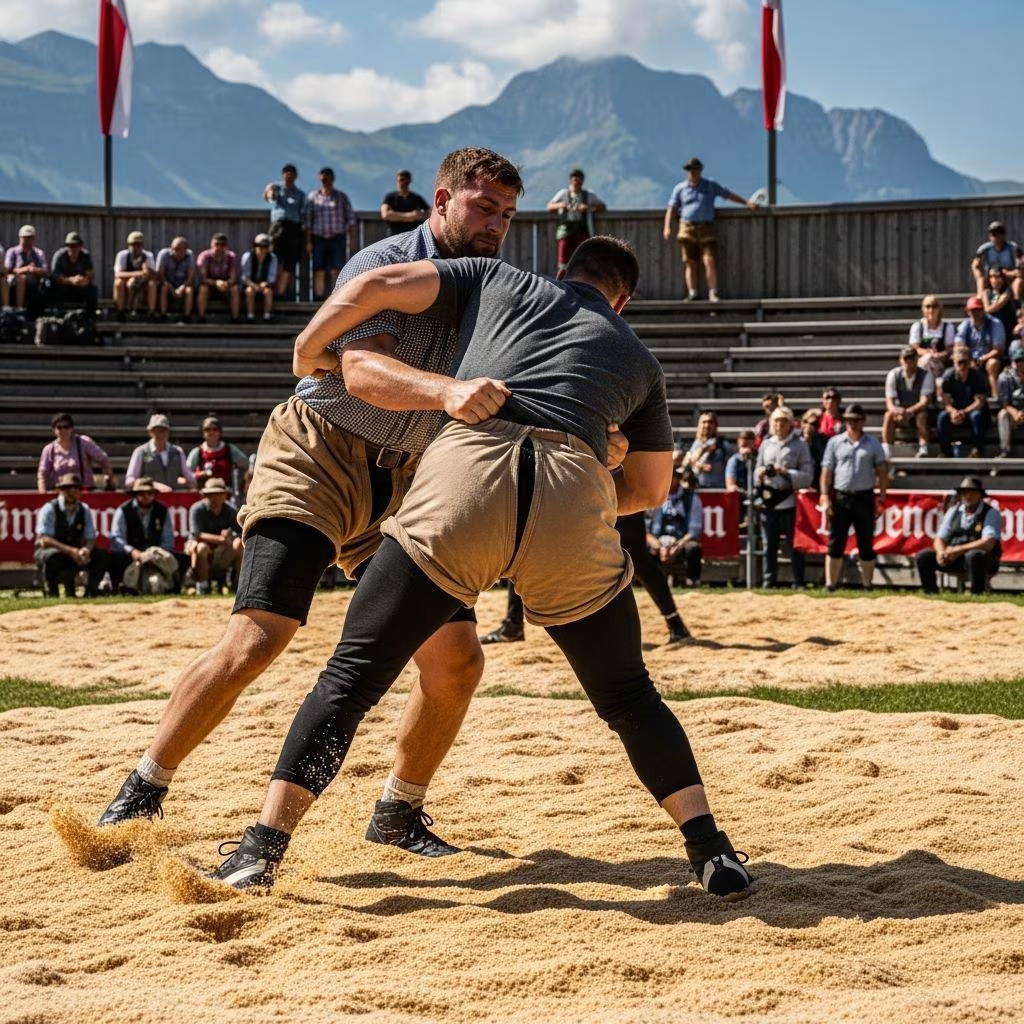
The sport features wrestling matches conducted primarily while standing, with competitors gripping one another through specialized holds and attempting to throw their opponent to the ground. Unlike wrestling styles that focus on pinning opponents, Schwingen contests conclude when either wrestler’s back touches the ground within the designated sawdust circle. This fundamental rule shapes the entire strategic approach competitors must adopt during bouts, rewarding both explosive power and technical precision.
One of the most recognizable aspects of Schwingen is the specialized clothing worn by competitors. Athletes don traditional Schwingerhosen, wrestling breeches crafted from sturdy jute or canvas material, layered over long trousers and a jersey or shirt. These wrestling breeches feature rolled-up legs that serve as handles for gripping opponents, creating a unique tactile element absent from other wrestling disciplines. A strong leather belt cinches the waist, and this belt becomes a critical component of both offensive and defensive strategies during competition.
The standardized nature of this equipment reflects the sport’s emphasis on equality and fair competition. Rather than allowing athletes to develop individualized gear advantages, the uniform requirements ensure that matches depend on skill, strength, and tactical understanding rather than equipment innovation. Wrestlers maintain a connection through one hand holding the opponent’s belt while the other secures the leg area, creating a distinctive grappling pattern that distinguishes Schwingen from Greco-Roman, freestyle, or catch wrestling styles.
The origins of Schwingen cannot be pinpointed to an exact historical moment, though evidence suggests the sport existed in some form centuries ago. Medieval sources provide early documentation, with a 13th-century depiction visible in the Lausanne Cathedral showing one of the characteristic holds used in competition. However, the first substantial written records appear in the 15th and 16th centuries, particularly as urban authorities began documenting the sport in legal contexts and moral conduct codes.
During the late Middle Ages, herdsmen’s festivals in the Central Swiss Alps featured wrestling contests where competitors participated for honor and rustic prizes rather than monetary rewards. Participants wrestled for cloth scraps, livestock, or other natural objects, but the genuine prize remained the prestige associated with victory. This cultural framework established Schwingen as an expression of strength, community connection, and pastoral identity.
A transformative moment arrived in 1805 when the Alpine shepherd’s festival at Unspunnen marked a deliberate revival of Schwingen as a nationalist endeavor. During this period, Switzerland endured French rule, and educated townspeople recognized in Schwingen an authentic expression of Swiss identity and resistance against foreign cultural influence. By organizing this festival explicitly to strengthen national consciousness, urban intellectuals began reframing a rural pastime as a symbol of Swiss authenticity and independence.
This strategic promotion proved remarkably successful. Over the subsequent decades, enthusiastic sports coaches and educated urbanites transported Schwingen from Alpine valleys to city centers, introducing the sport to wider populations and different social classes. The transformation from herdsman’s contest to metropolitan spectacle fundamentally altered Schwingen’s trajectory, establishing it as a component of formalized Swiss national identity rather than merely a regional custom.
The 19th century witnessed systematic efforts to standardize Schwingen through formal associations and governance structures. In 1855, Schwingen and Steinstossen were incorporated into the Eidgenössisches Turnfest (national gymnastics festival) held in Lausanne, representing official recognition of both sports as integral to Swiss culture. This institutional integration demonstrated how effectively the sport had transcended its rural origins to become a symbol of national athletic tradition.
The establishment of the Eidgenössischer Schwingerverband (Swiss Schwingen Association) in 1895 represented the apex of this formalization process. This national federation created standardized rules, integrated regional variations into a coherent competitive framework, provided instructional materials to improve athletes’ technical abilities, and established modern tournament structures. Today, the association oversees the sport with approximately 5,000 active wrestlers, including nearly 2,000 young participants, demonstrating sustained generational engagement. The organizational structure includes five regional associations, 23 cantonal associations, and six district associations that coordinate competitions throughout Switzerland.
The pinnacle of Schwingen competition occurs at the Federal Wrestling and Alpine Games Festival, commonly known as the Schwingfest, held triennially (every three years). These major competitions typically take place in late summer, frequently during August, attracting the nation’s most accomplished wrestlers and thousands of spectators who celebrate Swiss athletic tradition. The tournaments function as more than sporting events; they represent significant cultural gatherings where communities reaffirm their connection to national heritage and regional identity.
Winners of the Schwingfest tournament receive the title “Schwingerkönig” or Schwinger king, accompanied by traditional prizes that reflect the sport’s pastoral heritage. Historically, victors received live bulls as their ultimate prize, though contemporary versions have become increasingly ceremonial. Champions also receive cowbells, rustic items, and accolades that honor their achievement while maintaining the sport’s connection to Alpine farming culture and tradition.
Within Schwingen’s competitive hierarchy exists a distinguished category known as the Bösen, literally meaning “wicked ones,” which designates the elite wrestlers from throughout Switzerland. These exceptional competitors represent the apex of technical skill, physical prowess, and tactical understanding, and they compete against each other at the most prestigious festivals and championships. The designation of Bösen wrestlers creates an aspirational framework within the sport, motivating younger and less experienced competitors to continuously improve their abilities and pursue elite status.
An intriguing historical paradox characterizes Schwingen’s development: while urban authorities in pre-modern periods viewed the sport with suspicion and imposed penalties on those organizing matches, 19th-century townspeople completely reversed this attitude. Urban educated classes romantically reimagined Schwingen as an embodiment of authentic Swiss rural culture and pastoral tradition, transforming the sport into a marketable cultural product for urban consumption.
This shift represented far more than simple nostalgic appreciation. It reflected broader 19th-century European currents emphasizing national identity construction and romantic idealization of rural life as a counterbalance to industrialization. Townspeople appropriated Schwingen precisely because its Alpine origins and herdsman associations made it commercially attractive as a symbol of native authenticity and unbroken tradition. The urban transformation of Schwingen demonstrates how traditional sports can become commodified and repurposed to serve nationalist and commercial objectives, a process that continues influencing how the sport operates and is perceived today.
| Wrestling Style | Geographic Origin | Primary Focus | Equipment |
|---|---|---|---|
| Schwingen | Alpine Switzerland | Throws and standing technique | Jute shorts, leather belt, long trousers |
| Sumo | Japan | Ring dominance and pushing | Loincloth, topknot |
| Greco-Roman | Europe (Olympic) | Upper body control | Singlet, wrestling shoes |
| Freestyle | International (Olympic) | Leg techniques and takedowns | Singlet, wrestling shoes |
Schwingen shares certain philosophical elements with Sumo wrestling, as both emphasize cultural tradition, ritualistic elements, and the symbolic significance of victory beyond purely competitive metrics. However, Schwingen maintains distinct characteristics through its emphasis on standing technique, the specific role of specialized clothing handles, and its deeply rooted connection to Alpine agricultural heritage rather than imperial Japanese tradition.
Despite its national prominence and organized structure, Schwingen deliberately maintains amateur status rather than pursuing professional commercialization. This preservation reflects deliberate choices by the Swiss Schwingen Association and competing athletes themselves, who prioritize cultural authenticity and community participation over financial compensation and entertainment commodification. Amateur status means that competitors pursue wrestling for honor, personal achievement, community recognition, and the intrinsic satisfaction of athletic excellence rather than salary or career advancement.
This commitment to amateurism distinguishes Schwingen from many international sports that have increasingly prioritized professionalization and commercial development. By maintaining this orientation, the sport protects its cultural integrity while ensuring accessibility to competitors from diverse socioeconomic backgrounds who might not pursue wrestling as a primary profession.
Schwingen remains predominantly practiced in rural and German-speaking regions of Switzerland, though the sport maintains representation across the country through the national federation’s organizational structure. The concentration in Alpine areas reflects both the sport’s historical origins in pastoral communities and the continued cultural importance of traditional customs in these regions. However, the 19th-century urbanization process ensured that Schwingen never remained exclusively a rural phenomenon; Swiss cities maintain active wrestling communities and organizational structures that sustain competitive opportunities for urban athletes.
Closely associated with Schwingen exists another distinctive Swiss sport called Steinstossen, which involves throwing the Unspunnen stone, a roughly 83.5-kilogram glacial boulder, for maximum distance. Competitors accomplish this feat through running jumps while attempting to propel the heavy stone as far as possible. In August 2004, athlete Markus Maire achieved the standing record by throwing the stone 4.11 meters, improving upon the previous record by 14 centimeters. This sport shares Schwingen’s Alpine heritage and frequently appears alongside wrestling competitions at national festivals, reinforcing their cultural connection and complementary relationship in Swiss athletic traditions.
For visitors and residents interested in experiencing Schwingen firsthand, attending a Schwingfest or regional competition provides direct exposure to this distinctive athletic and cultural tradition. The organized associations coordinate competitions throughout the year at various competitive levels, from amateur regional matches to the prestigious triennial national championship. These events offer opportunities to observe elite athletes demonstrating technical mastery while participating in cultural celebrations that emphasize community, tradition, and athletic achievement.
The sport’s continued popularity, evidenced by thousands of active wrestlers and consistent attendance at major competitions, demonstrates that Schwingen maintains genuine cultural significance rather than functioning as a museum relic or tourist attraction. Modern Swiss communities continue viewing Schwingen as an integral component of national identity, preserving traditional elements while adapting organizational structures and competitive frameworks to contemporary athletic and social contexts.
