


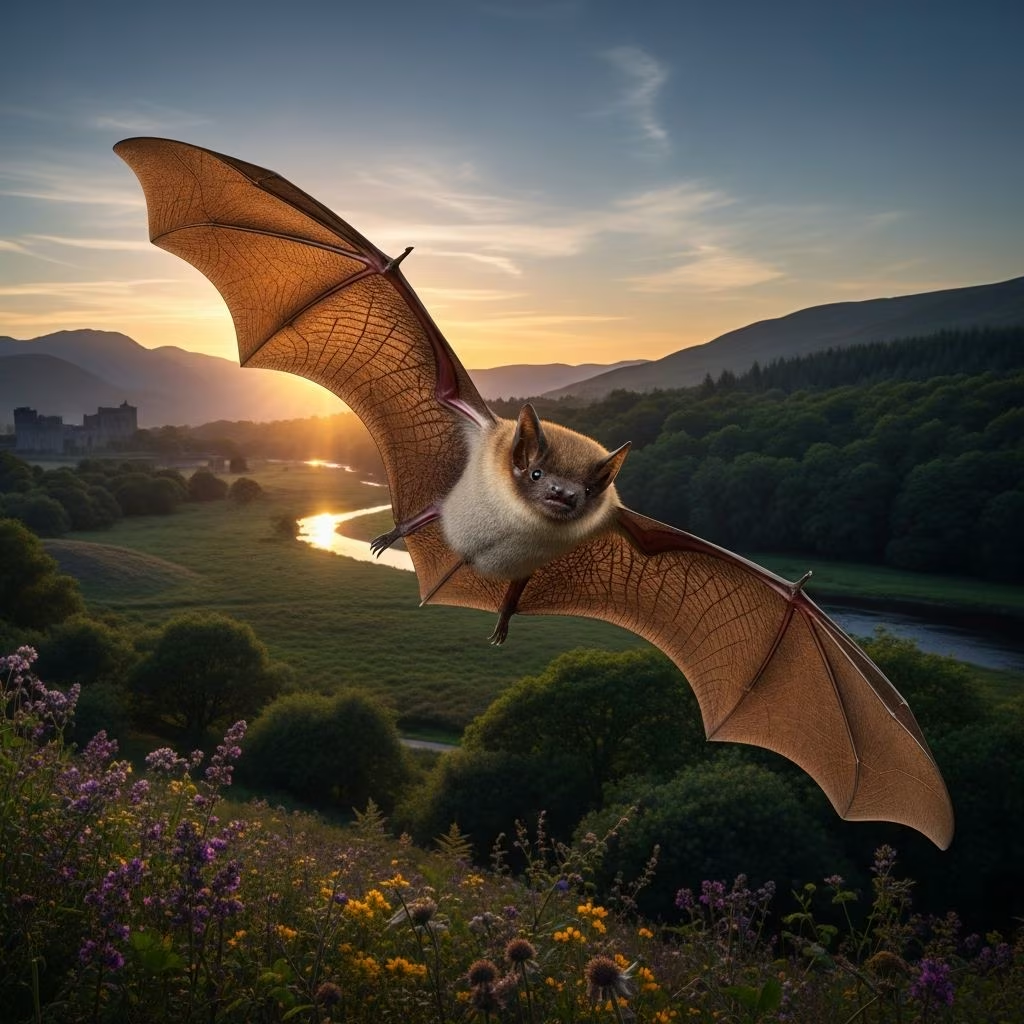
Scotland’s natural landscape has long been characterized by its rugged beauty, ancient woodlands, and diverse wildlife. Yet for decades, one significant group of mammals faced serious population declines across the nation. Today, conservation efforts are transforming this narrative. The recovery of Scotland’s bat populations represents one of the country’s most encouraging environmental achievements, demonstrating that dedicated protection strategies and community engagement can reverse wildlife decline even in challenging climates.
Understanding Scotland’s Bat Diversity
Scotland is home to eight native bat species, each playing distinct ecological roles within the country’s ecosystems. These mammals represent the only group of naturally occurring mammals capable of sustained flight, making them uniquely valuable for pest control and pollination services. The species inhabiting Scottish landscapes range from the common pipistrelle, the smallest bat species in Britain, to larger species such as the brown long-eared bat. Each species possesses specialized adaptations to thrive in Scotland’s temperate climate and variable seasonal conditions.
The ecological significance of these species extends far beyond their numbers. Bats are vital indicators of overall ecosystem health, responding sensitively to environmental changes, habitat quality, and prey availability. Their presence in robust populations suggests a functioning, healthy natural environment capable of supporting complex food webs and diverse biological communities.
Factors Behind Historical Population Decline
Throughout the twentieth century, Scottish bat populations faced mounting pressures from multiple interconnected factors. Understanding these historical challenges provides essential context for recognizing the significance of recent recovery efforts.
Habitat Destruction and Land Use Changes
Agricultural intensification and forestry practices fundamentally altered the landscape structure that bats depend upon for roosting and foraging. Traditional mixed woodlands with aged trees containing cavities and crevices were replaced by monoculture plantations offering limited roosting opportunities. Hedgerow removal, the conversion of wetlands, and the clearing of deadwood from forests eliminated critical feeding and shelter habitats. Urban expansion further fragmented remaining suitable territories, creating isolated populations unable to maintain genetic diversity through natural dispersal.
Chemical and Environmental Contamination
The widespread application of pesticides during the post-war agricultural boom had cascading effects throughout food chains. Insecticides eliminated the flying insects that constitute the primary diet of Scottish bats, directly reducing available nutrition. Additionally, chemical residues accumulated in tissues of predatory bats through bioaccumulation, causing reproductive failures and population-level declines. Rodenticides used in forestry and agriculture similarly disrupted food availability for species dependent on ground-dwelling invertebrates.
Building Modifications and Loss of Roost Sites
As human structures were renovated, modernized, and maintained with increased sealing of gaps and crevices, traditional roost sites disappeared. Bats had historically utilized building cavities, church belfries, and protected spaces within older structures. The removal of such sites without providing alternatives created acute housing shortages for species dependent on human structures. Additionally, the widespread use of toxic wood treatments in buildings poisoned roosting populations directly.
The Modern Conservation Framework
Scotland’s approach to bat conservation has evolved substantially, incorporating scientific research, community participation, and legislative protection. This multifaceted strategy addresses historical decline through comprehensive programs targeting habitat restoration, species monitoring, and public awareness.
Legal Protections and Regulatory Mechanisms
Scottish bats receive protection under European and national legislation, including the Wildlife and Countryside Act and the Conservation Regulations. These legal frameworks prohibit intentional capture, killing, or disturbance of bats and their roost sites. Planning authorities must consider bat populations when evaluating development proposals, and certain construction activities require specialized licenses ensuring minimal impact on populations. These regulations establish enforceable standards protecting both individual animals and broader population viability.
Habitat Restoration Initiatives
Conservation organizations working across Scotland have implemented landscape-scale habitat restoration projects. Ancient woodland expansion programs increase the availability of roosting cavities and complex vegetation structures supporting diverse invertebrate prey. Wetland restoration initiatives recreate feeding habitats that were previously drained for agriculture, while hedgerow planting reconnects fragmented forest patches. These restoration projects typically operate across multiple decades, reflecting the timeframes required for ecological recovery and the establishment of mature habitat features upon which bats depend.
Artificial Roost Installation and Management
Recognizing the shortage of suitable natural roost sites, conservationists have installed thousands of bat boxes, purpose-built structures mimicking natural cavities and crevices. These artificial roosts are strategically positioned in suitable habitats, orientated to capture appropriate thermal conditions, and maintained regularly. The installations provide immediate roosting opportunities while natural habitat recovery proceeds. Monitoring of artificial roosts generates valuable data regarding population demographics, reproductive success, and species distribution across regions.
Scientific Monitoring and Population Assessment
Effective conservation requires comprehensive understanding of population dynamics, distribution patterns, and species-specific requirements. Scotland’s monitoring programs employ diverse methodologies generating detailed population data.
Field Survey Techniques
- Acoustic monitoring: Ultrasonic detectors record echolocation calls, allowing species identification and activity assessment without physical disturbance
- Roost inspections: Trained ecologists survey potential roost sites, recording presence of occupancy indicators and population composition
- Mist-netting studies: Temporary nets capture flying individuals for detailed examination, genetic sampling, and population health assessment
- Thermal imaging: Infrared cameras detect heat signatures of roosting individuals within structures and crevices
- Radio frequency identification: Tagged individuals are tracked across landscapes, revealing movement patterns and habitat utilization
Collaborative Research Networks
Universities and research institutions throughout Scotland contribute to coordinated monitoring programs. The Scottish Bats Project and similar initiatives compile data from numerous surveys, establishing baseline populations against which recovery can be measured. These collaborative frameworks facilitate standardized methodology, ensuring comparable data across regions and time periods. Research findings directly inform conservation strategy adjustments and resource allocation decisions.
Community Engagement and Public Participation
Successful wildlife conservation depends upon public understanding and community participation. Scottish conservation organizations have developed extensive outreach programs building support for bat protection.
Educational Programs and School Initiatives
Educational curricula now incorporate bat biology and ecological roles, fostering appreciation among younger generations. Field trips to bat monitoring sites provide direct experience with research methodology and conservation work. These programs establish long-term support foundations for continued protection efforts as students mature into voters and decision-makers.
Bat Conservation Groups and Volunteer Networks
Volunteer organizations provide essential capacity for habitat restoration and monitoring activities. Trained volunteers conduct surveys, maintain artificial roosts, and participate in habitat improvement projects. This participation generates personal connection to conservation outcomes while multiplying the human resources available for implementation. Volunteer-led initiatives demonstrate to broader communities that bat protection represents achievable goals requiring sustained commitment rather than impossible aspirations.
Public Awareness Campaigns
Mass media campaigns address common misconceptions regarding bats, emphasizing their beneficial ecological roles and harmless interactions with humans. Information regarding bat biology, conservation status, and protection mechanisms reaches general audiences through diverse channels. These campaigns shift perceptions from viewing bats as pests or threats to recognizing them as valuable, vulnerable components of natural heritage requiring protection.
Economic and Ecological Benefits of Bat Recovery
The resurgence of Scottish bat populations generates measurable benefits extending beyond conservation objectives alone. These species provide essential ecosystem services with significant economic value.
Pest Control Services
Bats consume substantial quantities of flying insects, including agricultural pests and disease vectors. Scientific studies quantify the economic value of natural pest control services provided by bat populations. This economic framework demonstrates that conservation investments generate financial returns through reduced crop losses and pesticide expenses.
Biodiversity and Ecosystem Function
Healthy bat populations indicate functional ecosystems capable of supporting complex food webs and diverse species communities. As bat populations recover, they facilitate broader biodiversity recovery through predation on insects, competition that maintains ecological balance, and interactions with other wildlife. These ecosystem-level benefits extend across entire landscapes, supporting fisheries, hunting, and tourism industries dependent upon healthy natural systems.
Tourism and Cultural Values
Scotland’s natural environment attracts substantial tourism revenues, with wildlife viewing representing a significant component. Bat tourism programs, including cave tours, guided acoustic monitoring experiences, and educational presentations, generate income supporting local economies while funding conservation work. Cultural appreciation for native wildlife strengthens political support for continued protection investments.
Current Population Status and Recovery Indicators
Recent population surveys document remarkable recovery trajectories for several Scottish bat species. Population increases in artificial roost installations exceed historical decline rates, suggesting that removal of limiting factors enables rapid recovery. Acoustic monitoring data indicates expanded species distributions and increased activity levels in previously quiet regions. These indicators collectively demonstrate that conservation strategies are successfully reversing historical declines.
Some species show more dramatic recovery than others, reflecting differences in ecological requirements, historical population bottlenecks, and habitat availability. Common pipistrelles demonstrate particularly strong recoveries in regions with restored wetlands and woodland habitats. Specialist species depending upon particular habitat features show more modest increases, suggesting that continued habitat restoration remains essential for comprehensive ecosystem recovery.
Future Challenges and Emerging Conservation Priorities
Despite encouraging progress, Scottish bat conservation faces ongoing challenges requiring adaptive management and sustained commitment. Climate change threatens traditional habitats and alters insect phenology, potentially misaligning bat breeding cycles with prey availability. Emerging infectious diseases, including those affecting European bat populations, present novel biosecurity challenges. Continued habitat loss in certain regions threatens localized populations despite national-level recovery trends.
Conservation strategies must incorporate climate adaptation planning, disease surveillance and prevention protocols, and landscape-level habitat connectivity across international borders. These evolving challenges demand continued scientific research, management flexibility, and international cooperation ensuring long-term population viability.
FAQ: Common Questions About Scottish Bats
How many bat species inhabit Scotland?
Scotland supports eight native bat species, each occupying distinct ecological niches. These include common pipistrelle, soprano pipistrelle, Daubenton’s bat, brown long-eared bat, natthusius pipistrelle, leisler’s bat, Brandt’s bat, and whiskered bat. Each species exhibits specialized behaviors and habitat preferences reflecting adaptations to Scotland’s varied environments.
Are Scottish bats dangerous to humans?
Scottish bats pose no threat to humans. They do not attack people and maintain natural avoidance behaviors. Bats are important for controlling insect populations that can include agricultural and human-health pests. Historical negative associations between bats and disease represent misunderstandings; Scottish bats do not carry rabies or transmit diseases to human populations.
How can residents support bat conservation?
Homeowners can install bat boxes on properties, preserve existing trees and woodland, reduce pesticide applications, and participate in bat monitoring projects. Communities can advocate for habitat protection policies and support conservation organizations through donations and volunteer participation. Individual actions collectively generate landscape-scale impacts supporting population recovery.
What role do bats play in Scottish ecosystems?
Bats control flying insect populations, including agricultural pests and disease vectors, providing ecosystem services valued at millions annually. They represent indicators of ecosystem health, responding sensitively to environmental quality. Their presence suggests functioning food webs and diverse biological communities capable of supporting human communities dependent upon ecosystem services.
Conclusion: A Model for Wildlife Recovery
Scotland’s bat population recovery exemplifies how comprehensive, science-based conservation strategies can reverse wildlife decline. Through habitat restoration, legal protection, community engagement, and sustained scientific monitoring, Scottish populations have rebounded from historic lows. This success demonstrates that environmental challenges, even those resulting from decades of habitat loss and population decline, can be addressed through coordinated effort and commitment to long-term ecological recovery. As Scotland continues advancing conservation objectives, the recovery of native bat populations stands as testament to the possibility of environmental restoration and the importance of valuing all species within functioning ecosystems.
References
- European Commission Habitats Directive — European Union. 1992. https://ec.europa.eu/environment/nature/legislation/habitatsdirective/index_en.htm
- Wildlife and Countryside Act 1981 — UK Legislation. https://www.legislation.gov.uk/ukpga/1981/69/contents
- The Ecological Role of Bats in Forest Ecosystems — Journal of Mammalogy, Society of Mammalogists. 2019. https://academic.oup.com/jmammal
- Scottish Natural Heritage Bat Conservation Guidance — NatureScot. 2023. https://www.nature.scot/
- Economic Valuation of Bat Ecosystem Services in Europe — Biological Conservation Journal. 2021. https://www.sciencedirect.com/journal/biological-conservation
- Climate Change Impacts on Chiropteran Populations — Conservation Biology, Wiley Online. 2022. https://onlinelibrary.wiley.com/journal/15231739

