

 Travel Essentials
 Travel Essentials

Comprehensive guide to Scotland's two national parks featuring hiking, wildlife viewing, water sports, and mountain activities across diverse terrain.
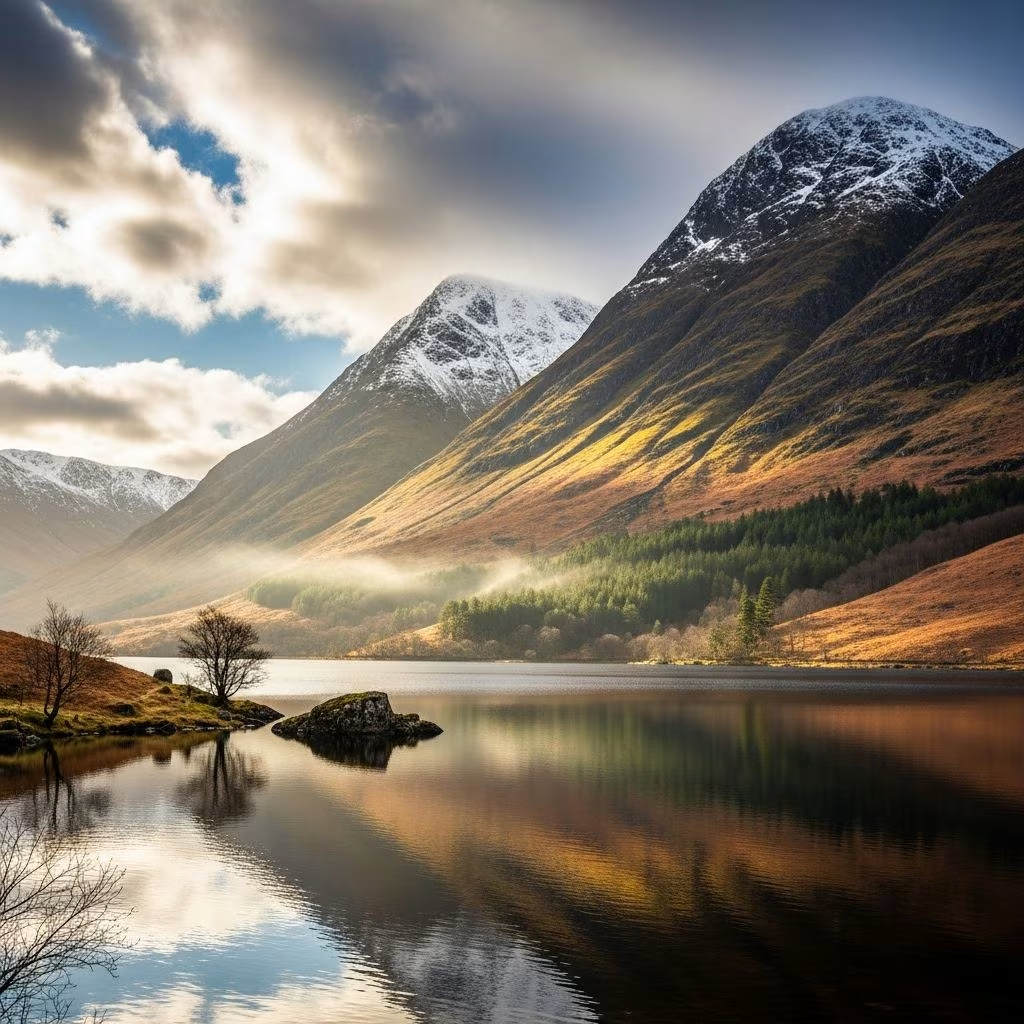 Travel Essentials
Scotland’s landscape represents one of Europe’s most dramatic and pristine natural environments. The country maintains two distinctive national parks that safeguard exceptional ecosystems, rare wildlife, and landscapes of extraordinary beauty. These protected areas serve multiple purposes: preserving biodiversity, protecting cultural heritage, and providing outdoor recreation opportunities for both residents and visitors. Understanding what each park offers helps travelers and adventure seekers plan meaningful experiences within Scotland’s wild spaces.
Scotland established its first national park in 2002, marking a significant commitment to environmental conservation and landscape protection. The creation of these parks reflected growing recognition of the need to preserve Scotland’s unique natural heritage while managing human activity within these sensitive areas. Today, Scotland operates exactly two national parks, each representing distinct geographical regions and offering different types of outdoor experiences. These parks collectively encompass thousands of square miles of protected territory, hosting diverse ecosystems and providing recreational infrastructure for millions of annual visitors.
The national parks framework in Scotland differs from other parts of the United Kingdom in its approach to land management and conservation objectives. Rather than removing human populations entirely, Scottish national parks integrate sustainable community living with environmental protection. This philosophy recognizes that Scotland’s landscapes have been shaped by centuries of human habitation and cultural practice, making integrated management more practical and authentic than preservation in isolation.
Established in 2002 as Scotland’s first national park, Loch Lomond and The Trossachs National Park encompasses approximately 720 square miles of varied terrain. Located in the southern Scottish Highlands, this park straddles the boundary between lowland and highland Scotland, creating a transition zone of exceptional ecological and scenic diversity. The park ranks among the largest protected areas in the British Isles, reflecting the scale and significance of its landscapes.
Loch Lomond itself dominates the park’s identity and visitor experience. This body of water represents Britain’s largest inland water surface by area, creating a focal point for numerous recreational activities and visual interest. The loch stretches for approximately 24 miles, with depths reaching over 600 feet in certain locations. Beyond Loch Lomond’s boundaries, the park encompasses 21 additional lochs and one lake, creating an intricate network of freshwater systems that support diverse aquatic life and water-based recreation opportunities.
The abundance of water within Loch Lomond and The Trossachs National Park creates exceptional opportunities for water sports enthusiasts. Visitors can engage in swimming, sailing, paddling, and windsurfing across the various lochs and water bodies. The combination of sheltered areas and exposed waters accommodates both beginners seeking calm conditions and experienced water sports participants desiring more challenging conditions. Rental facilities and instructional services operate throughout the park, making water recreation accessible to visitors with varying skill levels.
The park features extensive mountain biking routes that traverse varied terrain, offering experiences ranging from gentle forest paths to challenging highland tracks. The Trossachs Trail provides a scenic driving alternative for visitors less inclined toward strenuous activity, allowing appreciation of the landscape from vehicle vantage points. These trail systems connect communities within the park and provide access to viewpoints, natural features, and recreation areas throughout the protected landscape.
Walking opportunities accommodate diverse fitness levels and interests. Gentle waterside paths suit families and casual walkers, while challenging mountain routes appeal to experienced hikers. Rock climbing sites exist throughout the park for climbers with appropriate skills and equipment. The variety of walking terrain means visitors can structure their park experience around their physical capabilities and available time.
Scotland’s second national park, established in 2003, covers approximately 1,748 square miles across the northeastern Scottish Highlands. The Cairngorms National Park represents the largest national park in the United Kingdom and encompasses one of Europe’s most significant mountain ranges. Located roughly 140 miles north of Glasgow, the park occupies a remote and relatively undeveloped portion of the Scottish Highlands. The park’s name derives from the Cairngorms mountain range, which forms its geographical and ecological core.
The Cairngorms contain one-quarter of the United Kingdom’s rare and endangered species, making the park exceptionally important for biodiversity conservation. This concentration of rare fauna reflects the park’s unique subarctic ecological conditions, cooler temperatures, and specialized habitats. The park sustains approximately 18,000 residents within its boundaries, demonstrating how human communities can coexist with protected natural areas through careful planning and management.
The Cairngorms reach elevations exceeding 4,000 meters, creating conditions comparable to much more northerly latitudes. This elevation differential produces distinct ecological zones, from lowland forests and moorlands to alpine tundra-like environments. The combination of altitude, latitude, and exposure creates habitats where arctic-alpine plant species thrive and specialized wildlife populations persist. These conditions make the park scientifically valuable for understanding climate adaptation and ecosystem resilience.
Cairngorm Mountain hosts one of Scotland’s most established ski operations, providing winter recreation opportunities from December through April depending on snow conditions. The ski area offers varied terrain for different ability levels, from beginner slopes to challenging black runs. Beyond skiing, the park attracts winter hikers, snowshoers, and mountaineers seeking Scottish alpine experiences. The relatively accessible high-altitude environment allows visitors to experience mountain conditions without requiring extensive mountaineering expertise.
During warmer months, the Cairngorms transform into a hiking and mountaineering destination. Numerous peaks provide climbing objectives ranging from straightforward hill walks to technical scrambles. Mountain biking trails thread through lower elevations, offering all-terrain cycling experiences. The extended daylight during summer months accommodates extended outdoor adventures and exploration of remote areas.
| Feature | Loch Lomond & Trossachs | Cairngorms |
|---|---|---|
| Established | 2002 | 2003 |
| Size | 720 square miles | 1,748 square miles |
| Location | Southern Highlands | Northeastern Highlands |
| Primary Focus | Water recreation | Mountain activities |
| Best Season | Spring through autumn | Winter skiing; summer hiking |
| Water Features | 22 lochs/lakes | Various mountain lochs |
| Accessibility | More accessible from central Scotland | More remote location |
Both national parks function as critical habitats for Scotland’s most vulnerable species. The parks protect flora and fauna through restricted commercial activity and regulated human presence. Wildlife management combines habitat preservation with visitor education, helping people understand ecological relationships and conservation imperatives. Native species including golden eagles, red squirrels, and various plants adapted to Scottish conditions depend on these protected landscapes for survival.
The parks contribute to broader UK conservation efforts by maintaining populations of rare species and preserving genetic diversity within threatened animal and plant communities. Research conducted within the parks advances understanding of species behavior, population dynamics, and ecosystem function. This scientific work informs conservation strategies across the United Kingdom and contributes to international conservation knowledge.
Beyond their ecological importance, both parks preserve cultural landscapes shaped by centuries of Scottish inhabitation. Archaeological sites, traditional settlements, and historical structures exist within park boundaries, representing different eras of Scottish history. Communities residing within the parks maintain cultural practices and traditions connected to the landscape, making the parks living cultural entities rather than merely natural reserves.
Visiting these parks effectively requires understanding seasonal variations in weather, accessibility, and available activities. Summer months offer extended daylight and mild temperatures but coincide with peak visitor periods. Spring and autumn provide moderate weather and fewer crowds, though some higher-altitude trails may close due to snow. Winter presents challenges including limited daylight and severe weather but offers unique experiences unavailable during other seasons.
Summer and early autumn (June through September) offer the most favorable weather and longest daylight hours. However, spring (April-May) and autumn (September-October) provide excellent visiting conditions with fewer crowds and beautiful seasonal changes.
Yes, both parks offer family-friendly activities including gentle walks, water activities, and visitor center exhibits. Loch Lomond and The Trossachs particularly suit families due to lower elevations and easier accessibility.
No, skiing operates seasonally from approximately December through April, depending on snow conditions. Summer activities at Cairngorms include hiking, mountain biking, and sightseeing.
Both parks accommodate all experience levels. Loch Lomond and The Trossachs offer more gentle options, while Cairngorms presents varied difficulty levels across different trails.
Common sightings include red squirrels, golden eagles, red deer, and various bird species. Encountering larger predators is rare, and wildlife generally avoids close human contact.
