

 Travel Essentials
 Travel Essentials

Learn professional photography techniques to capture Scottsdale's stunning desert vistas, from golden hour timing to equipment recommendations.
 Travel Essentials
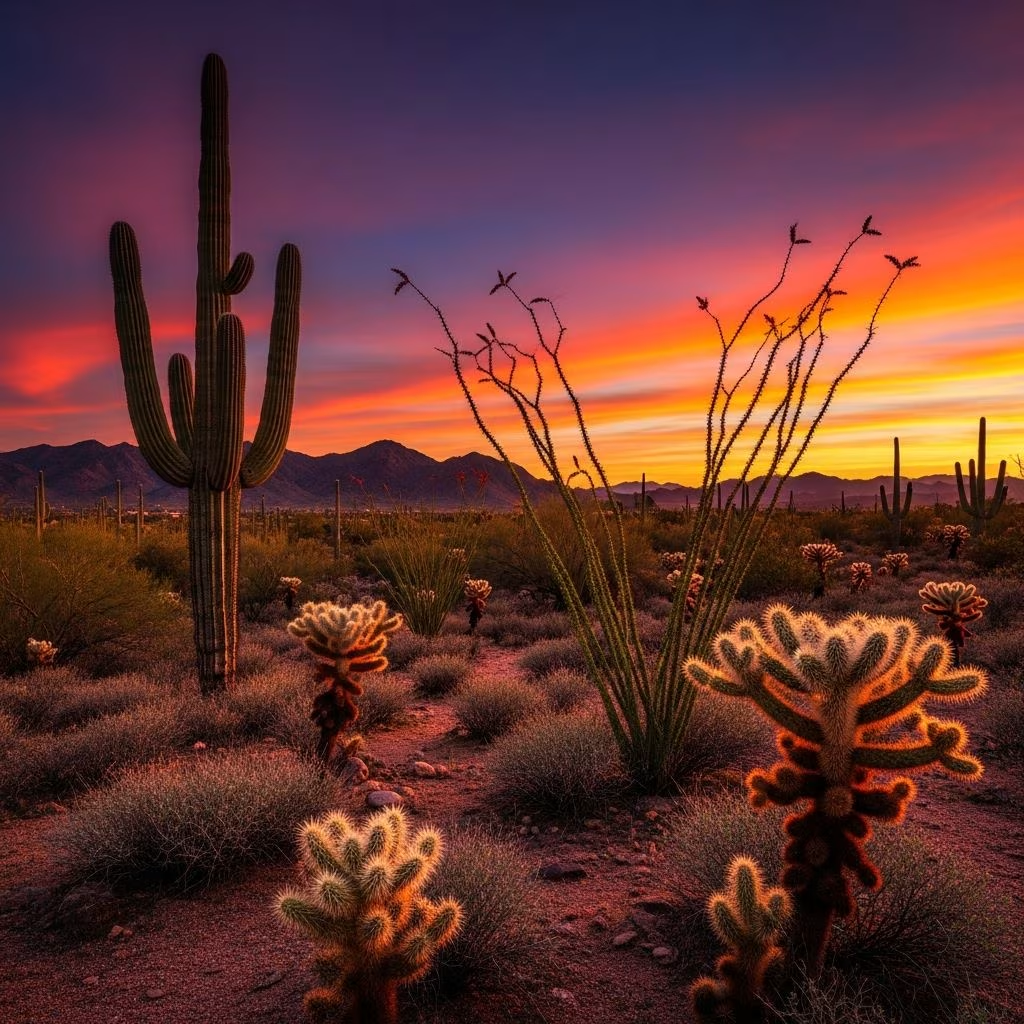
The Sonoran Desert surrounding Scottsdale, Arizona presents an extraordinary canvas for photographers seeking to document nature’s raw beauty. With its distinctive saguaro cacti, layered mountain ridges, and dramatic color shifts throughout the day, this landscape offers endless opportunities for compelling imagery. Whether you’re a seasoned photographer or someone looking to document your travels, understanding how to work with this unique environment can transform your photographic results from ordinary to extraordinary.
Scottsdale’s desert environment possesses distinctive visual qualities that differ significantly from other landscapes. The terrain combines wide-open valleys, towering rock formations, and dense stands of desert vegetation that create natural layers of depth in photographs. The Sonoran Desert’s saguaro forests provide strong vertical elements that can anchor compositions, while dramatic mountain ridges create natural leading lines that guide the viewer’s eye through an image.
The vastness of the desert landscape presents both opportunities and challenges. While the expansive vistas allow for sweeping panoramic compositions, they can sometimes feel overwhelming without proper compositional structure. Understanding how to balance these elements—incorporating foreground interest, middle ground subjects, and background mountains—becomes essential for creating visually compelling photographs that showcase the desert’s true scale.
The color palette of the Sonoran Desert shifts dramatically throughout the day. During midday hours, the landscape often appears washed out with harsh, desaturated tones. However, during transitional periods, the desert displays warm oranges, deep purples, and rich reds that create stunning visual drama.
Timing represents one of the most critical factors in desert photography success. The intense Arizona sun creates challenging lighting conditions during midday hours, with harsh shadows and blown-out highlights that diminish photographic appeal. Instead, early morning and late afternoon periods offer significantly better lighting conditions for capturing desert imagery.
Golden Hour Photography occurs during the first hour after sunrise and the final hour before sunset. During these periods, the sun sits lower on the horizon, casting warm, directional light that dramatically reveals texture and creates dimensional depth. This warm light accentuates the desert’s natural colors—bringing out the reds in rock formations and creating luminous halos around desert vegetation.
Sunrise photography offers distinct advantages over sunset sessions. Morning light tends to be clearer with less atmospheric haze, and morning temperatures are cooler, allowing photographers to stay comfortable during extended shooting sessions. Additionally, morning light often reveals patterns and textures in the sand and rocky surfaces that become less visible as the day progresses.
Early morning sessions also provide practical benefits. Trails are less crowded, allowing photographers to position themselves strategically without navigating around other visitors. This solitude enables longer exposures and more deliberate compositional choices.
While smartphone cameras have improved dramatically, certain equipment significantly enhances desert photography capabilities. A wide-angle lens remains essential for capturing the desert’s expansive vistas and creating environmental portraits that showcase the landscape’s scale.
Key Equipment for Desert Photography:
The desert environment presents unique challenges for equipment. Sand and dust can damage camera sensors and mechanical components. Protecting your camera with appropriate cases and changing lenses carefully in sheltered locations prevents degradation. Additionally, the intense sun can cause camera bodies to overheat during extended shooting sessions.
Scottsdale encompasses numerous locations that deliver exceptional photographic opportunities. Selecting destinations strategically based on your photographic goals and available time ensures efficient use of your visit.
This expansive preserve represents Scottsdale’s premier destination for landscape photography. With over 200 miles of trails, the preserve offers diverse perspectives of the Sonoran Desert, from dense saguaro forests to wide valleys and dramatic mountain ridges. The Gateway Loop Trail provides wide-angle compositions featuring desert floor vistas and rock formations, making it an excellent starting point for photographers at all skill levels.
The preserve’s multiple trailheads allow photographers to adjust their routes based on energy levels and specific photographic objectives. Early morning visits capture stunning sunrise light illuminating the McDowell Mountains while casting dramatic shadows across the landscape. Plan to complete photography sessions by late morning when temperatures rise and lighting becomes harsh.
This moderate-difficulty hike rewards photographers with elevated vantage points offering 360-degree panoramic perspectives of Scottsdale and surrounding mountains. The steady elevation gain provides multiple composition opportunities as perspectives change with increasing altitude. From the summit, the combination of wide-open skies and the desert’s dramatic color transformation during golden hour creates exceptional photographic conditions.
While technically located in Phoenix, this garden provides unparalleled opportunities for detailed desert flora photography. Well-maintained trails and curated plant collections enable close-up compositions of cacti blooms, succulents, and desert trees. The garden’s varied lighting conditions, including shaded areas, allow comfortable photography even during midday hours when exterior desert photography becomes challenging.
This accessible location features a natural sandstone opening that frames the desert skyline like a natural picture frame, creating ideal sunset backdrops. The family-friendly trail requires minimal hiking while still delivering memorable photographic opportunities. The rock formation’s natural framing qualities work particularly well for silhouette photography during sunset hours.
Strong composition transforms good photographs into compelling images. Desert landscapes benefit from deliberate compositional approaches that manage their expansive nature.
Layered Composition: Incorporate foreground interest (desert vegetation or rocks), middle-ground subjects (mountain formations), and background elements (distant ridges or sky). This three-part structure creates visual depth and prevents flat, two-dimensional appearances.
Leading Lines: Mountain ridges, trail paths, and rock formations naturally guide viewer attention through compositions. Position these elements to lead toward your primary subject or points of visual interest.
Rule of Thirds: Position horizons and primary subjects along the rule-of-thirds grid rather than centered in the frame. This creates more dynamic, engaging compositions that feel more intentional and visually interesting.
Silhouette Photography: During golden hour, position subjects (saguaro cacti, rock formations, or people) between your camera and the bright sun. This creates dramatic silhouettes that showcase desert shapes against luminous skies.
Proper camera settings ensure sharp, well-exposed images across various lighting conditions. Desert photography often requires adjusting standard settings to accommodate extreme brightness and varied terrain.
Exposure and Metering: The desert’s bright, reflective landscape often fools auto-exposure systems, resulting in underexposed images. Use spot metering focused on your primary subject or employ exposure compensation to add additional light. During golden hour, bracket exposures (taking multiple shots at different exposure levels) ensures at least one properly exposed image.
Focus Strategy: Maintain sharpness throughout your composition by using aperture settings that provide adequate depth of field. An f-stop of f/8 to f/16 typically provides sufficient sharpness from foreground to background in landscape photography. Autofocus may struggle with sandy terrain, so manual focus often produces more reliable results.
White Balance: Golden hour light appears warmer than midday sun. Selecting appropriate white balance settings—or shooting in RAW format for post-processing flexibility—ensures accurate color reproduction that captures the desert’s warm tones.
Successfully photographing in the Sonoran Desert requires attention to personal comfort and safety alongside photographic objectives.
Hydration and Supplies: The desert environment causes rapid dehydration. Bring substantially more water than you anticipate needing—a minimum of three liters for morning sessions and additional quantities for longer adventures. Include electrolyte replacement beverages for extended sessions.
Physical Preparation: Desert hikes often occur on uneven terrain at elevation. Appropriate footwear, gradual conditioning, and realistic assessment of your physical capabilities prevent injuries that could compromise your photography session.
Sun Protection: Intense desert sun causes rapid sunburn even during early morning hours. Apply broad-spectrum sunscreen (SPF 30 minimum), wear protective clothing, and utilize wide-brimmed hats. Sunglasses protect eyes during extended shooting sessions while also reducing glare when reviewing images on camera screens.
Photographing in RAW format preserves maximum image data, providing flexibility during post-processing. Desert images particularly benefit from selective editing that enhances the landscape’s natural drama.
Highlight recovery addresses blown-out sky areas common in high-contrast desert environments. Shadow adjustment reveals detail in darker foreground areas. Vibrance and saturation adjustments can enhance the desert’s natural colors without appearing artificial or over-processed.
Clarity adjustments increase midtone contrast, emphasizing texture in rock formations and sand patterns. Graduated filters can balance exposure between bright skies and darker landscape elements, creating more evenly exposed compositions.
Consistent practice in varied conditions develops photography skills more effectively than theoretical study alone. Visit the same locations during different seasons and times of day to understand how changing light and conditions transform the landscape. Review your images critically, identifying compositional successes and areas for improvement. Consider photography workshops or guided tours led by local professionals who understand the specific characteristics of Scottsdale’s desert environment.
Connecting with other desert photographers through local photography groups provides opportunities for shared learning, feedback, and collaborative photo adventures. These communities often organize group outings to prime shooting locations and times.
