

 Travel Essentials
 Travel Essentials

Explore why Seattle's famous gum wall at Pike Place Market rapidly regenerates after cleaning, the history behind this sticky attraction, and what makes it a unique tourist destination.
 Travel Essentials
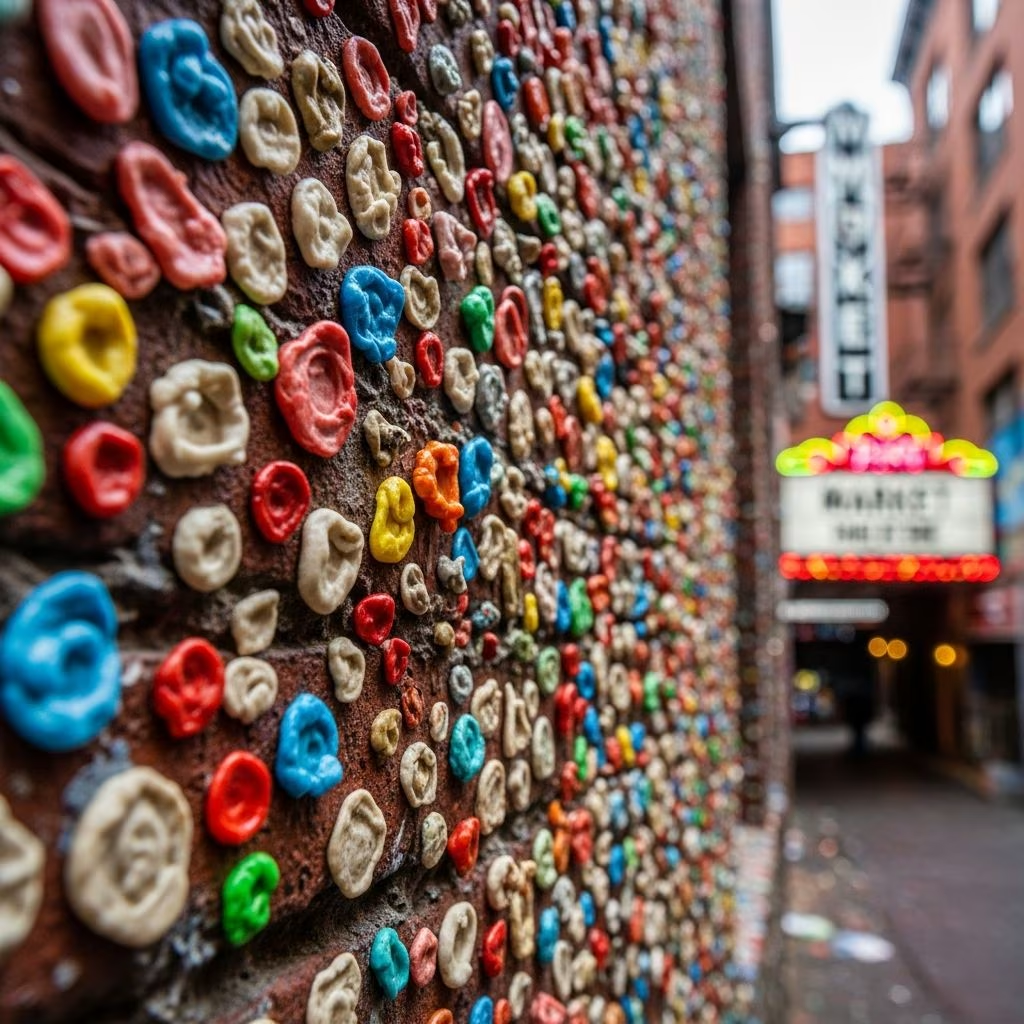
In the heart of Seattle’s Pike Place Market lies one of the most unconventional attractions in the United States: a brick wall completely covered in chewed gum. What began as a spontaneous act by theater patrons has evolved into a global phenomenon, drawing thousands of visitors annually who contribute to the ever-growing sticky mass. Despite periodic cleaning efforts that remove tons of accumulated gum, the wall regenerates almost immediately, earning it a reputation as one of the most resilient—and most unusual—cultural landmarks in America.
The gum wall’s origins trace back to the early 1990s in Post Alley, a narrow passageway adjacent to Pike Place Market’s famous theater district. The story begins simply enough: patrons and performers at Unexpected Productions, a local theater company, started an informal tradition of sticking their used chewing gum onto the brick walls while waiting in line or between shows. The theater had a strict no-gum policy inside the venue, so the alley became an impromptu receptacle for discarded chewing gum.
What might have remained a minor oddity transformed into something far more significant. Word spread throughout Seattle and beyond about this peculiar wall covered entirely in gum. Tourists began seeking it out as a novelty attraction, and locals started contributing their own gum to the growing mass. Within two decades, the wall had accumulated an estimated one million pieces of gum, creating a monument to human whimsy and urban folklore.
By the 2010s, the gum wall had achieved international recognition, featured in travel guides and social media posts from around the world. What had started as a throwaway habit became a bucket-list item for visitors to Seattle. The wall expanded beyond its original location, spreading across multiple brick surfaces, pipes, and even the theater’s box office window. The attraction generated significant foot traffic to the Pike Place Market area, contributing to the neighborhood’s tourism economy.
The wall’s appeal lies partly in its authenticity—it exists not because city officials planned it or invested capital in its creation, but because ordinary people chose to participate in a collective act of creative expression. Each piece of gum represents an individual visitor’s moment of connection with the city, making the wall a democratic artwork constructed by thousands of anonymous contributors.
Despite its charm and popularity, the gum wall posed a genuine problem for Pike Place Market’s preservation efforts. The fundamental issue centered on the chemical composition of the accumulated gum and its effects on the historic brick infrastructure. The acidic properties present in chewing gum, combined with the natural sugars in the product, began slowly degrading the mortar and bricks that formed the wall’s foundation.
Years of exposure to Seattle’s damp climate, combined with the constant pressure of added gum layers, created structural concerns. The Pike Place Market, designated as a historic landmark, faced the difficult decision of either allowing continued deterioration or implementing a restoration solution. Market administrators recognized that preserving the building’s integrity required intervention, even if it meant temporarily removing the attraction that drew thousands of visitors annually.
Additionally, hygiene considerations played a role in the decision. A wall covered in used chewing gum accumulated over decades presented potential public health concerns, despite its amusing nature. The accumulation also created unpleasant odors and an unsanitary environment that conflicted with health and safety standards expected in a public market space.
Pike Place Market’s first major cleaning effort occurred in 2015, marking the first comprehensive removal of gum since the wall’s inception roughly two decades earlier. This initial cleaning presented unprecedented challenges. Crews faced the task of removing an estimated one million gum wads and more than one ton of debris from the brick surfaces.
The cleaning method chosen reflected the delicate balance between removal effectiveness and historic preservation. Rather than using high-pressure washing, which could damage the aged brick and mortar, contractors opted for steam cleaning technology. The specialized equipment heated steam to approximately 280 degrees Fahrenheit, causing the gum to soften and delaminate from the wall surface. The moderate pressure combined with high temperature proved more effective than other methods while minimizing potential damage to the historic structure.
The 2015 cleaning operation took approximately three days to complete, requiring dedicated crews working continuously to remove the accumulated layers. Workers reported that fruity and sweet aromas emanated from the steam during the process, creating an unusual sensory experience as decades of gum flavors were simultaneously heated and removed.
Strikingly, the gum wall’s regeneration happened with remarkable speed. Market officials had anticipated that visitors would gradually recontribute gum over time, but the reality exceeded expectations. According to Pike Place Market’s estimates, new gum appeared on the cleaned wall within approximately one week, suggesting that eager visitors couldn’t resist participating in the tradition immediately after its removal.
By 2019, another cleaning became necessary, indicating that the wall’s accumulation continued at a rapid pace throughout the interim years. This second cleaning reinforced an uncomfortable truth: removing the gum wall, while temporarily successful, addressed only the symptom rather than the underlying phenomenon—the deep human desire to participate in this quirky tradition.
The speed of regumming raises fascinating questions about human behavior and cultural traditions. Despite Pike Place Market’s efforts to preserve the building’s structural integrity, visitors consistently chose to recontribute gum, essentially undoing the cleaning efforts within days. This phenomenon reflects the powerful draw of participating in an established tradition, even one that the institution managing the space actively discouraged.
Pike Place Market’s situation illustrates a complex cultural paradox: the institution must balance historic preservation obligations with respect for the organic tradition that had developed on its premises. The gum wall represented authentic urban culture that emerged spontaneously, not through official planning or corporate branding. Yet its very existence threatened the physical structures that housed it.
The market’s decision to preserve a heart-shaped section of gum during cleaning efforts demonstrated an attempt at compromise. By maintaining a symbolic representation of the tradition, officials acknowledged the wall’s cultural significance while asserting control over the overall situation. However, such compromises proved difficult to maintain as visitors continued the tradition regardless of official designations.
The gum wall’s persistent regeneration reflects deeper human motivations beyond mere novelty-seeking. Several factors explain why visitors continue contributing gum despite the attraction’s unsanitary reputation and institutional discouragement:
Understanding the evolution of cleaning efforts helps contextualize the wall’s rapid regeneration patterns:
| Year | Cleaning Event | Status | Key Details |
|---|---|---|---|
| 1991-2015 | First Major Cleaning | 24-year accumulation removed | Approximately 1 million gum wads and 1 ton of debris removed; steam cleaning method used |
| 2015-2019 | Four-year regrowth period | Rapid reaccumulation | New gum appeared within one week of cleaning |
| 2019 | Second Major Cleaning | 4-year accumulation removed | Pressure washing and steam methods employed |
| 2019-Present | Ongoing regrowth | Continuous regeneration | Wall maintains persistent coverage despite removal efforts |
While the gum wall’s cultural significance is undeniable, practical concerns regarding its existence deserve serious consideration. Accumulated chewing gum creates several problematic conditions:
Pike Place Market faces an ongoing challenge regarding the gum wall’s future. Several potential approaches have been discussed within the community and tourism industry:
Designated Gum Area: Creating an officially sanctioned area for gum contribution could concentrate the tradition while protecting other historic structures. This approach balances preservation with tradition-honoring.
Periodic Maintenance: Accepting the wall’s existence while implementing regular cleaning schedules might represent a more realistic long-term strategy than attempting complete removal.
Artistic Reinterpretation: Some have suggested creating a dedicated artistic installation that captures the gum wall’s spirit while using materials more suitable for long-term preservation.
Educational Initiative: Using the wall as a teaching tool about urban culture, preservation challenges, and human behavior might provide value that justifies its maintenance.
Seattle’s gum wall represents something increasingly rare in modern cities: an authentic, organically developed cultural phenomenon that emerged from grassroots participation rather than corporate development or official planning. In an era of sanitized, algorithmically-optimized experiences, the gum wall’s messy authenticity holds particular value.
The wall demonstrates how communities create meaning and connection through unconventional means. It challenges assumptions about what constitutes acceptable public behavior and cultural expression. Most importantly, it reveals how ordinary people collectively author cultural narratives that transcend individual intention, creating something greater than any single participant anticipated.
Despite cleaning efforts that temporarily remove millions of pieces of gum, Seattle’s famous wall inevitably regenerates. This cycle reflects a fundamental tension between preservation and participation, between official institutional control and authentic grassroots culture. The gum wall’s persistent resurrection suggests that some traditions, once established, become too resilient to eliminate entirely. Whether future authorities will continue fighting the gum’s return or ultimately accept it as an immovable part of Pike Place Market’s character remains to be seen.
The gum wall received its first major cleaning in 2015, approximately 24 years after the tradition began in 1991.
The 2015 cleaning removed approximately one million pieces of gum and over one ton of accumulated debris.
New gum typically appears within approximately one week of cleaning, with significant regrowth occurring rapidly thereafter.
Steam cleaning was chosen to protect the historic brick and mortar from damage while effectively removing gum layers through heat rather than force.
Yes, the wall continues attracting thousands of visitors annually who contribute gum despite its periodic cleaning and the market’s preservation efforts.
