

 Travel Essentials
 Travel Essentials

Plan a self-drive safari in Africa with expert tips on destinations, timing, vehicles, safety, budgets, and wildlife viewing strategies.
 Travel Essentials
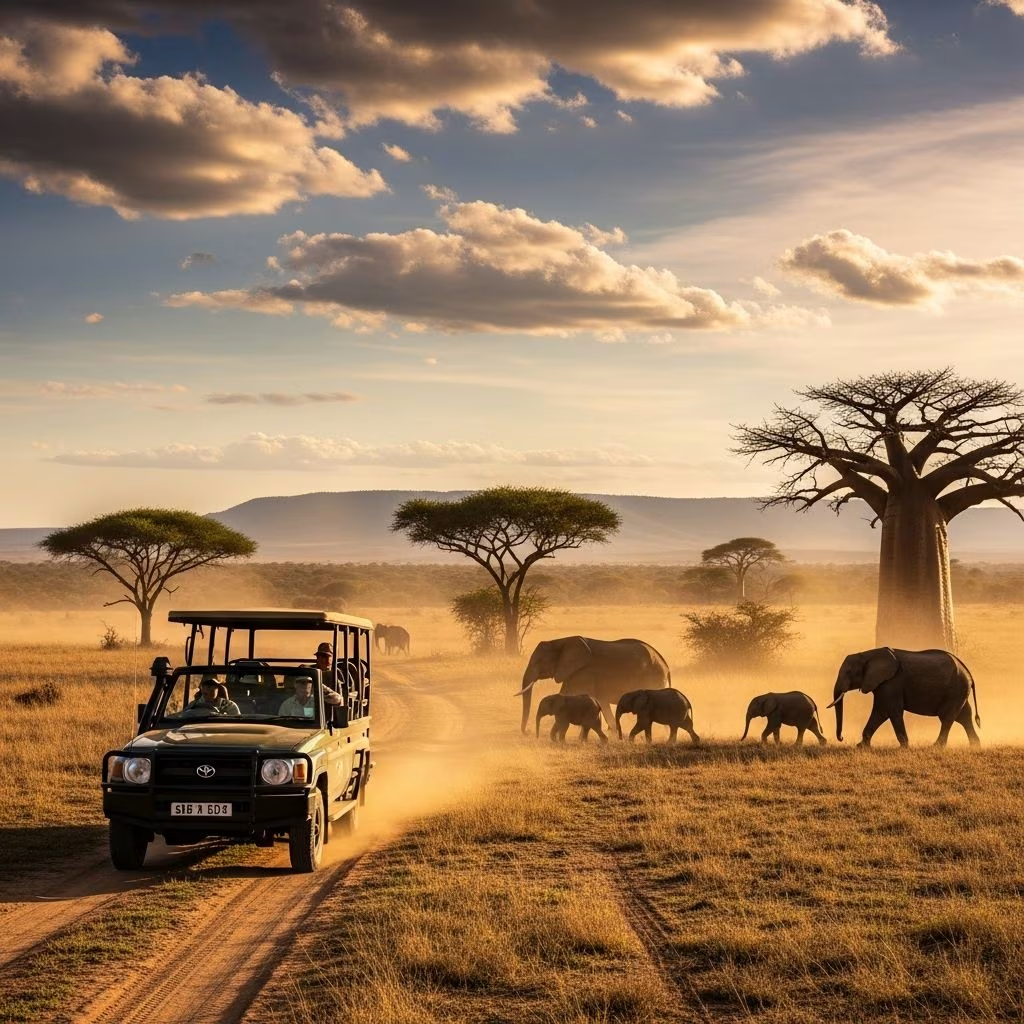
Embarking on a self-drive safari offers unparalleled freedom to explore Africa’s vast landscapes and abundant wildlife on your own terms. Unlike guided tours, this approach lets travelers dictate their pace, linger at animal sightings, and venture into remote areas without rigid schedules.
The allure lies in autonomy and cost savings. Travelers report spotting wildlife independently, often matching or exceeding guided experiences, while avoiding group dynamics. Flexibility allows spontaneous detours, such as chasing a lion pride or photographing elephants at dusk. Savings come from skipping guide fees, with many finding it more intimate and adventurous.
Southern Africa dominates for self-drive safaris due to superior infrastructure. Namibia stands out for novices with its safe, paved roads connecting highlights and minimal traffic. Etosha National Park demands 4x4s for gravel tracks teeming with elephants and rhinos.
South Africa offers accessible options like Kruger National Park and Addo Elephant National Park, where personal vehicles navigate fenced roads safely. Private reserves like Kwandwe provide hybrid experiences post-Garden Route drives.
Botswana’s remote beauty shines in Chobe, Okavango Delta fringes, and Kgalagadi Transfrontier Park, ideal for solitude amid Kalahari expanses. East Africa, including Uganda’s Murchison Falls and parks in Kenya, Tanzania, Rwanda, allows self-driving with cross-border 4×4 rentals.
| Destination | Best For | Road Conditions | Key Wildlife |
|---|---|---|---|
| Namibia (Etosha) | Beginners | Paved/gravel, low traffic | Elephants, rhinos, lions |
| South Africa (Kruger/Addo) | Families/Solos | Well-maintained, fenced | Big Five, whales nearby |
| Botswana (Chobe/Kgalagadi) | Adventurers | Gravel/off-road | Big cats, meerkats |
| East Africa (Uganda/Kenya) | Multi-country | Varied, some rough | Gorillas, hippos, leopards |
The dry season from May to October transforms safaris. Animals cluster around waterholes, visibility peaks without tall grasses, and mild weather (daytime 20-30°C, cooler nights) enhances comfort. Southern Africa’s winter dryness concentrates herds, boosting sightings. Avoid wet summers (November-April) due to floods, muddy tracks, and dispersed wildlife.
A robust 4×4 is non-negotiable for gravel, sand, and riverbeds. Opt for models like Toyota Land Cruisers with high clearance, rooftop tents for camping, and spares (tires, jacks, fuel cans). Rentals from specialists include cross-border permits for East African hops (Rwanda-Uganda-Kenya-Tanzania). Inspect for recovery gear: tow ropes, shovels, compressors. Drive on the left in most spots.
Roads vary: Namibia’s are beginner-friendly, Botswana’s demand off-road skills. Stay on designated tracks to protect ecosystems; off-roading risks fines or stranding. Parks enforce speed limits (often 40-60km/h), no exiting vehicles except rest camps, and gate closure times (sunrise to sunset). Trackers or apps aid animal locations.
Wildlife poses real risks—lions, elephants, buffaloes. Maintain 100m distance from predators, 50m from herbivores; never approach on foot. Carry first-aid, satellite phones for remoteness, and malaria prophylaxis. Night drives are prohibited in most parks; camp in fenced sites. Share itineraries, travel in convoys if solo.
Options span lodges, campsites, and glamping. Rest camps in Kruger offer secure parking; Namibia’s sites feature power hookups. Rooftop tents enable wild camping where permitted. Book ahead for peaks; self-catering saves via park shops.
7-Day Namibia Intro: Windhoek to Etosha (game drives), Sossusvlei dunes, return. 1,200km, paved focus.
14-Day South Africa-Botswana: Johannesburg to Kruger (3 days), Chobe NP, Okavango day trips. Mix parks and Victoria Falls.
21-Day Southern Circuit: Fly into Johannesburg, Kruger, Namibia (Etosha-Skeleton Coast), Botswana (Kalahari-Chobe), loop back. 3,000km+.
Expect $150-300/day per person: 4×4 rental ($100+), park fees ($20-50/day), fuel ($1.50/L), camps ($30-80). East Africa adds gorilla permits ($700+). Budget 20% buffer for spares/repairs.
| Expense | Daily Estimate (USD) |
|---|---|
| Vehicle Rental | 80-150 |
| Park Fees | 20-60 |
| Fuel | 30-50 |
| Accommodation | 40-100 |
Early mornings and late afternoons yield best sightings as animals active. Waterholes draw herds; follow vulture clusters for kills. Patience pays—lions may nap 20 hours daily. Binoculars, long lenses essential; apps like iNaturalist aid ID.
Yes, with precautions; join convos or use trackers. South Africa/Namibia safest for solos.
Not always; start in Namibia/South Africa. Practice on gravel first.
Absolutely, in fenced parks like Addo/Kruger. Kids love the control.
Rentals include 24/7 assistance; carry basics. Parks have rangers.
No in most self-drive zones; optional for expertise.
Stick to tracks, no littering, support locals via crafts. Limit vehicle numbers at sightings. Choose eco-lodges to minimize footprint.
