

 Travel Essentials
 Travel Essentials

Explore Semana Santa, Spain's Holy Week tradition featuring elaborate processions, religious devotion, and cultural heritage celebrated across Spanish cities and towns.
 Travel Essentials
Every spring, Spain undergoes a profound transformation as one of Europe’s most enduring religious and cultural celebrations takes center stage. Semana Santa, or Holy Week in English, represents far more than a religious observance—it is a living testament to centuries of Spanish faith, artistry, and community identity. This annual tradition commemorates the final days of Jesus Christ’s earthly life, drawing millions of participants and spectators to witness processions that blend spiritual devotion with theatrical grandeur.
The celebration encompasses the seven days preceding Easter Sunday, beginning on Palm Sunday and concluding with the resurrection celebrations. What distinguishes Semana Santa from Easter observances in other parts of the world is its spectacular visual presentation and the profound emotional intensity that permeates every street, plaza, and church throughout Spain.
The origins of Semana Santa extend deep into medieval Spain, but the celebration as it exists today took definitive shape during the sixteenth century. A pivotal moment arrived in 1521 when the Marqués de Tarifa returned from a pilgrimage to the Holy Land, profoundly moved by the sacred sites he had witnessed. Drawing inspiration from these experiences, he introduced the Via Crucis—the Stations of the Cross—to Spanish religious practice. This innovation transformed how Spanish Catholics engaged with the Passion narrative, moving from purely contemplative practices to participatory street processions.
Initially, these processions involved participants stopping at designated symbolic points throughout the city to reflect on Christ’s journey to Calvary. Over subsequent centuries, particularly during the seventeenth and eighteenth centuries, the tradition grew increasingly elaborate. Religious brotherhoods, known as cofradías, began commissioning intricately carved wooden figures and ornate floats to enhance the spiritual narrative. What had begun as solemn religious observance gradually evolved into comprehensive artistic performances that combined sculpture, music, textile arts, and human devotion.
Processions form the absolute centerpiece of Semana Santa celebrations across Spain. These are not simple parades but rather carefully choreographed spiritual journeys that can extend for many hours. In some cities, individual processions last up to fourteen hours, drawing thousands of participants who walk barefoot through city streets in an extraordinary display of physical and spiritual commitment.
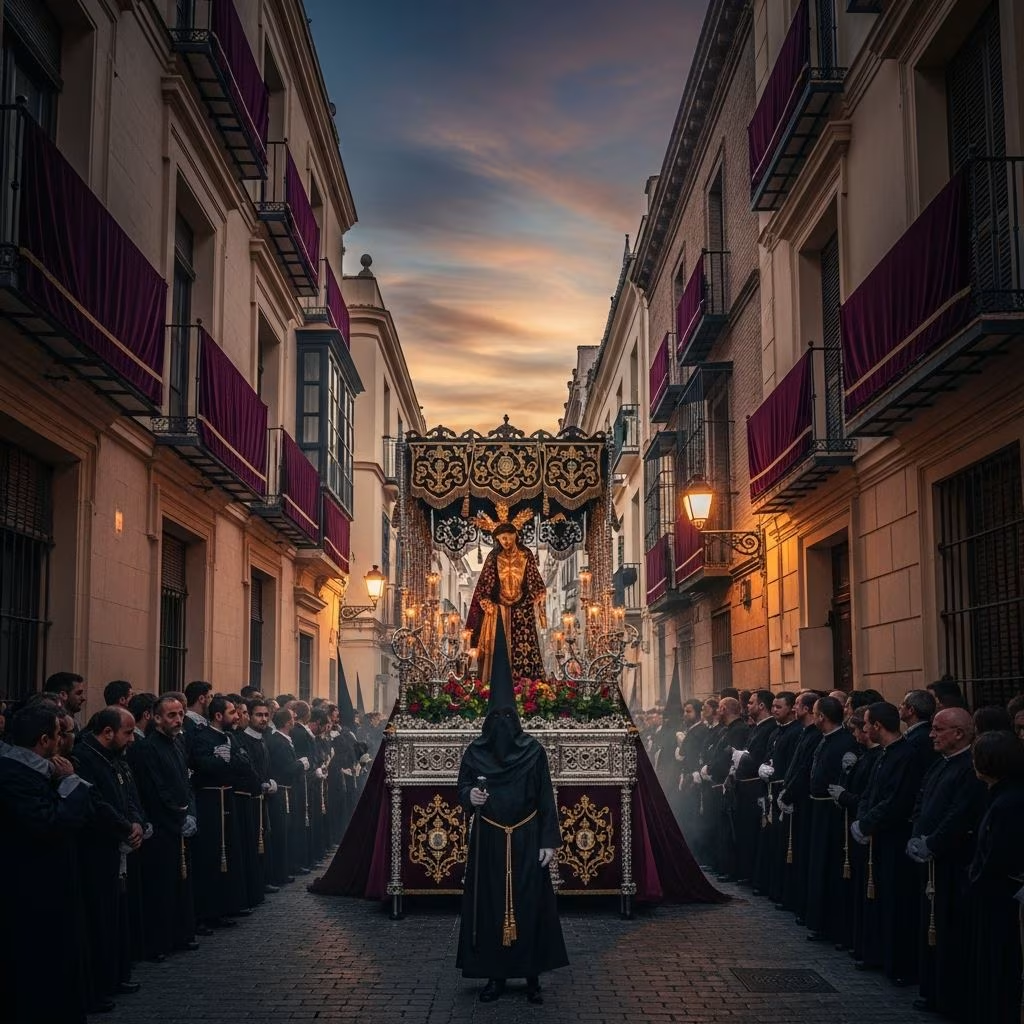
Each procession typically features two primary floats, or pasos, that showcase religious artistry. One float typically depicts the Virgin Mary in her various representations, while the other presents scenes from the Passion of Christ—moments including his trial, carrying of the cross, crucifixion, and resurrection. These floats are not static displays but rather carefully balanced structures carried by dedicated groups called costaleros, who bear the significant physical weight while maintaining perfect timing and movement with accompanying music.
The musical accompaniment to these processions creates an unmistakable sensory experience. Traditional Spanish drums provide rhythmic foundation, while wind instruments offer melodic texture. In certain regions, particularly Andalusia, performers sing saetas—deeply emotional flamenco prayers that emerge from balconies overlooking the procession routes, adding layers of vocalized spirituality.
Participants in Semana Santa processions wear distinctive traditional dress that immediately identifies them as members of specific religious brotherhoods. The most recognizable element is the capirote—a tall pointed hood that covers the wearer’s face. These hoods have generated historical confusion due to superficial resemblance to certain hate group imagery; however, the capirotes originated centuries before any such associations and represent mourning and penitence within Catholic tradition, not symbols of hatred.
Brotherhood members also wear long robes in colors specific to their organization, creating a visual spectrum as different cofradías process through the streets. The hooded penitents are called nazarenos, and they walk in seemingly endless processions alongside the elaborate floats. Many choose to walk barefoot as a personal expression of penitential devotion, adding to the authentic spiritual character of the celebration.
The capirotes serve another crucial function: they are removed on Easter Sunday to symbolize the celebration of Christ’s resurrection. This transition from covered faces representing mourning to unveiled faces representing joy marks the transformation of Semana Santa’s emotional and spiritual tone as the week progresses.
While Semana Santa occurs throughout Spain, distinct regional approaches reflect local history, culture, and religious intensity. Andalusia, particularly cities like Seville and Málaga, celebrates with colorful pageantry and jubilant atmosphere, treating the processions as both solemn religious occasions and festive cultural events. The Andalusian approach emphasizes visual splendor and emotional expressiveness, with thousands gathering to witness the spectacular displays.
In contrast, regions such as Castile and León maintain more subdued, introspective celebrations that prioritize reflective spirituality over visual grandeur. These variations reflect how different Spanish communities have adapted the core tradition to align with their distinct cultural identities while maintaining the fundamental elements of religious devotion and procession participation.
Semana Santa unfolds as a structured spiritual journey, with each day carrying specific significance and particular observances. The week begins with Palm Sunday, commemorating Jesus’s triumphant entry into Jerusalem, and escalates in intensity as Holy Week progresses.
Holy Thursday, known as El Jueves Santo, marks a significant transition where church bells fall silent throughout Spain, creating an unusual acoustic landscape that reinforces the somber character of the day. This deliberate absence of bells intensifies the spiritual atmosphere and focuses attention on the human elements of the processions.
Good Friday, or El Viernes Santo, represents the most solemn point in the celebration. Participants engage in fasting, and processions take on heightened emotional intensity. The faithful dress in somber colors, and penitents carry wooden crosses through city streets while others gather at significant religious sites to commemorate Christ’s crucifixion. In Seville, worshippers assemble before the cathedral in early morning hours to remember Christ’s trial and meditate on the events described in the Gospels.
The character of Semana Santa fundamentally transforms on Easter Sunday, or Pascua. The pointed hoods come off, signifying the shift from mourning to resurrection celebration. Music returns in joyous form, processions become festive rather than penitential, and the entire atmosphere brightens as Spanish communities celebrate hope and renewal.
Spanish Semana Santa observance extends beyond street processions to include distinctive food traditions that have become inseparable from the celebration. Torrija stands as the iconic Semana Santa food throughout Spain. This Spanish variation on French toast involves slices of bread dipped in milk, sugar, and egg mixture, then fried in olive oil until golden and served with honey or cinnamon. The preparation and consumption of torrija during Holy Week connects families to centuries of tradition while providing sustenance during periods of religious fasting.
These culinary customs vary by region and family tradition, but torrija remains the most universally recognized Semana Santa food across Spanish territories, served in homes, restaurants, and street vendors throughout the week.
Spanish colonization carried Semana Santa traditions throughout Latin America, where the celebration adapted to local contexts and indigenous cultural elements. In Latin American countries, streets where processions pass are often covered with alfombras de aserrín—elaborate carpets traditionally crafted from colored sand, fresh flowers, and fruits. These vibrant floor decorations represent a distinctive adaptation that adds visual richness to processions while incorporating local artistic traditions.
In modern Spain, Semana Santa has transcended purely religious boundaries to become a major cultural tourism event and a powerful expression of regional and national identity. Cities across Spain welcome hundreds of thousands of visitors specifically to witness these processions, transforming Semana Santa into an important economic driver for tourism industries while maintaining authentic spiritual significance for participants.
The tradition attracts visitors regardless of religious background, as the artistic scale, historical depth, and emotional power of the celebration create experiences that resonate beyond faith communities. The processions represent among Spain’s most significant cultural achievements, rivaling museums and monuments in their capacity to move observers.
Visitors planning to experience Semana Santa should understand that the celebration requires advance planning. Major cities like Seville, Málaga, and Madrid fill accommodations months in advance as international visitors arrive to witness the processions. Different cities offer distinctive experiences—Seville is renowned for particularly elaborate and emotionally intense celebrations, while smaller towns may provide more intimate, community-focused observances.
The experience demands physical preparation, as witnessing major processions may involve standing for extended periods in streets or securing balcony viewpoints. Spring weather in Spain varies by region, so appropriate clothing considerations should inform packing decisions.
