

 Travel Essentials
 Travel Essentials

Discover efficient ways to get around Seoul using subways, buses, taxis, bikes, and more. Learn fares, apps, cards, and tips for tourists.
 Travel Essentials
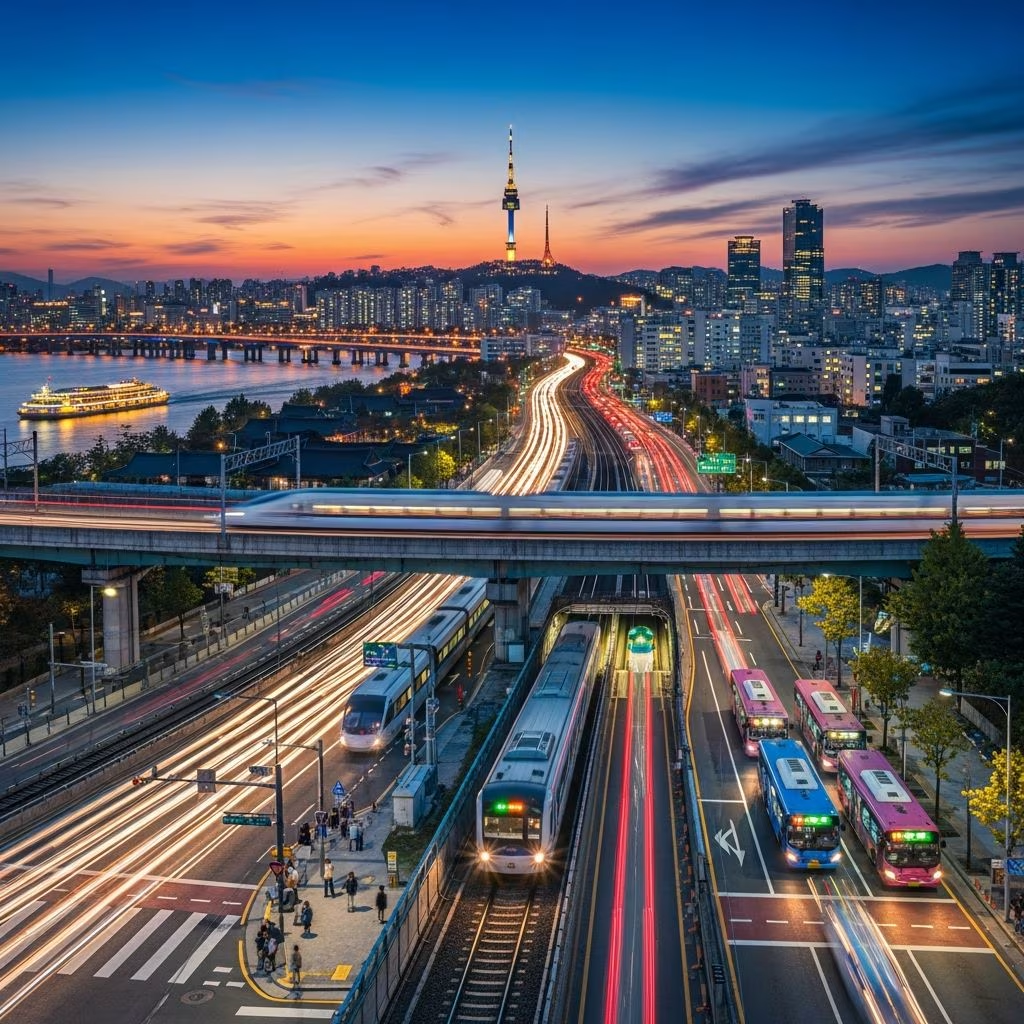
Seoul’s transportation network stands out globally for its efficiency, affordability, and accessibility, making it simple for visitors to explore this vibrant metropolis without a car. With options like the extensive subway system, color-coded buses, reliable taxis, and bike-sharing programs, travelers can move seamlessly across the city and beyond.
Seoul’s public transport earns top rankings worldwide due to its cleanliness, frequency, and multilingual support, including English, Chinese, and Japanese signage at stations. Trains and buses operate from around 5:30 AM to midnight, with high-frequency service during peak hours—often every few minutes—covering over 700 subway stations and thousands of bus routes. This setup supports up to four free transfers within 30 minutes using a transport card, minimizing costs and wait times.
The Seoul Metropolitan Subway, with 22 lines spanning about 1,100 kilometers, connects key districts like Gangnam, Myeongdong, Insadong, Hongdae, and Jamsil. Lines are color-coded for easy identification: Line 2 (green) links university areas and shopping hubs, Line 4 (light blue) serves central spots, and Line 6 (brown) covers additional neighborhoods. Stations feature platform screens showing arrival times and exit guides to landmarks, ensuring intuitive navigation even for first-timers.
Fares start at 1,550 KRW for adults with a T-money card, covering multiple transfers; cash payments are slightly higher at 1,650 KRW. Trains run non-stop from 5:30 AM to midnight, though exact closing times vary by line—always check apps for updates.
Complementing the subway, Seoul’s 8,969 buses operate on 594 routes, color-coded by function for clarity. Blue trunk buses link districts on main arteries, green feeder buses connect subway stations to residential areas, yellow circulation buses loop tourist zones like Namsan and Myeongdong, and red express buses reach suburbs. Smaller maeul (local) green buses serve intra-neighborhood routes.
Buses run from 5:30 AM to midnight, with fares at 1,500 KRW for adults using cards (1,200 KRW early bird), dropping for teens and children. Night ‘owl buses’ fill the gap from midnight to 5 AM, covering hotspots like Gangnam and Hongdae.
| Bus Type | Adult Card Fare (KRW) | Cash Fare (KRW) | Early Bird (KRW) |
|---|---|---|---|
| Blue/Green (Trunk/Branch) | 1,500 | 1,500 | 1,200 |
| Yellow (Circulation) | 1,400 | 1,400 | 1,120 |
| Red (Express) | 3,000 | 3,000 | N/A |
The rechargeable T-money card, available at convenience stores, subways, and airports for 2,500-5,000 KRW (refundable deposit), simplifies payments across subways, buses, taxis, and even some shops. It offers discounts (e.g., 100 KRW off taxis), free transfers (up to four within 30 minutes, excluding same routes), and auto top-up options via apps. Single-journey tickets require exact change plus a 500 KRW deposit but lack transfer perks.
Incheon International Airport (ICN) links to Seoul via the AREX Airport Railroad Express: the express train reaches downtown in 43 minutes for about 9,000 KRW, while all-stop services are cheaper at 4,150 KRW. Gimpo Airport (GMP) connects via subway Line 9 or 5. T-money works on AREX, and apps guide transfers.
Taxis are plentiful, clean, and affordable—base fare 4,800 KRW (daytime), rising with distance (100 KRW per 5-8 km). Opt for silver ‘international’ taxis with English-speaking drivers at airports or use apps like Kakao T for ride-hailing, which supports foreigner modes and card payments. Night surcharges apply after 10 PM, but they’re safer post-midnight when subways close.
| Distance | Fare Rate (KRW) | T-money Discount |
|---|---|---|
| Up to 10-50 km | 100/5 km | 100 KRW off |
| After 50 km | 100/8 km | 100 KRW off |
Seoul’s extensive bike paths and sharing systems like Seoul Bike (unlock via app or kiosk, 1,000 KRW/hour) suit short trips in parks or riversides. Walking shines in compact areas like Myeongdong or Bukchon Hanok Village, with pedestrian-friendly sidewalks and crossings.
KakaoMap excels for integrated transit, taxi booking, and navigation; Naver Map offers detailed walking routes; Subway Korea focuses on rail specifics. Pre-download for offline use, as Wi-Fi is widespread but data helps.
Stations provide elevators, braille, and audio guides; low-floor buses aid wheelchairs. Peak hours (7-9 AM, 5-7 PM) bring crowds—subways beat buses then. For families, stroller-friendly options abound, but note no free rides for kids over 6.
Owl buses and taxis dominate after midnight; KTX high-speed trains via Seoul Station enable day trips to Busan or Gyeongju with KORAIL passes. Regional lines like Sinbundang or EverLine extend reach.
Subway or bus with T-money card—fares under 1,600 KRW per ride with transfers.
No, T-money covers most; cash works but no discounts or easy transfers.
Owl buses run midnight to 5 AM on select routes like Gangnam-Hongdae.
AREX express train: 43 minutes to Seoul Station.
Yes, in central areas; use transit for longer distances.
