

 Travel Essentials
 Travel Essentials

Tanzania allocates funds for Serengeti Green International Airport, emphasizing sustainability amid environmental concerns. Construction tenders signal progress.
 Travel Essentials
Tanzania’s ambitious plan to build the Green International Airport in Serengeti National Park marks a pivotal step in enhancing access to one of Africa’s premier wildlife destinations. With initial funding secured and tenders issued, the project prioritizes ecological harmony alongside economic growth.
The vision for an international airport serving Serengeti dates back over a decade, initially proposed to accommodate growing tourist numbers to the park. Early plans faced delays due to environmental opposition, as the site lies near a UNESCO World Heritage area teeming with wildlife. Recently revived, the initiative gained momentum in 2025 with a consultancy contract awarded to Saba Engineering from Ethiopia on February 27.
Located in Mugumu, Mara Region, the airport aims to double visitor numbers from 0.8 million to 1.6 million annually, potentially increasing tourism revenue to $2.8 billion. Political support, including announcements from figures like presidential candidate Samia Suluhu Hassan, underscores its role in regional development.
In the 2025-2026 national budget, Tanzania earmarked three billion Tanzanian shillings (approximately $1.1 million USD) for feasibility studies and preliminary construction. Transport Minister Professor Makame Mbarawa highlighted this allocation during a parliamentary session on May 15, positioning the airport as a key aviation hub linked to Julius Nyerere and Kilimanjaro International Airports.
Overall project costs are estimated at $350 million, reflecting significant investment in infrastructure that could transform northern Tanzania’s connectivity. Domestic funding sources ensure government control, minimizing external dependencies.
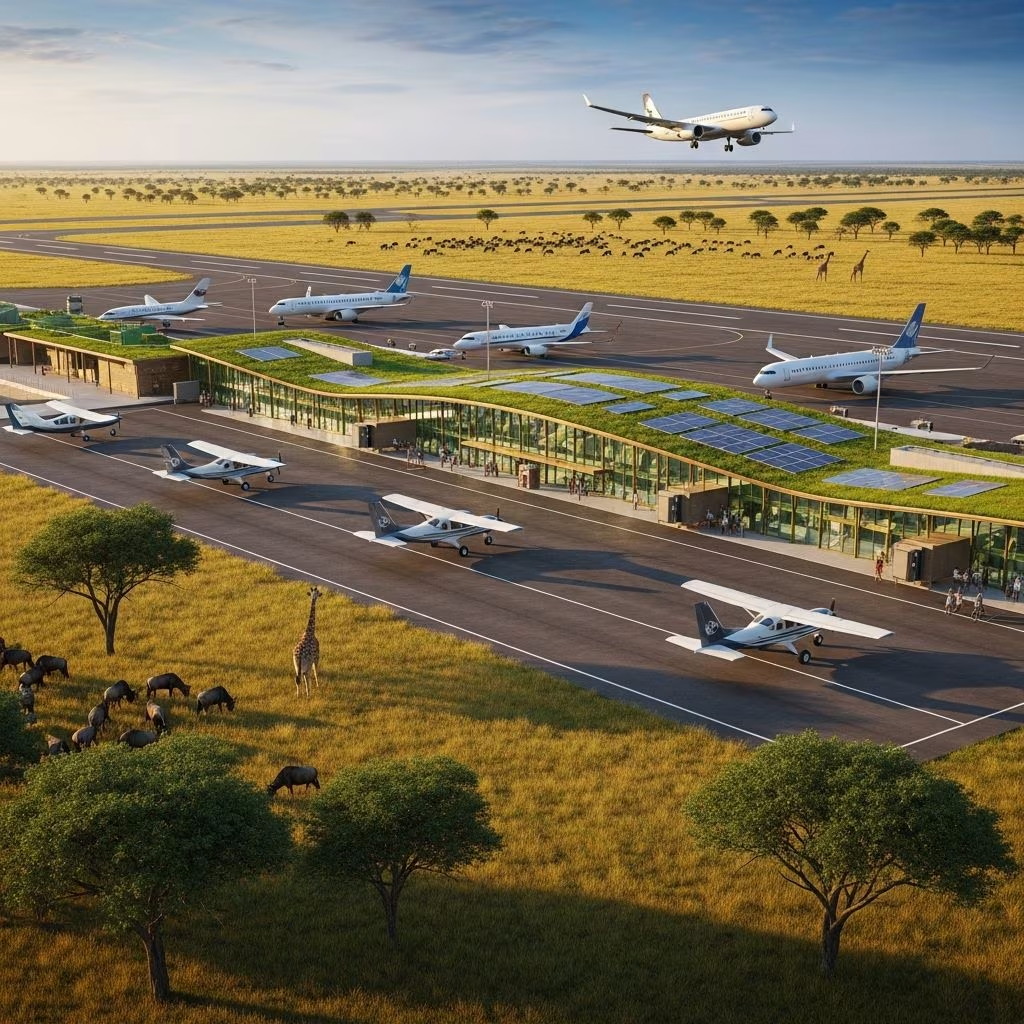
Dubbed the ‘Green International Airport,’ the facility integrates sustainability from the ground up. Officials promise wildlife corridors to maintain animal migration paths, renewable energy sources for operations, and noise-reduction technologies to minimize disturbance to the ecosystem.
Comprehensive environmental impact assessments will guide site selection and construction, addressing past criticisms from conservationists. The design aligns with global eco-tourism standards, potentially setting a precedent for infrastructure in protected areas across Africa.
Situated in the Uwanja wa Ndege ward of Mugumu town, Serengeti District, the airport’s coordinates (1°51′49″S 34°39′13″E) place it strategically near park entrances. As a public facility, it will handle international flights, serving the expansive Serengeti National Park that spans 14,750 square kilometers.
Tenders for construction were published by the Tanzania Airports Authority (TAA) on March 2, 2026, with bids due by March 10, targeting firms experienced in airport builds (CPV code 45235100). This phase follows the design consultancy, ensuring a phased, deliberate rollout.
Serengeti attracts visitors for its Great Migration, where millions of wildebeest and zebras traverse the plains. Currently, travelers rely on regional airstrips or distant hubs, limiting accessibility. The new airport promises shorter travel times, drawing more high-end tourists and fostering year-round visits.
| Aspect | Current Situation | With New Airport |
|---|---|---|
| Annual Visitors | 0.8 million | 1.6 million |
| Tourism Revenue | Current levels | $2.8 billion |
| Connectivity | Limited regional flights | Direct international links |
| Local Jobs | Moderate | Thousands in construction/ops |
Local communities stand to benefit from employment in construction, operations, and ancillary services like guiding and hospitality, driving socioeconomic upliftment.
Critics worry about habitat fragmentation and increased human-wildlife conflict. Proponents counter that revenues will fund anti-poaching and habitat restoration. The project’s ‘green’ mandate includes biodiversity monitoring and adaptive management plans to respond to ecological data.
By connecting to existing airports, it reduces pressure on overused facilities, distributing tourism impacts more evenly.
Progress hinges on transparent environmental compliance and stakeholder engagement with NGOs and local communities.
Similar projects worldwide offer lessons. Costa Rica’s airports incorporate canopy bridges for monkeys, while Singapore’s Changi uses rainwater harvesting. Tanzania can adapt these for savanna contexts, enhancing its reputation in sustainable travel.
A proposed eco-friendly airport in Mugumu to serve Serengeti National Park, focusing on sustainability.
Preliminary works begin post-2025/26 budget allocation, with full tenders in 2026.
Through corridors, renewable energy, noise controls, and impact studies.
Doubled tourists, $2.8B revenue, job creation, better access.
Targeted at Mugumu’s Uwanja wa Ndege ward, pending assessments.
Risks include funding shortfalls and legal challenges from activists. Mitigations involve public consultations, international standards adherence, and phased development to allow monitoring.
