

 Travel Essentials
 Travel Essentials

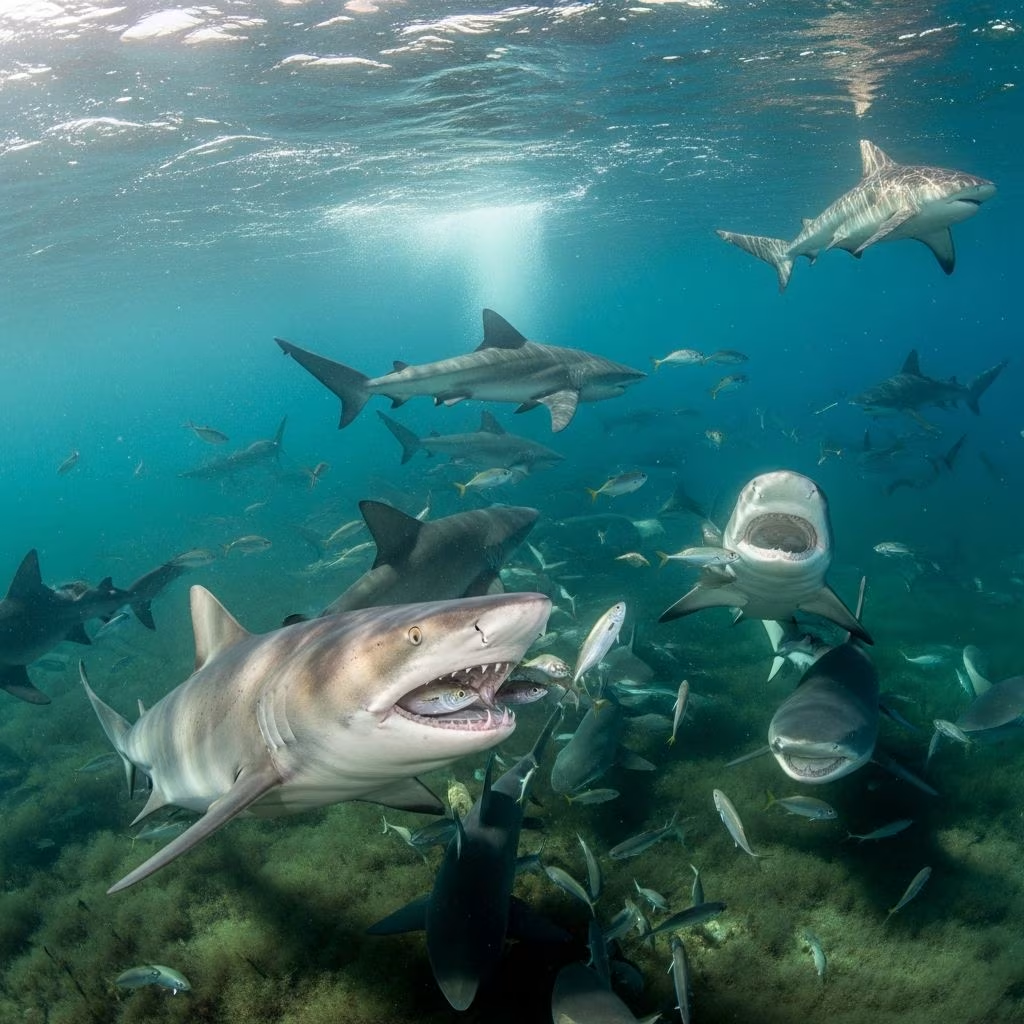
A viral video reveals a massive shark feeding event off Louisiana's coast, where scores of sharks tore into schools of yellowfin tuna, leaving fishermen in awe of nature's raw power.
 Travel Essentials
In the warm waters of the Gulf of Mexico, just 15 miles off the coast of Venice, Louisiana, an extraordinary natural event unfolded that left seasoned fishermen speechless. A viral video captured dozens of sharks in a frenzied attack on a massive school of yellowfin tuna, creating a whirlwind of splashing water, thrashing tails, and devoured prey. This breathtaking display of predator-prey dynamics highlights the untamed power of marine life in one of America’s richest fishing grounds.
The scene began innocently enough for Dillon May, his girlfriend Kaitlyn Dix, and their friends aboard a fishing charter. They were targeting yellowfin tuna, a prized game fish known for its speed and fight, when they noticed unusual water movement. What they initially mistook for a ‘tuna boil’—a surface disturbance caused by tuna feeding on baitfish—quickly revealed itself as something far more intense.
As they approached, the water erupted into chaos. Scores of sharks, identified by locals as likely blacktip and spinner species common to the Gulf, were tearing into the tuna with relentless ferocity. May grabbed his phone to record the event, capturing over a minute of non-stop action. ‘Never seen anything like it,’ he later shared, echoing the sentiments of everyone on board. The video, shared via social media platforms like Storyful, exploded online, garnering millions of views and sparking discussions about shark behavior in coastal waters.
The stars of this frenzy were predominantly blacktip sharks (Carcharhinus limbatus) and spinner sharks (Carcharhinus brevipinna), two agile predators that thrive in the Gulf of Mexico. Blacktips are named for the white tips on their dorsal and pectoral fins, growing up to 8 feet long and weighing around 400 pounds. Spinner sharks earn their name from their acrobatic breaching spins while hunting, often leaping clear of the water.
Both species form large schools, sometimes numbering in the hundreds, especially during feeding events. In this case, estimates from the video suggest at least 50-100 sharks participated, creating a ‘shiver’—the collective term for a group of sharks. These opportunistic feeders target schools of baitfish and larger prey like tuna when available, using their speed (up to 20 mph) to outmaneuver victims.
The Gulf of Mexico serves as a vital nursery and feeding ground for numerous shark species. Its nutrient-rich waters, influenced by the Mississippi River outflow, support massive schools of tuna, menhaden, and mullet—prime attractants for predators. Venice, often called the ‘Tuna Capital of the World,’ sits at the Mississippi Delta, where deep waters close to shore create ideal conditions for big-game fishing.
Seasonal migrations amplify shark presence. In late summer and fall, blacktips move inshore to give birth, while spinners patrol deeper blue water. Events like this feeding frenzy are not isolated; similar sightings occur annually, though rarely captured on video at such scale. Fishermen report increased shark interactions during tuna runs, underscoring the interconnected ecosystem.
| Shark Species | Habitat Preference | Size Range | Prey Focus |
|---|---|---|---|
| Blacktip | Nearshore reefs, estuaries | 5-8 ft | Tuna, mullet, stingrays |
| Spinner | Offshore pelagic | 6-10 ft | Bonito, jacks, squid |
| Bull Shark | River mouths, brackish | 7-11 ft | Everything opportunistic |
Sharks are apex predators with remarkable adaptations for survival. They can fast for up to six weeks, storing energy in their livers, before entering hyperphagic ‘eating phases’ triggered by abundant prey. During these binges, they consume voraciously, often eating far beyond immediate needs. NOAA Fisheries notes that sharks are not picky; stomach contents have included tires, license plates, and even armor suits, though they primarily target fish, seals, and marine mammals.
In a frenzy like this, sharks employ sensory overload: electroreceptors detect muscle contractions, nostrils pick up blood scents from miles away, and lateral lines sense vibrations. Group feeding confuses prey, increasing capture rates. Tuna, despite speeds of 45 mph, become overwhelmed in the melee, leading to mass casualties.
Venice’s charter fleet thrives on yellowfin tuna, with catches supporting a multi-million-dollar industry. A single good day can yield fish worth thousands. However, shark frenzies pose challenges: they steal hooked tuna (a phenomenon called ‘sharking’) and deter bites during peak action. Captains adapt by using heavy leaders and targeting dawn/dusk when sharks are less active.
Despite this, the event boosts tourism. Viral videos draw adventure seekers, and guided shark-viewing trips are gaining popularity. Local outfitters emphasize safety: maintain distance, avoid chumming near swimmers, and use electronic repellents if needed.
Encounters with shark schools are thrilling but require caution. NOAA recommends:
Swimmers should heed beach flags and avoid dawn/dusk. Statistically, shark attacks in the Gulf are rare (fewer than 10 unprovoked annually), with most involving misidentified fish bites.
Despite fearsome reputations, many Gulf sharks face population declines from overfishing and bycatch. Blacktips are managed under NOAA quotas, with recreational bag limits to ensure sustainability. Organizations like the Gulf States Marine Fisheries Commission monitor stocks, promoting circle hooks to reduce gut-hooking.
Habitat protection is key: oil spills and dead zones from runoff threaten nurseries. Initiatives like the Shark Finning Prohibition Act ban wasteful practices, allowing populations to rebound. Tourists can contribute by choosing sustainable charters certified by the Marine Stewardship Council.
This frenzy exemplifies balanced predation. Sharks cull weak tuna, preventing overgrazing of baitfish and maintaining food web health. Declines in shark numbers correlate with jellyfish booms and fishery crashes elsewhere, highlighting their role as ‘sea cleansers.’
Climate change adds uncertainty: warming waters shift migrations northward, potentially intensifying Gulf events. Researchers track via tags and drones, predicting hotspots for safer human-wildlife coexistence.
The video amassed over 10 million views across platforms, eliciting awe (‘Nature’s true horror show!’) and education requests. Comments ranged from thrill-seekers planning trips to concerns about shark overpopulation—debunked by data showing stable or recovering numbers.
Social media amplified scientific outreach, with NOAA and aquariums sharing facts to dispel myths. This event underscores video’s power in conservation awareness.
A large school of yellowfin tuna attracted opportunistic blacktip and spinner sharks, leading to a competitive feeding event.
Blacktips and spinners rarely attack humans, preferring fish. Attacks are minimal compared to other coastal hazards.
Frequently during tuna seasons (summer-fall), though massive schools like this are less common and depend on prey abundance.
Yes, with precautions: heavy tackle, quick releases, and avoidance of peak frenzy times.
Essential predators controlling prey populations, ensuring biodiversity and healthy fisheries.
