

 Travel Essentials
 Travel Essentials

Your complete guide to Shenandoah National Park: entry details, top hikes, lodging options, seasonal tips, and must-see spots along Skyline Drive.
 Travel Essentials
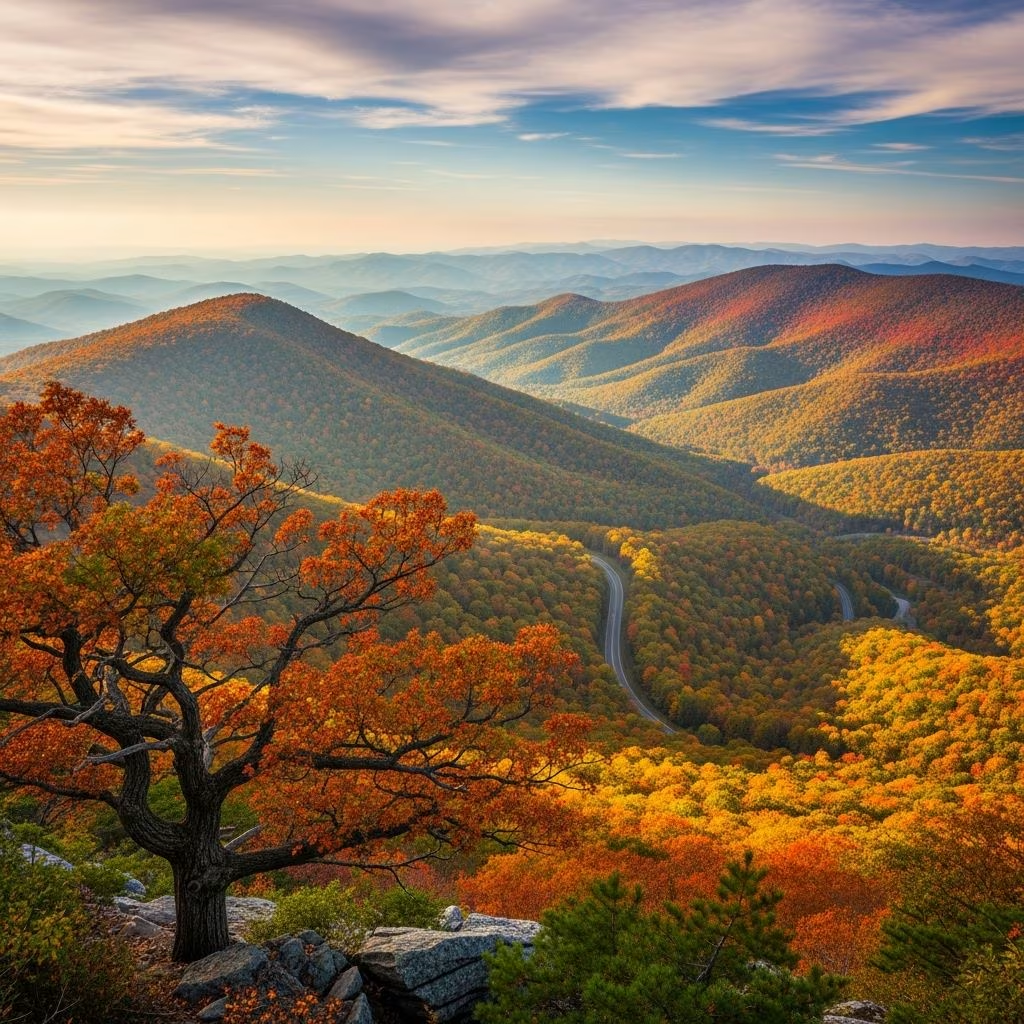
Shenandoah National Park spans over 200,000 acres in Virginia’s Blue Ridge Mountains, offering a serene escape just 75 miles from Washington, D.C. This protected haven features cascading waterfalls, panoramic vistas, wildflower meadows, and dense forests teeming with deer, songbirds, and black bears.
Access the park via four main entrance stations: the northern gate near Front Royal off Route 340 (Mile 0), Thornton Gap between Luray and Sperryville on Highway 211 (Mile 31.5), Swift Run Gap between Elkton and Stanardsville (Mile 65.7), and Rockfish Gap near Waynesboro and Charlottesville on Highway 250 (Mile 105), which connects to the Blue Ridge Parkway. Skyline Drive, the park’s 105-mile spine, uses mile markers from north (Mile 1 at Front Royal) to south (Mile 105 at Rockfish Gap) for navigation.
Entry requires a fee: $30 per vehicle for 7 days, $25 for motorcycles, or $55 for an annual pass. Seniors 62+ can get a lifetime pass for $80, while military members and 4th graders enter free. Check for fee-free days on the official calendar. The park operates year-round, but Skyline Drive closes during harsh winter weather—verify road status before traveling.
Skyline Drive is the primary route, winding through the park with 75 overlooks for stunning valley views. Drive times vary: north district (Miles 0-31) takes about 1 hour; central (Miles 31-65) around 1 hour; south (Miles 65-105) roughly 50 minutes without stops. Cyclists share the road, but no shuttles operate—personal vehicles are essential. Fuel up at the sole gas station in Big Meadows (Mile 51).
The Appalachian Trail parallels Skyline Drive for 101 miles, providing easy access points for hikers. Key visitor hubs include the Byrd Visitor Center at Big Meadows (Mile 51), featuring exhibits on park history, flora, fauna, and the displacement of over 500 families during its 1930s creation.
With over 500 miles of trails, including 101 miles of the Appalachian Trail, hiking dominates activities. Trails range from flat, accessible paths to strenuous ascents—note that even easy ones often involve uphill returns.
Always check trail conditions, elevation gains, and slippery rocks near falls. Ranger-led hikes enhance safety and education.
Spring (late April-May) offers mild weather, blooming wildflowers, and fewer crowds before summer leaves fill out—perfect for vistas. Summer brings lush greenery and peak visitation; fall explodes in reds, oranges, and golds (September-October), drawing leaf-peepers. Winter suits snowshoers but limits drive access. Avoid peak weekends; opt for weekdays or lesser-known trails like Turk Mountain or Little Calf Mountain near Charlottesville.
Elevations from 600 to 4,051 feet mean variable microclimates: cooler ridges, warmer valleys. Pack layers, rain gear, sturdy shoes, and bear spray awareness—sightings occur but attacks are rare. Stay on trails to prevent slips.
Stay inside for immersion: lodges like Big Meadows (Mile 51) offer rooms with fireplaces; Skyland Resort (Mile 41.7) provides cabins and dining. Campgrounds include Big Meadows (219 sites), Lewis Mountain (31 sites), and Mathews Arm (165 sites)—reservations essential in peak season via recreation.gov. Backcountry permits are free but required for wilderness camping along the AT. Nearby towns like Luray or Waynesboro offer hotels.
| Location | Mile Marker | Type | Features |
|---|---|---|---|
| Big Meadows | 51 | Lodge/Campground | Visitor center, gas, dining, 219 sites |
| Skyland | 41.7 | Resort | Cabins, restaurant, trails |
| Lewis Mountain | 51.4 | Campground | 31 sites, historic |
| Mathews Arm | 33.5 | Campground | 165 sites, lake access |
Options cluster at Big Meadows and Skyland: cafeterias serve burgers, salads, and local brews; lodges offer upscale meals. Stock groceries outside or picnic at overlooks. The park store sells essentials; no other major services exist.
Spot black bears, deer, turkeys, and over 200 bird species. Exhibits at Byrd Center detail the park’s 1935 establishment, rocky terrain transformation mimicking Western parks, and human stories. Ranger programs cover geology, wildlife walks, and junior ranger activities for kids.
Bears habituated to humans pose risks—store food properly. Lightning storms demand shelter; hydration prevents heat issues. No drones; pets restricted to roads. Leave No Trace: pack out trash, yield to hikers.
One Day: Enter Thornton Gap, hike Hawksbill, visitor center, drive select overlooks.
Weekend: Day 1 north district (Stony Man, Mathews Arm camp); Day 2 central (Big Meadows, falls).
Week: Full drive, south hikes like Blackrock Summit, AT sections, stargazing.
Yes, ideal for day hikes or overnights via Skyline Drive.
Yes, over 200 black bears; store food securely.
Yes, but share with cars; steep grades challenge.
Fall foliage or spring for balance of beauty and crowds.
For lodging/camping yes; trails first-come.
