

 Travel Essentials
 Travel Essentials

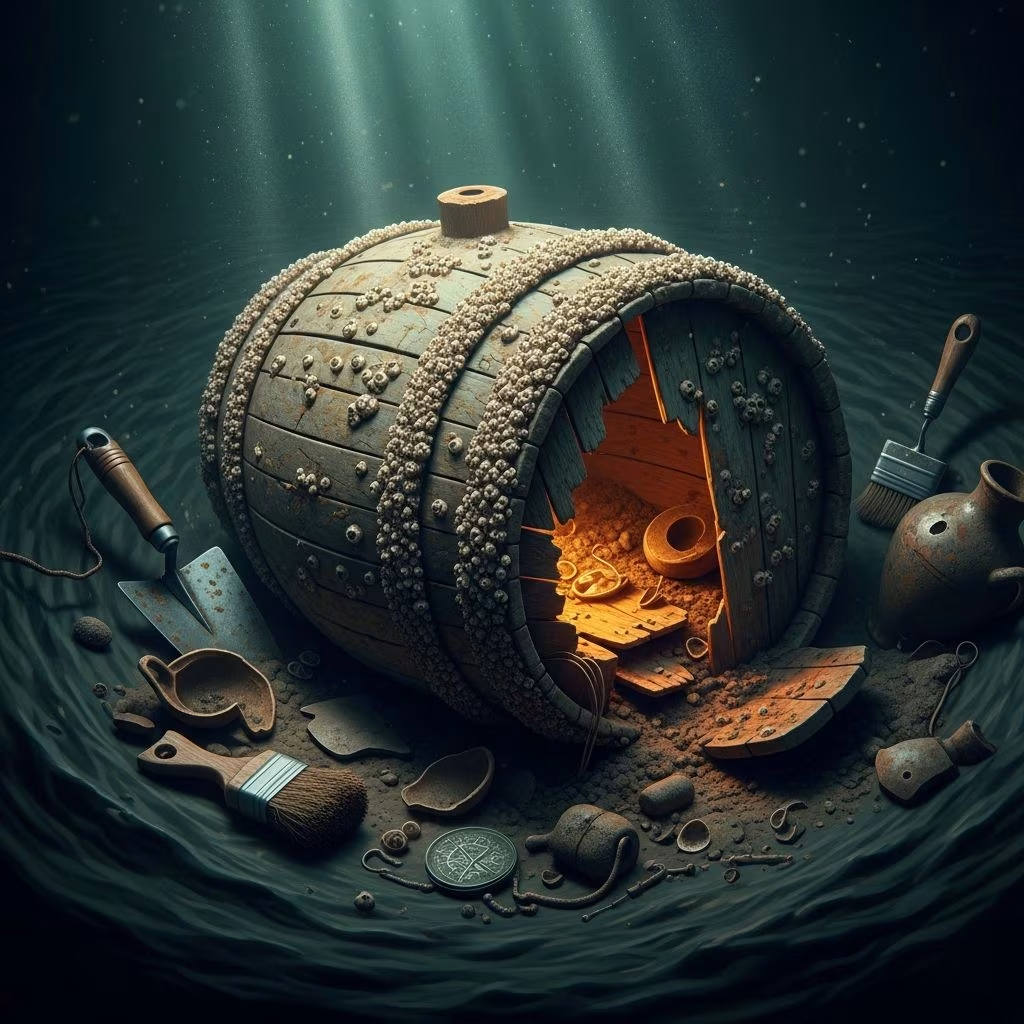
Shipwrecked beer bottles preserved for centuries reveal living yeast, letting scientists and brewers recreate flavors from the age of sail.
 Travel Essentials
Buried under layers of sand and seawater for centuries, bottles of beer from long-lost ships offer a unique window into history. These maritime time capsules preserve not just liquid but living yeast strains that brewers today are using to recreate flavors from bygone eras. From the turbulent waters off Australia to the chilly depths of the Baltic Sea, such discoveries blend archaeology, microbiology, and brewing artistry.
In 1797, the barque Sydney Cove set sail from Calcutta bound for Port Jackson, carrying supplies for Britain’s nascent penal colony in what is now Sydney. Caught in a ferocious storm in Bass Strait, the ship leaked badly and was eventually beached on Preservation Island near Tasmania. While many crew survived by trekking to safety, the vessel sank weeks later, entombing its cargo—including dozens of beer bottles—beneath protective sand and seagrass.
Divers first located the wreck in 1977, but it was marine archaeologists in the 1990s who recovered 26 intact beer bottles from the hold. These artifacts found a home at Tasmania’s Queen Victoria Museum, where one unopened bottle stands as the world’s oldest verified beer, surpassing a 133-year-old lager in Denmark’s Carlsberg Museum.
Chemist David Thurrowgood, joining the museum in 2014, eyed the murky liquid in one bottle and wondered if viable yeast microbes lingered within. Defying skeptics who believed beer yeast couldn’t survive beyond a decade, Thurrowgood rallied an international team from Australia, Belgium, France, and Germany. The original bottle’s contents proved barren, but samples from two others—decanted two decades prior—yielded success.
Through meticulous culturing, they isolated five distinct yeast species and several bacteria strains, offering insights into pre-Industrial Revolution microbiomes in human diets. DNA analysis confirmed the yeasts were not contaminants but original survivors, akin to those in Europe’s Trappist ales—suggesting the beer was a premium English export for colonial officers.
The result? Preservation Ale, a mild brew following an 18th-century recipe. Tasters note its distinctive, subtle profile, evoking the era’s table beers meant for daily refreshment rather than bold flavors.
Half a world away, in the Baltic Sea south of the Åland Islands, another wreck from roughly 1800-1830 has captivated researchers. This unnamed schooner, possibly ferrying cargo from Copenhagen to St. Petersburg—perhaps a gift from France’s King Louis XVI to Russia’s court—yielded champagne bottles in 2010, followed by beer discoveries.
Salvage divers, led by figures like Rainer Juslin from Åland’s ministry, recovered beer bottles at 50 meters depth. One burst upon surfacing, spilling dark, golden fluid confirmed as beer with living cultures. Officials hail it as potentially the oldest drinkable beer, its cloudy elixir now under analysis by Finnish scientists aiming to model new recipes from its ingredients.
How do these brews endure? Seawater’s anaerobic conditions, combined with bottle seals and sediment layers, create ideal preservation. Yeast enters dormancy, some strains remarkably resilient. Modern techniques like DNA sequencing and culturing isolate viable microbes, excluding post-recovery contaminants.
| Shipwreck | Date Sank | Location | Beer Age | Modern Recreation |
|---|---|---|---|---|
| Sydney Cove | 1797 | Bass Strait, Australia | 220+ years | Preservation Ale |
| Åland Wreck | 1800-1830 | Baltic Sea | 190-220 years | In analysis |
| SS Oregon | 1886 | Off New York | 140 years | Deep Ascent Ale |
In the age of sail, beer was staple ship fare—safer than water, nutrient-rich, and low-alcohol for discipline. Colonial traders like Sydney Cove stocked it for officers and crew, reflecting England’s brewing prowess. These weren’t hearty porters but light ales suited to warm climates and long voyages.
Recreating shipwreck beers demands precision. Scientists replicate period grains, hops, and methods while adapting for safety—discarding original liquids due to potential pathogens. The yeast imparts authenticity: Sydney Cove’s evokes Trappist subtlety, while Baltic beers promise robust, cloudy profiles.
Challenges include scaling microbial cultures and balancing historical accuracy with palatability. Yet successes like Preservation Ale prove feasible, thrilling craft brewers worldwide.
Travelers can encounter these relics:
No—original liquids harbor bacteria risks. Only revived yeast in new brews is consumed.
The Sydney Cove bottle from 1797, at over 220 years.
Samples are cultured in labs; DNA verifies authenticity.
Limited releases like Preservation Ale appear in specialty markets; check local craft scenes.
Likely—thousands of wrecks dot seabeds, promising future finds.
These projects safeguard history, educating on colonial trade, microbial science, and brewing evolution. Museums and breweries collaborate, turning wrecks into tastable legacies. As technology advances, more ancient ales may foam again, connecting us to sailors of old.
