

 Travel Essentials
 Travel Essentials

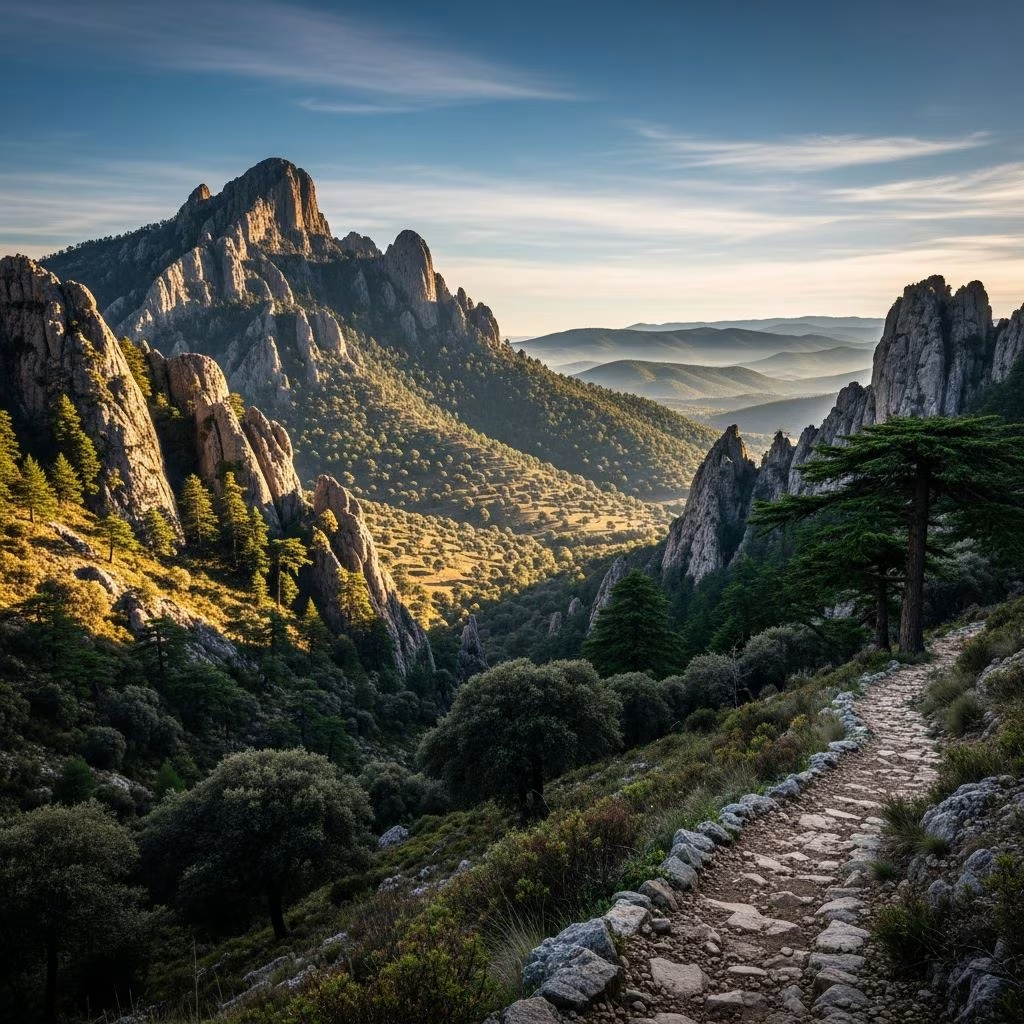
Explore Sierra de las Nieves National Park: home to unique Spanish firs, Pico Torrecilla, rare wildlife, and epic hikes near Malaga. A UNESCO Biosphere Reserve turned national park in 2021.
 Travel Essentials
Nestled in the sun-drenched province of Malaga, southern Spain, Sierra de las Nieves National Park stands as a testament to nature’s enduring power. Declared a national park in 2021, this expansive protected area spans roughly 18,530 hectares across the Betic Mountain Range, centered around the imposing Pico Torrecilla at 1,919 meters—the highest point in Malaga. Once a natural park and UNESCO Biosphere Reserve since 1995, it safeguards some of Europe’s most unique ecosystems, from relic conifer forests to dramatic gorges and snow-dusted peaks (earning its name, meaning ‘Mountains of the Snows’). Ideal for hikers, nature lovers, and those seeking respite from the Costa del Sol’s bustle, the park offers unparalleled biodiversity just 50 minutes from Malaga Airport.
The park’s terrain is a geologist’s dream, shaped by millions of years of tectonic activity in the Penibaetic System. Towering peaks, deep ravines like the Caina Gorge, and sheer 100-meter slopes create a rugged mosaic. Complex geology fosters varied microclimates, from Mediterranean scrub at lower elevations to alpine conditions atop Torrecilla, where winter snow occasionally lingers—a rarity in southern Spain.
Visitors are drawn to karst formations, limestone cliffs, and hidden valleys that channel rare moisture, supporting lush vegetation amid otherwise arid surroundings. The area’s isolation has preserved its wild character, with minimal human impact beyond a few mountain villages.
| Key Geological Features | Description | Best Viewing Spots |
|---|---|---|
| Pico Torrecilla | 1,919m summit, panoramic vistas | Quejigales trailhead |
| Caina Gorge | Steep ravines, river-carved walls | Access from Tolox |
| Karst Landscapes | Caves, sinkholes, limestone outcrops | Los Reales de Monda |
| Snow Pits (Neveros) | Historical ice collection sites | Higher elevations in winter |
At the heart of Sierra de las Nieves lies the Spanish fir (Abies pinsapo), a living fossil from Tertiary-era conifer forests. Endemic to southern Spain and northern Morocco, it thrives here across nearly 2,000 hectares—the world’s largest stand. These ancient trees, with silvery needles and symmetrical cones, cloak hillsides in ethereal fog-shrouded canopies, especially in the park’s core zones.
Botanists like 19th-century Edmond Boissier and 1933’s Luis Ceballos first documented this wealth, underscoring its global significance.
Sierra de las Nieves pulses with life, its position on migratory routes amplifying diversity. Mammals include Spanish ibex scaling cliffs, muflon rams, wild boar, roe deer, fallow deer, otters, and elusive wildcats. Birdwatchers tally 120+ species: golden eagles soaring overhead, goshawks, sparrowhawks, kestrels, and owls haunting twilight skies.
Aquatic life thrives in rivers—fish, amphibians, insects—balancing the food web. The park’s National Hunting Reserve status since 1970 has bolstered populations. No bears roam here, ensuring safer treks.
Over 100km of trails weave through the park, from gentle walks to challenging ascents. Water scarcity demands preparation—carry supplies. Key routes:
Beyond hiking, try horseback riding, climbing, or winter snowshoeing. Visitor centers in Ronda and park entrances offer maps and guides.
Fly into Malaga Airport (AGP), rent a car, and drive 50-60 minutes via A-397 to entrances like Refugio de las Nieves or Los Reales. Buses from Marbella or Ronda connect sporadically. Park in designated lots; shuttles serve popular trailheads.
Best Seasons:
Entry is free; respect rules—no drones, fires, or off-trail wandering. Accommodations range from Ronda paradores to eco-lodges in Tolox or Monda.
Human history echoes through Sierra de las Nieves. Phoenicians, Iberians, Romans, Visigoths, and Muslims traversed these passes, leaving ruins and traditions. Mountain villages like Igualeja and Pujalte preserve charcoaling heritage and snow-gathering in neveros—pits that stored winter ice for summer use. Today, locals craft esparto crafts and chestnut festivals celebrate heritage.
Protected milestones: 1970 National Hunting Reserve, 1995 UNESCO Biosphere, 2021 National Park via royal assent from King Felipe VI. Efforts combat climate threats to firs, invasive species, and fires. Visitor numbers are managed to preserve wilderness.
Yes, easier trails like Pinsapar are family-friendly; harder summits suit experienced hikers.
Visitor centers, restrooms, and picnic areas at main entrances; no shops on trails.
Designated zones only; wild camping prohibited.
Store food securely from boar; no bear risks. Stick to paths for ibex safety.
Limited; car recommended for flexibility.
Plan your Sierra de las Nieves adventure to witness Andalusia’s wild soul—where ancient firs whisper secrets and peaks pierce the sky.
