

 Travel Essentials
 Travel Essentials

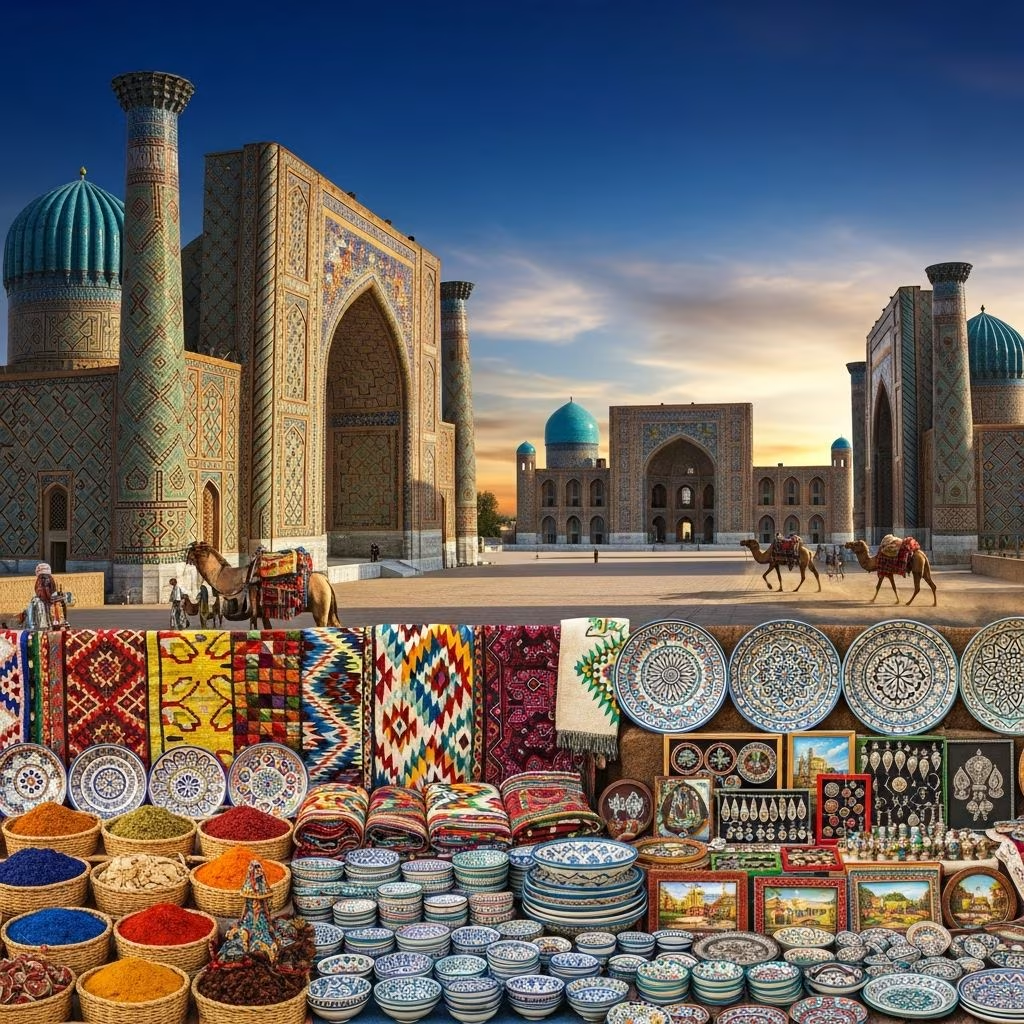
Explore Uzbekistan's iconic Silk Road sites including Samarkand's Registan, Bukhara's ancient citadels, and Khiva's walled old town, revealing a rich tapestry of trade, empires, and artistry.
 Travel Essentials
Uzbekistan stands as a living testament to the Silk Road’s legacy, where ancient trade routes once linked East and West. This Central Asian nation boasts UNESCO-listed cities like Samarkand, Bukhara, and Khiva, each preserving grand madrasas, towering minarets, and bustling bazaars that echo centuries of commerce, conquest, and cultural exchange.
The Silk Road transformed Uzbekistan into a pivotal hub for merchants, scholars, and conquerors. Spanning over 4,000 miles from China to Europe, these routes facilitated the exchange of silk, spices, paper, and ideas, fostering Buddhism, Zoroastrianism, Islam, and more. Uzbekistan’s position at the crossroads amplified its role, with cities evolving into oases of prosperity amid vast deserts.
Modern travelers can trace this path through well-preserved sites. High-speed trains connect Tashkent to Samarkand in under two hours, while desert drives reveal remote caravanserais. Uzbekistan’s stability and visa-free entry for many nationalities make it accessible for immersive journeys.
Samarkand, founded over 2,700 years ago and known to Alexander the Great as Marakanda, captivates with its azure-tiled domes. Conquered by Timur (Tamerlane) in the 14th century, it became his capital, adorned with monumental architecture symbolizing imperial might.
The Registan Square dominates as the city’s heart, a UNESCO site comprising three madrasas: Ulugbek, Sher-Dor, and Tilya-Kori. Intricate tilework depicts lions, suns, and Quranic verses, glowing under evening light shows. Climb Ulugbek’s minaret for panoramic views.
Nearby, Bibi-Khanym Mosque, once the world’s largest, showcases massive iwan portals despite earthquake damage. Ulugbek Observatory, with its underground meridian arc, highlights Samarkand’s scientific golden age. Day trips to Shahrisabz reveal Ak-Saray Palace ruins, Timur’s unfinished extravaganza.
Bukhara, over 2,500 years old, served as a spiritual and educational center during Islam’s Golden Age. Its compact old town brims with over 140 monuments, including mosques, minarets, and caravanserai-turned-bazaars.
The Ark Citadel, a massive mud-brick fortress, housed emirs for millennia, its thick walls witnessing sieges and splendor. Lyabi-Hauz Ensemble centers on a serene pond flanked by mulberry trees, madrasas, and teahouses—perfect for people-watching.
Poi-Kalyan Complex features the 12th-century Kalyan Minaret, dubbed the ‘Tower of Death’ for its execution platform, now a symbol of endurance. Nearby, Ismail Samani Mausoleum exemplifies early Islamic brickwork, its geometric patterns interlocking without mortar.
| Key Bukhara Sites | Historical Significance | Visitor Highlights |
|---|---|---|
| Ark Citadel | Emir residence since 5th century | Museum exhibits, panoramic views |
| Poi-Kalyan | Islamic call to prayer hub | 47m minaret, vast Friday Mosque |
| Lab-i Hauz | 17th-century plaza | Relaxing pond, traditional chai |
Khiva’s Ichan-Kala, a fully intact mud-brick citadel, feels like a step into a fairy tale. This UNESCO site, enclosed by 10m-high walls, preserves over 50 monuments from the 18th-19th centuries, when Khiva was a khanate slave-trading hub.
Tash-Hauli Palace dazzles with 150 rooms, carved wooden pillars, and harems. Juma Mosque’s 200+ columns, some dating to the 10th century, create a forest-like hall. Kunya-Ark Fortress offers rampart walks overlooking the desert.
Islam Khoja Minaret, at 45m, provides the best vantage for Ichan-Kala’s labyrinth. Evening strolls reveal teahouses serving plov and melon, evoking caravan rests.
Uzbekistan’s capital, Tashkent, blends Soviet boulevards with Silk Road relics. Chorsu Bazaar, under a massive dome, buzzes with spices, bread, and ikat fabrics—a trade hub since Timur’s era.
Kukeldash Madrasa and Independence Square offer urban contrasts. Venture to Fergana Valley for silk production in Margilan’s Yodgorlik Factory, where visitors witness mulberry-fed silkworms and handwoven ikat. Rishtan ceramics and Kokand’s khan palace add artisanal depth.
Beyond the trio, Termez reveals Silk Road’s diverse faiths at Fayaz Tepe Buddhist stupa and Karshi’s Nasaf Bazaar. Nukus’ Savitsky Museum hides Russian avant-garde art in a surreal Karakalpakstan outpost. Katta Langar village features a 16th-century shrine amid timeless landscapes.
Best visited April-June or September-October to avoid summer heat. High-speed Afrosiyob trains link major sites; shared taxis fill gaps. Homestays and boutique hotels mix with Soviet-era options. Bargain in bazaars, try plov and shashlik, and respect mosque dress codes.
Visas are straightforward; download offline maps. Guided tours enhance context, especially for Registan’s tilework symbolism.
Samarkand, Bukhara, and Khiva top the list for their UNESCO status and architecture.
10-14 days covers highlights, including Tashkent and Fergana.
Yes, with low crime and welcoming locals; stick to tourist paths.
Trains for comfort, buses or taxis for flexibility.
Ikat textiles, ceramics, spices, and mulberry paper.
UNESCO protections and restoration projects sustain these sites against earthquakes and tourism. Community-led initiatives in Fergana promote sustainable crafts, ensuring the Silk Road’s spirit endures for future generations.
