

 Travel Essentials
 Travel Essentials

Discover the surprising biology, strength, swimming skills, and symbiotic fur ecosystem that make sloths far more remarkable than they seem.
 Travel Essentials
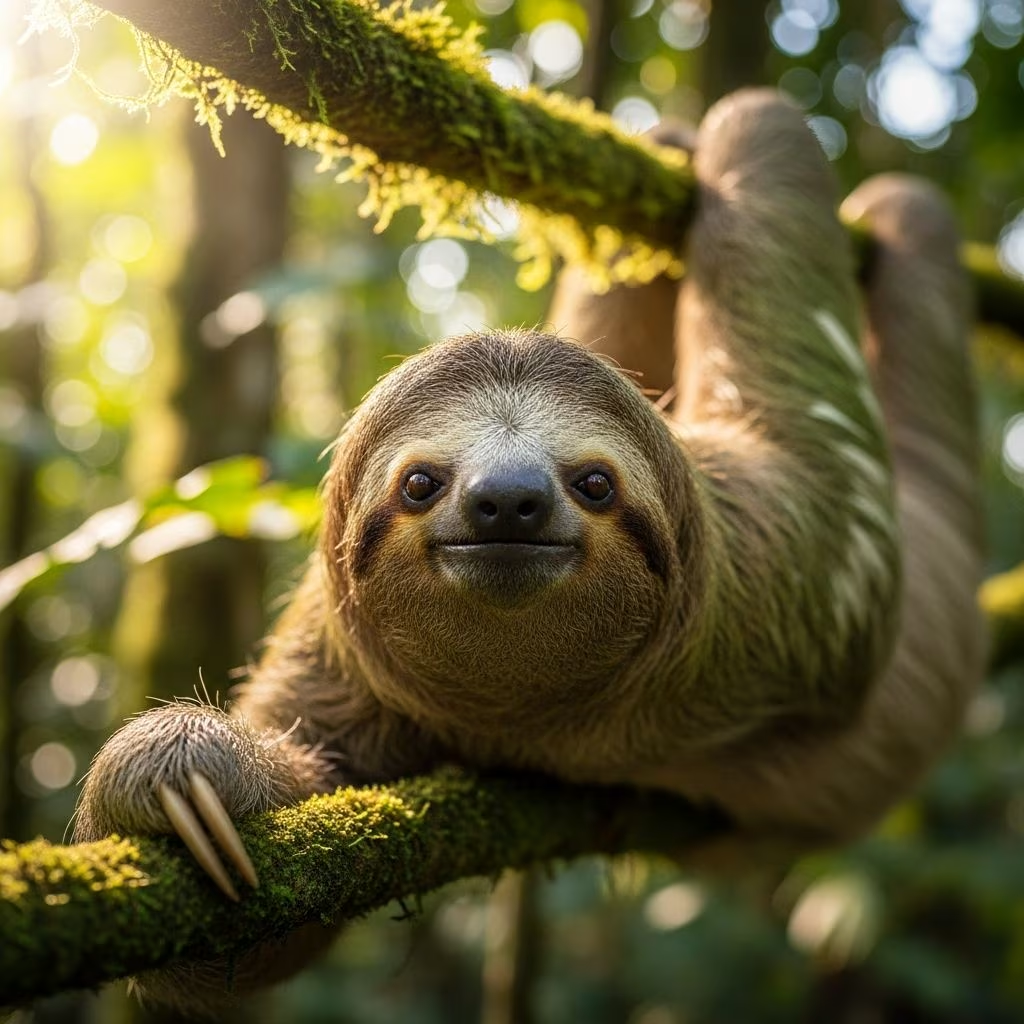
Sloths captivate with their leisurely pace and endearing expressions, but beneath this calm exterior lies a suite of remarkable adaptations that enable survival in the competitive rainforest canopy. These arboreal mammals, native to Central and South America, have evolved extraordinary traits over millions of years, from prehistoric behemoths to modern energy-conserving wonders. This article delves into their biology, behaviors, and ecological roles, revealing why sloths are far more complex than their sluggish reputation suggests.
Modern sloths descend from colossal ancestors that roamed the Americas during the Pleistocene epoch. These ancient giants, such as Megatherium americanum, could reach heights of over 19 feet and weigh several tons, dwarfing today’s tree-dwellers. Fossils indicate over 80 species existed, including aquatic forms like those in the genus Thalassocnus, which grazed on marine vegetation in shallow coastal waters. These mega-sloths were likely herbivores with powerful claws for foraging and defense, contrasting sharply with the petite, leaf-munching sloths we know today.
The transition from ground-dwelling giants to canopy specialists highlights dramatic evolutionary shifts driven by changing climates and predation pressures. While giant sloths went extinct around 10,000 years ago, possibly due to human hunting and habitat loss, their descendants perfected a low-energy lifestyle in treetops.
Despite their small size and minimal muscle mass—about 30% less than comparable mammals—sloths possess superhuman pulling power. From birth, they can hoist their entire body weight using a single arm, making them three times stronger than humans relative to size. This feat stems from specialized muscle fibers and tendons that lock claws in place, allowing effortless suspension without energy expenditure.
Such adaptations counter threats like jaguars, whose pulls sloths can resist while dangling. In lab tests, their grip endures extreme forces, underscoring an evolutionary trade-off: raw power over speed or bulk.
One of sloths’ most peculiar habits is defecating only once weekly, expelling up to one-third of their body weight in a single event. They descend from their tree, dig a small hole at the base, and cover it before climbing back—a risky journey exposing them to predators.
Theories abound: it may signal reproductive readiness via scent, maintain fur ecosystems, or optimize slow digestion. Their multi-chambered stomachs ferment tough leaves over days or weeks, a process mirroring cow rumination but far slower.
Sloths suffer from rod monochromacy, lacking cone cells for color vision and rendering them blind in bright light. They navigate dim understories via acute smell, spatial memory, and touch. This poor eyesight contributes to their caution, preventing hasty falls in complex branches.
Three-toed sloths boast exceptional neck flexibility, rotating heads nearly 360 degrees thanks to extra vertebrae—more than any other mammal except owls. This panoramic view aids foraging and vigilance without repositioning.
Sloths forgo precise thermoregulation to conserve energy, letting core temperatures swing 10°C daily. In cold snaps, gut microbes essential for leaf digestion may perish, starving the sloth despite a full stomach. Their basal metabolic rate is among the lowest in mammals, suiting a cecum-based diet of fibrous foliage.
Recent Panama studies debunked the 20-hour sleep myth; sloths rest 8-10 hours nightly, akin to humans, freeing time for subtle movements.
Sloth fur hosts thriving micro-communities: green algae, fungi, moths, and beetles—up to 950 invertebrates per animal. Algae camouflage sloths against predators and provide supplemental nutrition when ingested during grooming.
Moth populations link to defecation; adults lay eggs in dung, larvae migrate to fur, dying to fertilize algae upon descent. This symbiosis boosts survival: camouflage, food, and possibly antibiotics from fur microbes.
| Component | Role | Benefit to Sloth |
|---|---|---|
| Algae | Camouflage & nutrition | Blends with foliage; edible supplement |
| Moths/Beetles | Fertilizer cycle | Sustains algae growth |
| Fungi | Potential antibiotics | Combats pathogens |
Contrary to treetop torpor, sloths excel in water, swimming three times faster than on land via a canine-paddle stroke or leisurely backstroke. This skill aids river crossings, predator evasion, and access to mineral licks. Dense fur traps air for buoyancy, and powerful arms propel efficiently.
Observations show sloths covering kilometers without fatigue, highlighting versatile locomotion beyond branches.
Six extant species split into two-toed (Choloepus) and three-toed (Bradypus) genera, differing in claw count, size, and habits. Two-toed sloths are larger, nocturnal omnivores; three-toed are smaller herbivores with opposable inner toes for grooming.
The pygmy three-toed sloth, exclusive to Panama’s Isla Escudo de Veraguas, teeters on critically endangered status due to habitat loss. Conservation targets threats like pet trade and deforestation.
Sloths tumble from trees weekly due to visual limits and slippery bark, yet survive 100-foot drops unscathed. Their sturdy skeletons, flexible joints, and low mass mitigate impact. Organs anchor to ribcages, preventing lung compression during inverted hangs.
Rainforest deforestation, poaching for pets, and climate shifts endanger sloths, once among the canopy’s most abundant mammals. Initiatives like the Sloth Conservation Foundation advocate protection, rehab, and research to safeguard these icons.
Once a week, losing up to a third of body weight.
Yes, three times stronger than humans proportionally, with locking tendons.
Exceptionally well, three times faster than on land.
Symbiotic algae provide camouflage and nutrition.
Six, in two-toed and three-toed groups.
