


 Food & Culture
Food & Culture
Slow Food in Italy: History, Philosophy and Regional Cuisine
Discover how Italy’s Slow Food movement defends regional cuisine, sustainable farming, and the joy of eating well.
 Food & Culture
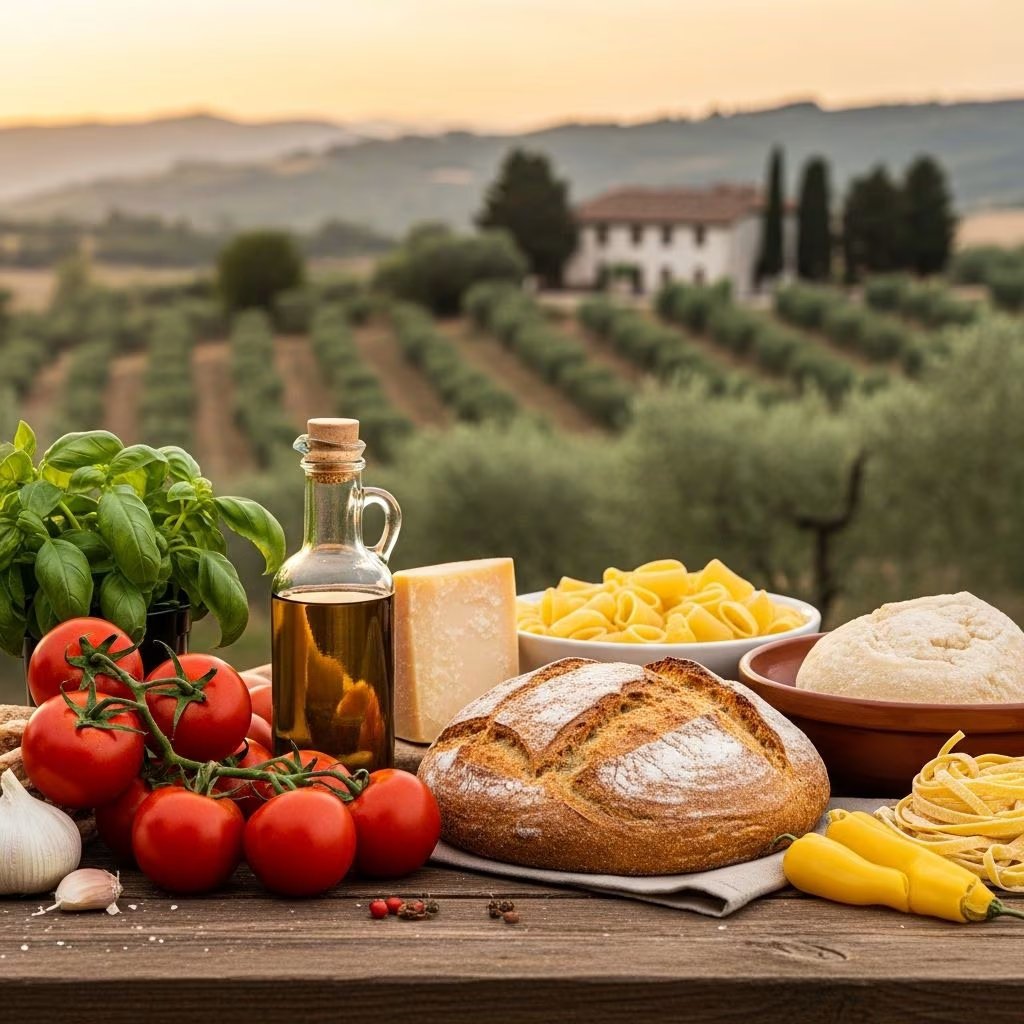
Italy’s Slow Food movement emerged as a powerful counterforce to the rise of fast food, emphasizing joy in eating, regional ingredients, and cultural preservation. Founded in response to globalization’s threat to traditional cuisines, it has grown into a global network promoting sustainable practices.
Birth of a Culinary Resistance
In 1986, amid the opening of Italy’s first McDonald’s near Rome’s iconic Spanish Steps, journalist Carlo Petrini rallied protesters not with signs but with steaming bowls of penne pasta, declaring opposition to ‘fast food’ in favor of ‘slow food.’ This symbolic act birthed Arcigola, the precursor to Slow Food, highlighting concerns over cultural homogenization.
Petrini, from the Piedmont town of Bra, observed the severing of ties between farmers and consumers due to supermarkets and chains. His vision sought to reclaim culinary authenticity, focusing on fresh, local produce and time-honored methods inherent to Italian heritage.
- Key trigger: McDonald’s arrival in historic Rome site.
- Protest tactic: Serving traditional pasta to crowds.
- Foundational ethos: Defend regional flavors against uniformity.
Core Philosophy: Good, Clean, Fair
Slow Food’s manifesto, signed in Paris in 1989 by delegates from 15 nations, rejected ‘Fast Life’—a rushed existence devoid of savoring meals. It advocates for food that is good (flavorful and nutritious), clean (environmentally sustainable), and fair (ethically produced and accessible).
This triad guides initiatives worldwide, encouraging diverse farming, seed preservation, and livestock breeds suited to local ecosystems. In Italy, it manifests in protecting specialties like Piedmont’s hazelnuts or Tuscany’s heirloom beans from industrial erosion.
| Principle | Description | Italian Example |
|---|---|---|
| Good | Delicious, healthy taste from quality ingredients | Artisanal pecorino cheese aged traditionally |
| Clean | No harmful chemicals, biodiversity-friendly | Organic vineyards in Chianti |
| Fair | Equitable pay for producers, community support | Cooperatives in Emilia-Romagna |
Expansion from Local Roots to Global Network
By 1989, Slow Food formalized as a nonprofit in Bra, Italy, now its headquarters. Today, it spans over 122 countries with 450 chapters, hosting biennial Terra Madre conferences in Turin that draw thousands to celebrate small-scale producers.
Terra Madre, launched in 2004, unites 5,000 delegates from 130 countries, spotlighting food communities safeguarding traditions and ecosystems. It evolved into a platform for social justice, linking producers with advocates for policy change.
In Italy, condotte (local chapters) organize tastings, support markets, and educate via Master of Food classes. The movement influences politics on biodiversity, climate, and energy.
Preserving Italy’s Regional Treasures
Italy’s mosaic of cuisines—from Sicily’s arancini to Veneto’s risotto—thrives under Slow Food’s Ark of Taste, cataloging endangered products. This initiative rescues varieties like the Cuneo round potato or Lardo di Colonnata, promoting their cultivation.
Family farms resist industrial agriculture, maintaining la dolce vita centered on pasta, prosciutto, and parmesan. Slow Food fosters school gardens, solidarity groups, and Fairtrade ties, embedding activism in daily life.
- Ark of Taste: Database of 5,000+ global heirlooms, hundreds Italian.
- Presidia: Projects reviving 400+ fading traditions.
- University of Gastronomic Sciences: Founded by Petrini for food education.
Practical Ways to Embrace Slow Food in Italy
Travelers can immerse in Slow Food by visiting Bra’s headquarters or Turin’s Terra Madre. Seek osteria with seasonal menus, farmers’ markets in Bologna, or agriturismi in Umbria for farm-to-table stays.
Join convivia for themed dinners featuring hyper-local dishes. In Rome, trace origins near Spanish Steps; in Piedmont, hike to hazelnut groves. Cooking classes teach slow techniques like handmade pasta.
- Plan around Salone del Gusto, Slow Food’s biennial expo.
- Dine at Osteria dell’Arca in Bra.
- Explore Presidia products at specialty shops.
Challenges and Future Horizons
Despite growth, Slow Food faces climate threats, economic pressures on small farms, and fast food’s persistence. It counters via advocacy for regenerative agriculture and youth engagement through gardens.
Petrini remains president, steering toward a world where all access quality food. Recent efforts tackle social justice, linking plate to planet and politics.
Frequently Asked Questions
What sparked the Slow Food movement?
A 1986 protest against McDonald’s near Rome’s Spanish Steps, led by Carlo Petrini.
Where is Slow Food headquartered?
Bra, Piedmont, Italy, home to its university and events.
How does Slow Food differ from organic farming?
It encompasses cultural preservation, fair economics, and pleasure beyond just chemical-free growth.
Can I join Slow Food?
Yes, via local chapters worldwide for events and advocacy.[10]
What is Terra Madre?
A global gathering of food producers every two years in Turin.
References
- Local Foods and the Slow Food Movement in Italy — Italian Connection. 2023. https://italian-connection.com/italian-food-culture/italy-slow-food/
- Our History — Slow Food. 2024-10-15. https://www.slowfood.com/our-history/
- A Brief History of the Slow Food Movement — Tourissimo. 2022-05-12. https://www.tourissimo.travel/blog/a-brief-history-of-the-slow-food-movement
- What is the Slow Food Movement? — Slow Living LDN. 2023-08-20. https://slowlivingldn.com/journal/gather-feast/what-is-the-slow-food-movement/
- Italy – Slow Food. Rich Culture — Student Diplomacy Corps. 2024. https://sdcorps.org/italy-slow-food-rich-culture/
← Previous
Curaçao Pride 2026: Caribbean LGBTQ+ Celebration Guide
Next →
Beirut Travel Guide: History, Food, Nightlife & Neighborhoods
Related Reading
More in Food & Culture
Food & Culture Food & Culture
 Food & Culture
Best Places to Eat in Rome: Neighborhood Dining Guide
 Food & Culture
 Food & Culture