

 Travel Essentials
 Travel Essentials

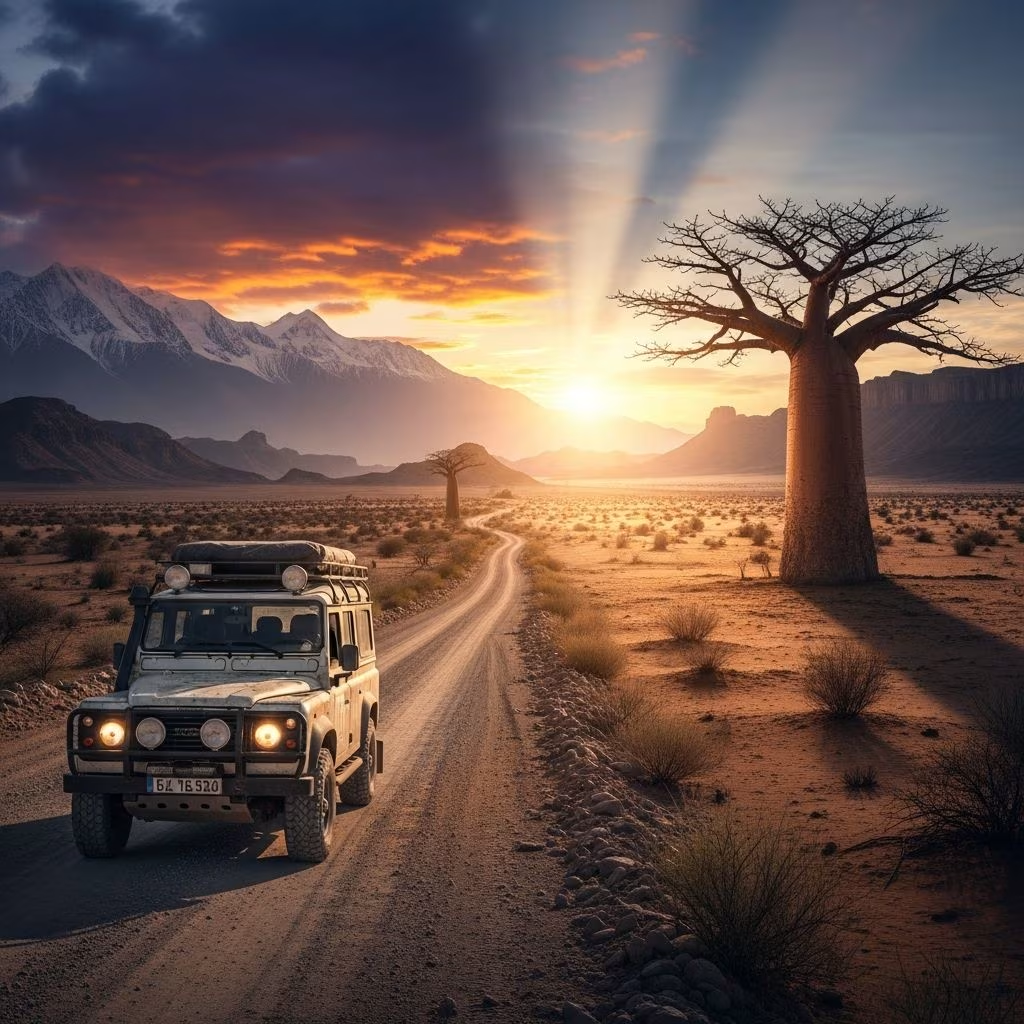
Explore the profound impact of long-distance overland travel, combining slow travel philosophy with automotive adventure across diverse landscapes and cultures.
 Travel Essentials
Travel has undergone a fundamental transformation in recent decades. Where once explorers and adventurers defined the practice of traversing continents, contemporary travelers increasingly seek meaningful engagement with the destinations they visit rather than merely collecting destinations. This shift reflects a deeper understanding that authentic experience requires time, patience, and genuine interaction with local communities and landscapes.
The traditional model of rapid transit—flying into a city, spending 48 hours as a tourist, and moving on—has given way to a more thoughtful approach. Modern travelers recognize that understanding a place requires immersion, observation, and the willingness to slow down. Overland journeys by vehicle represent one of the most compelling expressions of this philosophy, combining the practical advantages of automotive travel with the philosophical principles of cultural appreciation and environmental awareness.
Driving across vast distances offers unique advantages that other travel methods cannot replicate. Unlike air travel, which severs the connection between origin and destination, overland routes create a continuous narrative. You witness geographical transitions gradually—the shifting of landscapes, the evolution of architecture, the subtle changes in food and dialect that mark regional boundaries. This gradual transformation aids psychological adjustment and deepens your understanding of why places differ.
The flexibility inherent in automotive travel cannot be overstated. When traveling by train or plane, you follow predetermined schedules and fixed routes. With a vehicle, you retain agency over your itinerary. If you discover an unexpected village worthy of exploration, you can detour. If weather or personal circumstances require adjustment, you adapt without penalty. This autonomy transforms travel from a structured activity into a dynamic experience responsive to discovery and opportunity.
One of the most significant advantages of overland travel involves the extended time spent in individual locations. Rather than rushing through major attractions, travelers can settle into smaller towns and rural areas, allowing relationships with local communities to develop organically.
When you spend weeks in a region rather than days, several transformative changes occur:
This depth of engagement contrasts sharply with conventional tourism, where cultural understanding remains superficial and mediated through commercial channels designed for outsiders.
Beyond philosophical considerations, driving offers concrete practical benefits. Vehicle travel eliminates dependence on public transportation schedules, airport logistics, and accommodation availability in tourism hotspots. You control your route, your pace, and your accommodation through flexible options like camping, rural lodging, and smaller hotels.
The cost structure of overland travel often proves more economical than traditional tourism. Avoiding expensive resort areas and tourist-oriented restaurants in favor of local establishments, combined with flexible accommodation options, can significantly reduce expenses. Cooking your own meals occasionally, shopping at local markets, and staying outside city centers all contribute to sustainable budgeting.
Vehicle travel also provides practical advantages for experiencing diverse ecosystems and geographical features. National parks, remote villages, and scenic routes often lack convenient public transportation. A personal vehicle opens access to landscapes and communities that tourism infrastructure typically ignores.
Long-distance overland travel functions as a form of extended meditation and personal reflection. The combination of physical movement, changing scenery, and reduced daily pressures creates psychological space that modern life rarely permits. Many travelers report significant personal insights and perspective shifts during extended journeys.
The structured monotony of driving—handling routine mechanical tasks, maintaining vehicle systems, navigating terrain—paradoxically frees mental space for deeper thought. Conversations with fellow travelers, encounters with strangers, and solitary reflection time combine to facilitate personal growth that rushed travel cannot provide.
Additionally, overcoming the practical challenges inherent in extended overland travel builds resilience and confidence. Mechanical problems, navigational challenges, unexpected weather, and cultural barriers all require problem-solving and adaptation. Successfully addressing these challenges develops practical competence and reduces anxiety about future challenges.
Extended overland routes frequently traverse multiple climatic zones and ecological regions. This geographical diversity offers educational value regarding how human societies adapt to different environmental conditions. Architecture, agriculture, cuisine, clothing, and daily practices all reflect local climate and resources.
Understanding these connections through direct observation rather than academic study creates more meaningful learning. Experiencing the intense heat that influences siesta culture, the architectural styles that manage temperature, and the agricultural practices adapted to local rainfall creates embodied knowledge superior to abstract information.
Vehicle-based travel also permits seasonal awareness. Witnessing how landscapes transform across seasons, how agricultural cycles progress, and how communities prepare for seasonal changes provides perspective that tourism typically misses. Many travelers modify their routes seasonally, following optimal weather patterns and avoiding extreme conditions.
Modern overland travelers increasingly consider environmental impact. While driving inherently involves carbon emissions, several practices can mitigate environmental consequences. Traveling slowly reduces overall fuel consumption compared to rapid transit. Choosing efficient vehicles, traveling with companions to share emissions, and offsetting carbon footprint represent practical steps many serious travelers implement.
Additionally, vehicle-based travel avoids some environmental costs of tourism infrastructure. Bypassing heavily developed resort areas and instead supporting small communities reduces concentrated environmental pressure on fragile ecosystems. Shopping at local markets, eating regional foods, and avoiding mass tourism activities all represent environmentally conscious choices available through overland travel.
Successfully executing long-distance overland travel requires thoughtful preparation across several domains:
| Preparation Category | Key Considerations |
|---|---|
| Vehicle Selection | Reliability, fuel efficiency, spare parts availability, comfort for extended periods |
| Documentation | Passports, visas, vehicle registration, insurance, health records, permits |
| Financial Planning | Budget estimation, currency management, emergency funds, payment methods |
| Route Planning | Border crossings, seasonal considerations, road conditions, accommodation options |
| Health Preparation | Vaccinations, medical insurance, medication supplies, fitness assessment |
| Mechanical Knowledge | Basic repairs, spare parts inventory, maintenance schedules, service location research |
Route selection significantly impacts journey success and satisfaction. Factors to consider include political stability, road quality, border crossing procedures, seasonal weather patterns, cultural considerations, and personal interests. Some travelers prefer following established overland routes with established communities of traveling vehicles, while others prefer exploring less-traveled alternatives.
Timing influences experience substantially. Traveling during shoulder seasons often provides optimal conditions—avoiding peak tourism crowds while enjoying favorable weather. Understanding regional climate patterns, festival calendars, and seasonal closures enables strategic planning that maximizes opportunities and minimizes complications.
Duration varies based on personal circumstances and objectives. Some travelers complete significant routes in several weeks, while others spend months or years traveling. The slow travel philosophy emphasizes time adequacy for meaningful engagement rather than predetermined durations. Many experienced travelers recommend minimum two-week periods for specific regions to allow genuine connection.
Vehicle choice depends on route difficulty, budget, and comfort preferences. High-clearance vehicles suit challenging terrain, while fuel-efficient sedans work for developed roads. Many overlanders modify standard vehicles with additional storage, water systems, and camping equipment. The optimal vehicle balances reliability, efficiency, maintenance cost, and comfort for your specific journey.
Successful travelers develop systematic maintenance routines and carry comprehensive spare parts. Understanding your vehicle mechanically, learning basic repairs, and researching service availability along your route prevent minor issues from becoming journey-ending problems. Many overlanders document maintenance thoroughly and budget regularly for servicing.
Many solo travelers successfully complete overland journeys, though safety varies by region and individual circumstances. Practical safety strategies include researching current conditions, maintaining vehicle reliability, carrying emergency supplies, sharing itineraries with contacts, and trusting instincts about particular situations. Many solo travelers connect with overlanding communities for practical support and companionship.
Budget requirements vary dramatically based on destination region, vehicle type, accommodation preferences, and travel pace. Experienced overlanders typically budget between $30-100 per day depending on destination region, though extended journeys in affordable regions can operate more economically.
Travelers completing extended overland journeys report consistent themes regarding personal transformation. Perspectives shift regarding what constitutes quality of life, importance of material possessions, and definition of success. Relationships with landscapes deepen through extended observation. Understanding of different cultures evolves from intellectual concepts to embodied knowledge based on direct experience.
Many travelers describe extended overland journeys as life-altering experiences that reshape priorities, career choices, and personal relationships. The combination of extended time, constant novelty, problem-solving demands, and cultural immersion creates conditions for profound personal growth.
In an era of rapid, disconnected tourism, overland journeys represent a deliberate alternative grounded in slow travel philosophy. By choosing vehicle-based travel across extended distances, travelers reclaim agency over their experience, deepen cultural understanding, and facilitate personal transformation. The approach requires more time, planning, and sometimes discomfort than conventional tourism, yet offers rewards that superficial travel cannot provide—genuine connections, embodied knowledge, and sustainable engagement with the world’s diverse places and people.
