

 Travel Essentials
 Travel Essentials

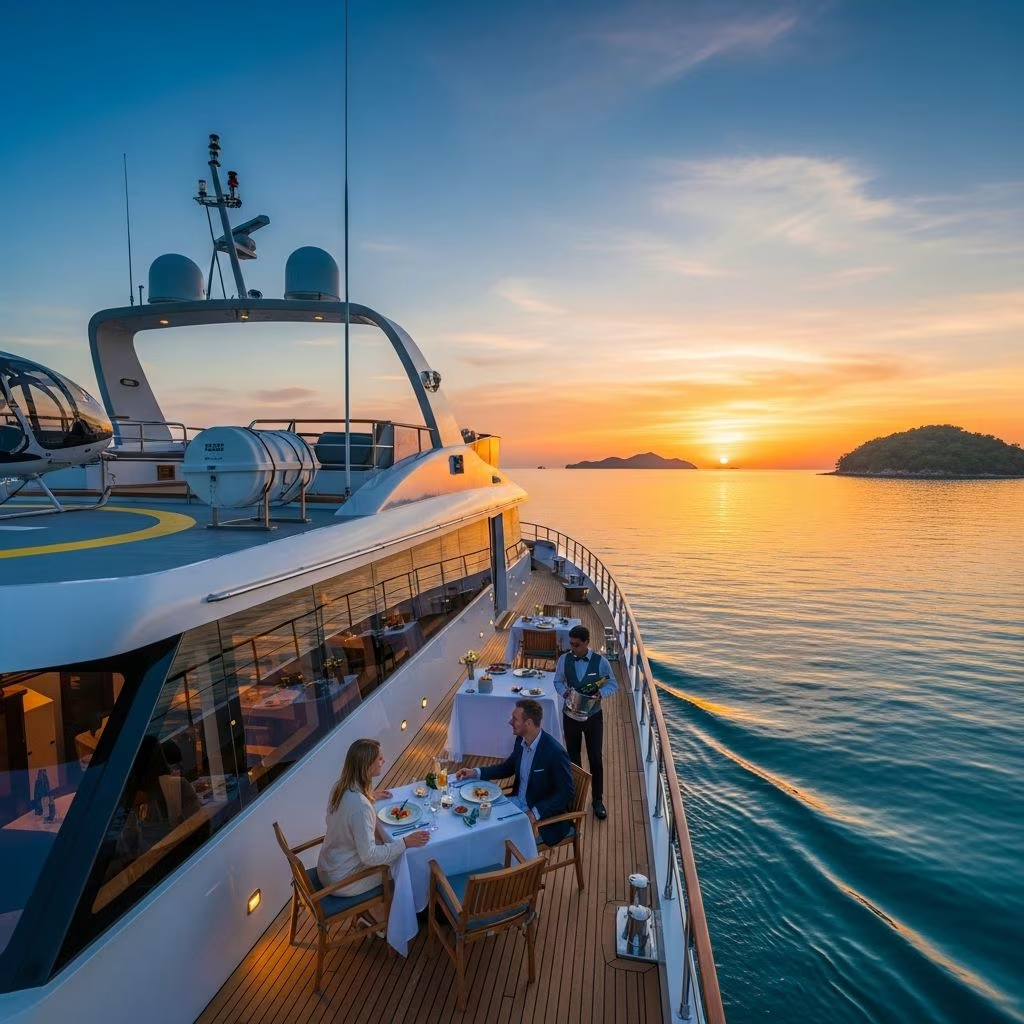
Explore the world of small-ship cruising, where passenger capacity limits create intimate experiences, exclusive port access, and personalized service unavailable on mega-ships.
 Travel Essentials
The cruise industry has undergone a dramatic transformation in recent decades, with massive floating cities carrying thousands of passengers becoming the industry standard. However, a growing segment of discerning travelers seeks an alternative experience—one that prioritizes intimacy, personalized service, and the ability to explore ports inaccessible to larger vessels. This resurgence of small-ship cruising represents a fundamental shift in how travelers approach ocean voyages, emphasizing quality over quantity and discovery over crowds.
Small-ship cruising has carved out a distinctive niche in the luxury travel market, appealing to those who value meaningful engagement with destinations and fellow passengers. These boutique vessels typically accommodate between 100 and 600 guests, creating an environment that fosters genuine connections and allows for a level of service that mega-ships simply cannot replicate.
The definition of a small-ship cruise extends beyond mere passenger capacity—it represents a philosophy of travel that prioritizes accessibility, personalization, and exploration. Unlike their massive counterparts that often spend limited time in major ports before moving to the next destination, small-ship operators frequently navigate to remote locations, smaller harbors, and lesser-known islands that larger vessels cannot physically access.
The variety within the small-ship category is remarkable. Some operators maintain intimate sailing vessels with traditional rigging, evoking the romance of classic maritime travel. Others utilize modern all-suite ships that combine contemporary amenities with boutique accommodations. A handful specialize in expedition cruising, focusing on polar regions, remote archipelagos, and wildlife encounters. This diversity ensures that travelers with different preferences and interests can find a small-ship experience tailored to their specific desires.
The psychological and practical benefits of cruising on smaller vessels extend far beyond the simple reduction in passenger numbers. The intimate scale fundamentally changes how travelers experience destinations and interact with crew members.
Several established cruise lines have built distinguished reputations in the small-ship market, each offering unique interpretations of the boutique cruising experience.
Windstar operates one of the most diverse small-ship fleets in the industry, combining traditional sailing experiences with modern all-suite accommodations. The fleet includes both sail-assisted yachts and former luxury ships, each carrying between 148 and 342 passengers. This variety allows Windstar to offer distinct experiences—from pure sailing adventures to refined motor-yacht journeys. The cruise line’s approach emphasizes approachability; the atmosphere aboard Windstar vessels remains deliberately relaxed despite the high quality of accommodations and service. Windstar’s ability to navigate narrow waterways and access smaller ports has made it particularly popular for Caribbean itineraries and Mediterranean explorations.
Seabourn has established itself as a premier luxury operator, balancing sophistication with accessibility. The fleet comprises four classic cruise ships carrying between 458 and 600 passengers, offering an experience positioned between ultra-intimate yachts and standard cruise ships. What distinguishes Seabourn is its commitment to curated experiences beyond the vessel itself. The cruise line arranges exclusive opportunities including shopping expeditions with shipboard chefs, specialized wine tastings, and unique beach experiences featuring premium beverages and gourmet fare. Seabourn’s itineraries are designed for travelers seeking deeper cultural immersion and intellectual engagement with destinations.
Silversea operates a distinctive fleet emphasizing expedition cruising and exploration. While some Silversea vessels carry up to 600 passengers, the cruise line maintains a focus on access and discovery. Silversea’s strength lies in its ability to reach geographically remote and scientifically significant locations, from Alaska’s glacial regions to the Galapagos Islands. The cruise line positions expert naturalists, historians, and cultural specialists aboard each voyage, transforming the cruise experience into an educational journey.
Operating exclusively superyachts carrying approximately 110-150 guests, SeaDream represents the ultimate expression of intimate cruising. The cruise line operates on an all-inclusive model, eliminating gratuities and additional charges. SeaDream’s positioning emphasizes flexibility and spontaneity—itineraries can be adjusted based on weather, wildlife sightings, and guest interests. The cruise line alternates seasonal operations between the Mediterranean and Caribbean, allowing for year-round availability in these desirable regions.
Ponant operates some of the world’s most intimate cruise vessels, including the legendary three-masted yacht Le Ponant, which accommodates just 32 guests. This ultra-luxury operator epitomizes the yacht-cruising experience, emphasizing French elegance and personalized service. Ponant’s small size enables access to secluded anchorages and the ability to conduct zodiac explorations and water-based activities with minimal environmental impact.
The small-ship cruise market continues to evolve with innovative new entrants. The Ritz-Carlton Yacht Collection launched in 2022, bringing the luxury hospitality brand’s standards to ocean travel. The fleet’s vessels, including Evrima and Ilma, carry approximately 300-450 guests and offer distinctive design aesthetics combined with premium service standards. These new entrants often emphasize experiential amenities and cutting-edge design, attracting affluent travelers seeking contemporary luxury rather than traditional cruise ship conventions.
Different regions benefit uniquely from small-ship exploration, each offering distinct advantages for boutique vessels.
| Region | Key Advantages | Typical Itinerary Focus |
|---|---|---|
| Caribbean | Access to lesser-known islands, pristine beaches, protected anchorages | Grenadines, Virgin Islands, Windward Islands |
| Mediterranean | Ancient ports, narrow anchorages, cultural immersion | Greek islands, French Riviera, Croatian coast |
| Alaska | Glacier viewing, wildlife encounters, fjord navigation | Inside Passage, Prince William Sound |
| Polar Regions | Arctic and Antarctic access, expedition capabilities | Patagonia, Greenland, Arctic passages |
| River Systems | Intimate city exploration, cultural authenticity | Rhine, Danube, Seine, Nile |
Small-ship cruises typically command premium pricing compared to standard cruise offerings. However, the value proposition extends beyond per-night accommodation costs. Inclusive amenities—gratuities, specialty beverages, excursions, and gourmet dining—are frequently incorporated into small-ship cruise packages, eliminating hidden costs that plague traditional cruising. The ability to visit exclusive ports, combined with personalized service and refined accommodations, justifies premium pricing for many travelers.
The cost structure varies considerably based on vessel size, destination, and cruise line positioning. Ultra-luxury all-inclusive offerings from SeaDream or Ponant represent the market’s highest pricing tier, while expedition cruises with naturalist expertise command moderate premiums over standard tourism offerings.
Small-ship operators increasingly emphasize environmental stewardship and sustainable cruising practices. The reduced passenger capacity inherently limits environmental impact compared to mega-ships. Many boutique operators implement advanced waste management systems, minimize single-use plastics, and employ fuel-efficient technologies. Expedition vessels frequently employ naturalist staff who educate guests on ecosystems and environmental conservation, transforming cruise passengers into advocates for protected regions.
Choosing among small-ship options requires consideration of several interconnected factors beyond destination preference.
Yes, many first-time cruisers find small-ship experiences more comfortable than mega-ship voyages. The reduced complexity, intimate scale, and personalized service can create less-overwhelming introductions to cruise travel.
Smaller vessels experience greater motion in heavy seas compared to larger ships. However, modern small-ship technology and experienced captains mitigate discomfort, and most itineraries are planned around seasonal weather patterns.
Small-ship cruises attract mature travelers, typically with average ages between 50-70, though age-specific voyages and family-friendly options exist on select cruise lines.
Absolutely. The intimate setting facilitates social connections, and many cruise lines offer competitive solo cabin pricing and organized social events.
Expedition cruises emphasize remote destination access, expert-led exploration, and educational programming. Leisure small-ship cruises prioritize refined accommodations and relaxed pacing.
The small-ship cruise segment continues expanding as affluent travelers increasingly seek alternatives to mass-market tourism. Technological innovations in hull design, propulsion systems, and amenities enable new vessel designs that enhance comfort while maintaining small-passenger capacity. The introduction of new operators and specialized concepts suggests the market will diversify further, offering increasingly tailored experiences for specific traveler preferences and interests.
Small-ship cruising represents more than a travel modality—it embodies a philosophy prioritizing meaningful experience over volume, sustainability over convenience, and genuine discovery over scripted tourism. As travelers seek more thoughtful, connected vacation experiences, intimate ocean voyages positioned by boutique cruise lines will likely continue capturing market share from traditional cruising sectors.
