

 Travel Essentials
 Travel Essentials

Comprehensive safety guidance for solo female travelers in India, covering dress codes, transportation, accommodation, regional considerations, and cultural awareness.
 Travel Essentials
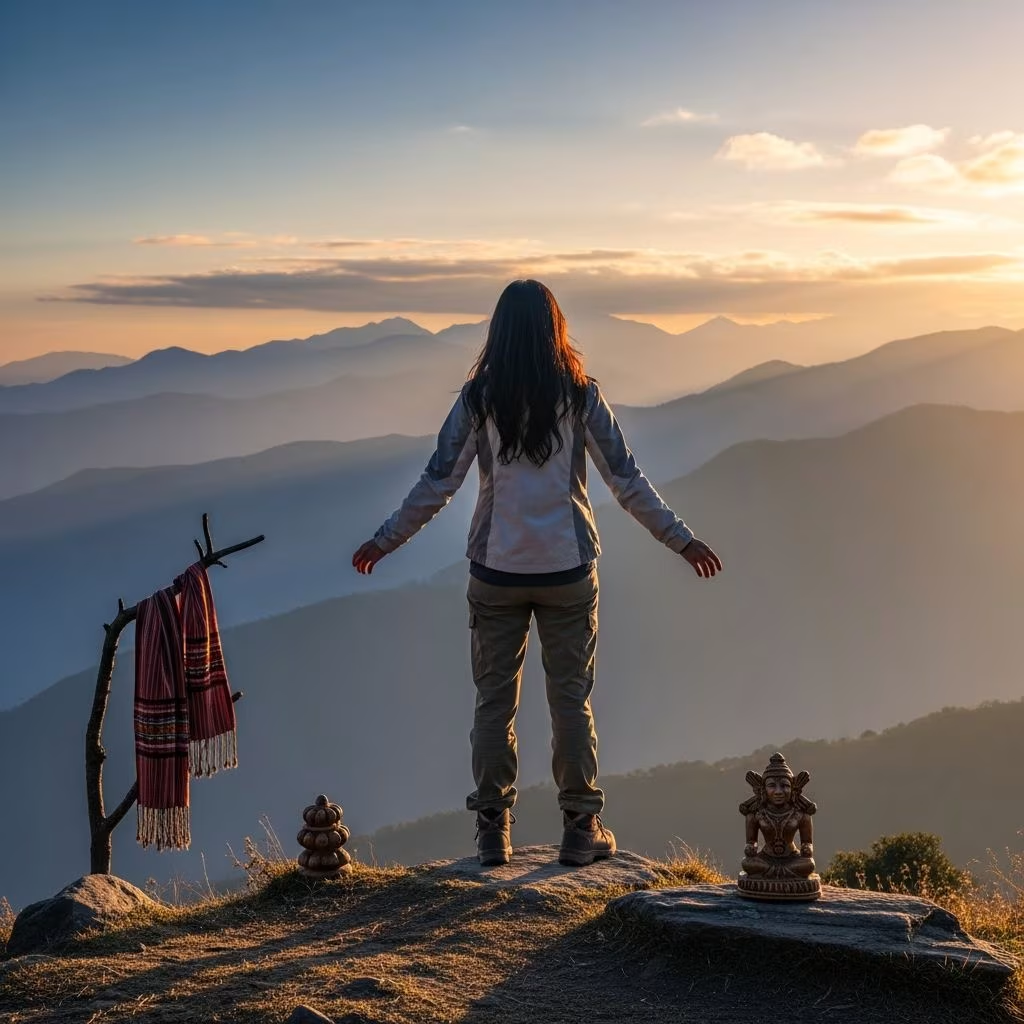
India presents a fascinating destination for solo female travelers, offering rich cultural experiences, diverse landscapes, and warm hospitality. However, navigating this vast country as a woman requires thoughtful preparation, cultural awareness, and practical safety strategies. Understanding local customs, choosing appropriate transportation, and adopting a confident travel approach significantly enhance your ability to explore India with security and peace of mind.
India is a traditionally conservative society undergoing significant transformation, and this reality shapes how female travelers should approach their journey. The expectations surrounding women’s behavior, appearance, and social interactions differ considerably from Western norms, requiring visitors to adjust their perspectives and expectations accordingly.
Rather than viewing these differences as obstacles, approaching them with respect and openness creates opportunities for meaningful cultural engagement. Many experienced female travelers emphasize that adopting a mindset of curiosity rather than judgment transforms potential challenges into enriching learning experiences. This cultural flexibility demonstrates respect for your host country and contributes to safer, more positive interactions with local communities.
Clothing serves as your first line of communication in India, signaling respect for local customs while minimizing unwanted attention. Conservative dress is not merely a suggestion but an important cultural expectation that directly impacts your travel experience.
Strategic transportation planning represents one of the most critical safety considerations for solo female travelers in India. Your choices regarding how, when, and with whom you travel directly influence your overall security.
Trains serve as the primary intercity transportation method in India and remain a reliable choice for female solo travelers when booked thoughtfully. Always reserve air-conditioned class accommodations in advance, as this provides both comfort and security. Overnight trains require particularly careful planning—arrive during daylight hours rather than late evening, and inform your accommodation provider of your train arrival time so they can arrange transportation from the station.
For long journeys between cities, booking train tickets through your hotel or established travel platforms provides verification and reduces complications. Alternatively, pre-arranged hotel taxis offer personalized service and eliminate uncertainty about driver reliability.
Within cities, multiple transportation options cater to different situations and times of day. During daylight hours, auto-rickshaws provide convenient, affordable local transport. However, exercise caution regarding late-night solo travel in any form. Whenever possible, arrange for someone to accompany you to your transportation, or loudly confirm your driver’s vehicle number with a friend so the driver knows someone is aware of your route.
Many hotels and restaurants offer staff who will wait with you until transportation arrives or will personally escort you to your vehicle. Taking advantage of these services demonstrates practical wisdom rather than excessive caution.
Obtaining a local SIM card and mobile phone upon arrival is essential for both safety and practical convenience. India operates as a highly mobile-connected society where text messages coordinate transportation, confirm reservations, and facilitate emergency communication. A local number enables direct communication with taxi drivers, hotel staff, and new friends without international roaming charges.
Always carry photocopies of your passport and visa separate from the originals, along with extra passport photographs. This preparation protects you if documents are lost or require replacement. Share your itinerary and expected arrival times with trusted contacts, maintaining regular communication through messaging apps or social media.
Your choice of lodging significantly impacts your sense of security and comfort throughout your journey. Prioritize accommodations with strong reviews specifically mentioning female solo travelers’ experiences.
While safety considerations apply throughout India, certain regions offer particularly welcoming environments for solo female travelers, particularly those making their first visit to the country. South India, encompassing regions from Karnataka extending to the southern tip of the peninsula, generally receives consistent positive reports from female travelers regarding both safety and cultural openness.
These southern regions balance strong cultural identity with exposure to international visitors, creating communities accustomed to and prepared for Western female travelers. Coastal areas in Kerala and established tourist circuits provide additional comfort through infrastructure specifically designed for visitor needs. Beginning your Indian journey in these regions allows you to develop confidence and understanding before potentially traveling to less touristy areas.
How you carry yourself, your level of confidence, and your behavioral choices profoundly influence your experiences and perceived vulnerability. Research consistently indicates that attackers typically target individuals they perceive as easy victims—those appearing uncertain, passive, or unaware of surroundings.
Maintain confident posture, direct eye contact, and purposeful movement through public spaces. Avoid appearing lost or uncertain by studying maps beforehand and planning routes in advance. Headphones and focused attention on mobile devices can signal unavailability and reduce unwanted approaches. Most importantly, trust your instincts—if a situation feels uncomfortable, remove yourself immediately without concern for politeness.
While Indian culture generally emphasizes hospitality and friendliness, solo female travelers should exercise discretion regarding relationship development with unfamiliar men. Overly familiar behavior or excessive friendliness can be misinterpreted in a context where traditional gender interactions follow different patterns than Western societies. Maintain friendly but bounded relationships with service providers, guides, and casual acquaintances.
When socializing, prefer group settings or venues with other tourists. Established restaurants, tourist-oriented cafes, and organized tour groups provide natural social environments where interaction occurs within recognized contexts.
Thorough preparation before departure significantly reduces anxiety and enhances your ability to make sound decisions while traveling. Understanding what to realistically expect from India—acknowledging both its remarkable qualities and its genuine differences from Western environments—prevents disappointment and helps you navigate situations with appropriate perspective.
Beyond larger planning considerations, daily habits and moment-to-moment awareness contribute significantly to your safety:
Thousands of solo female travelers successfully explore India annually without incident. While legitimate safety considerations exist, appropriate precautions, cultural awareness, and practical planning enable safe, rewarding experiences. Many experienced female travelers report that the benefits and enrichment gained outweigh the challenges, provided they approach travel thoughtfully.
While some travelers choose guides for practical or cultural reasons, a guide’s gender alone does not determine safety. The guide’s professionalism, experience with female travelers, and reputation matter significantly more. Verify guides through established tourism offices or hotel recommendations rather than hiring from street approaches.
Trust your instincts and remove yourself from uncomfortable situations immediately. Seek assistance from hotel staff, police, or other tourists if needed. Save emergency contact numbers in your phone, including your embassy’s helpline. Most hotels take guest safety seriously and can provide immediate assistance or guidance.
Significant behavioral adjustments prove necessary and represent respect for your host country rather than oppression. Accept that India’s social norms differ from Western societies, particularly regarding gender interactions, public displays of affection, and female independence. Flexibility and respect for local customs directly enhance both safety and cultural relationships.
Safety considerations remain relatively consistent year-round, though tourism patterns vary seasonally. Peak seasons bring more tourists and established infrastructure, while shoulder and off-seasons offer different experiences. Your personal comfort with crowds and infrastructure availability might influence timing more than strict safety concerns.
Successful solo female travel in India stems fundamentally from thorough preparation combined with realistic expectations and cultural respect. Rather than viewing India through a lens of fear, approaching it with curiosity, respect, and practical awareness transforms potential vulnerabilities into opportunities for remarkable personal growth.
Countless women have navigated India independently, discovering profound beauty, connecting with locals, and gaining confidence through their experiences. Your gender need not limit your exploration provided you combine appropriate caution with thoughtful planning. By incorporating the strategies outlined here—from conservative dress choices to transportation planning to cultural awareness—you position yourself to explore this extraordinary country with both security and genuine enjoyment.
