

 Travel Essentials
 Travel Essentials

Expert guidance on managing logistics, safety, and engagement when traveling solo with children, from packing strategies to destination selection.
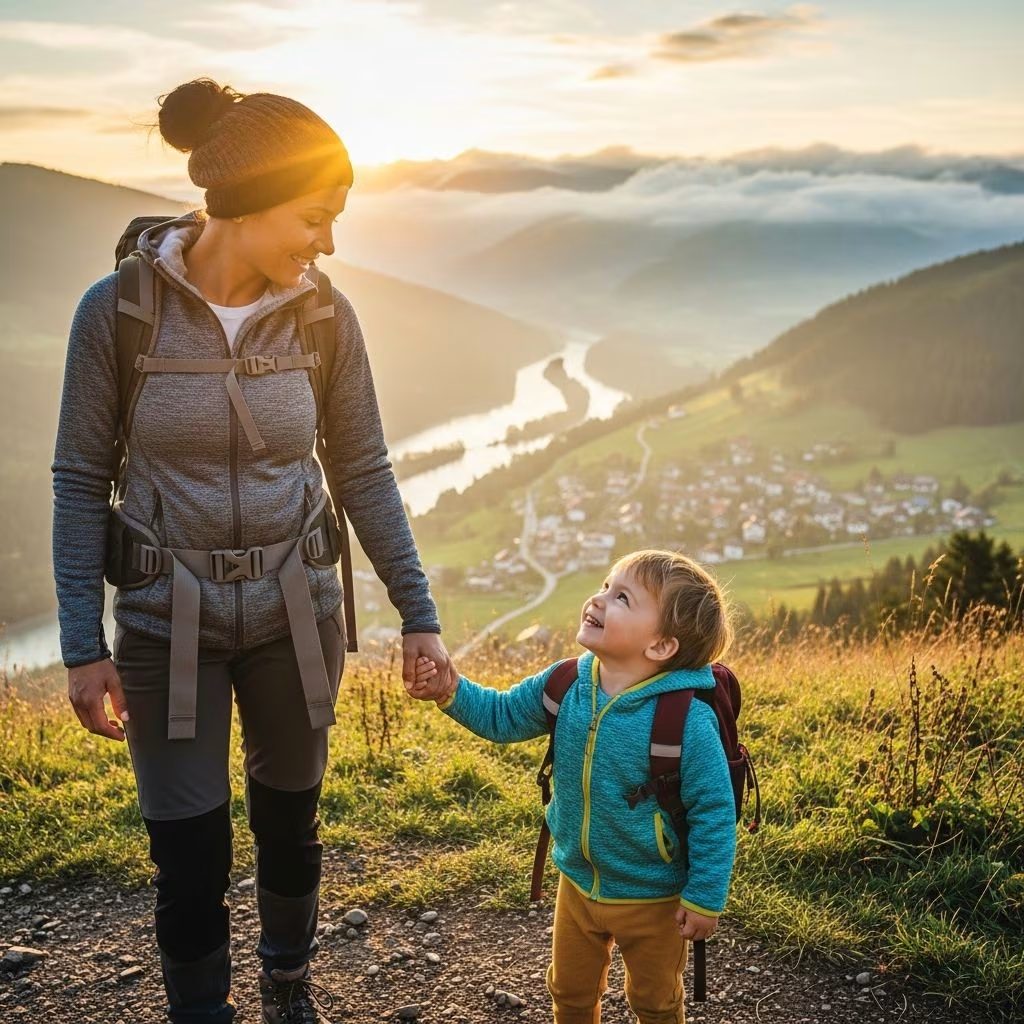 Travel Essentials
Traveling with children as a single parent presents unique challenges that differ significantly from family travel with multiple caregivers. When you’re the sole adult responsible for managing logistics, safety, and engagement, preparation becomes essential to transforming potential stress into rewarding experiences. This comprehensive guide addresses the practical and emotional dimensions of solo parenting travel, offering strategies proven effective by experienced travelers navigating journeys with their children.
Success in solo parenting travel begins well before departure. The foundation of any smooth journey relies on thorough planning that anticipates potential obstacles and establishes backup systems for managing unexpected situations. Research becomes your most valuable asset when traveling independently with children, as you’ll need to understand the specific requirements, infrastructure, and family-friendly options available at your destination.
Start by assessing your comfort level with international travel and your child’s developmental stage. First-time solo parent travelers benefit from choosing destinations that offer straightforward navigation, language compatibility, and abundant family-oriented activities. Consider beginning with a weekend trip within your home country before advancing to more complex international journeys. Destinations such as London, Tokyo, Singapore, Fiji, and Costa Rica provide excellent introductory experiences due to their infrastructure, safety records, and established family tourism frameworks.
Building extra time into your itinerary reduces pressure and allows for flexibility when unexpected situations arise. Travel with children inherently involves unpredictability—illness, fatigue, or simple delays can disrupt carefully planned schedules. Establishing realistic expectations about daily accomplishments and remaining adaptable transforms potential frustrations into manageable adjustments.
The constraint of traveling with limited hands makes strategic luggage planning crucial. When managing children and belongings simultaneously, carrying capacity becomes your primary limitation rather than the volume of items you might wish to bring. The goal is selecting luggage that maximizes accessibility while minimizing encumbrance.
Essential luggage principles include:
The psychological shift from traditional travel packing involves accepting that you cannot bring everything. Focusing on necessities rather than conveniences reduces your physical burden and simplifies decision-making throughout the journey. This minimalist approach also provides practical advantages—less luggage means fewer items to track, reduced baggage fees, and decreased stress when navigating airports or public transportation.
Air travel with children as a solo parent requires strategic decisions about timing, seating, and engagement. These choices significantly impact both your experience and your child’s comfort level.
Selecting flight times that align with your child’s natural rhythms rather than fighting against them prevents unnecessary crankiness and fatigue. Avoid scheduling flights during typical tantrum periods, commonly referred to as the “witching hour,” or at times when you’d be cutting short established nap routines. Morning flights often work better for families, as children typically have lower energy and increased patience after a full night’s sleep. Conversely, evening flights may align with natural bedtime, potentially allowing your child to sleep through portions of the journey.
Positioning yourself toward the back of the aircraft provides multiple operational advantages. Proximity to restrooms allows you to manage bathroom needs without leaving your child unattended for extended periods. This location also positions you closer to flight attendants and the galley area, making it easier to request assistance, obtain additional water or snacks, and access support when needed. Back-of-plane seating typically accommodates families more readily, with flight attendants and other passengers generally more understanding about the realities of traveling with children.
Arriving early at the airport eliminates rushing stress, which becomes amplified when managing children alone. Extra time allows you to obtain gate-check tags for strollers, navigate security without pressure, and manage the various steps required for boarding. Request special assistance from airline personnel when needed—airlines typically accommodate solo parents with children, and flight attendants can provide valuable support during your journey.
The equipment you choose directly impacts your ability to move through airports, attractions, and destinations while managing your child effectively.
For families with multiple young children or very small infants, combining carriers and strollers maximizes efficiency. A baby carrier worn on your body frees your hands while keeping your infant secure and comfortable, while a stroller serves dual purposes—transporting another child and providing storage for belongings and supplies. Front carriers prove particularly valuable at attractions with queuing situations, allowing you to hold an active toddler securely during wait times without requiring separate hands.
Consider investing in a double stroller if managing two very young children, as this arrangement allows both to travel safely while maximizing your available hands and mental capacity. Individual assessments of your specific children’s needs prove more valuable than generic recommendations—some toddlers manage walking significant distances while others require continuous transportation support.
Your in-transit day bag requires careful curation to include items addressing immediate needs without creating excessive weight or bulk. Backpack-style bags preserve hand freedom compared to shoulder-carried options, which can shift and restrict movement when you’re managing children.
Recommended day bag contents:
Organization systems using ziplock bags or small compartments allow you to rapidly locate needed items without scattered searching through your entire bag. Keeping frequently needed items accessible on top of your bag structure prevents constant rearrangement and frustration during transit periods.
Managing a child’s attention during travel periods—particularly during flights—significantly impacts the overall experience for both your child and those around you. Strategic entertainment planning prevents boredom-induced behavioral challenges.
Screen-based entertainment such as tablets or portable devices can be deployed effectively during key stress periods, though pairing these with non-digital activities provides variety and reduces battery dependency. Coloring supplies, small construction toys, activity books, and travel-friendly games engage children while encouraging participation rather than passive consumption. Hands-on activities at destinations—such as cooking classes, guided nature walks, or structured playground time—create meaningful engagement that builds memories and allows for shared exploration.
For budget-conscious travelers or those seeking spontaneous entertainment, creating scavenger hunts requires minimal preparation while engaging children actively in their surroundings. These activities work effectively both indoors and outdoors, transforming passive sightseeing into interactive exploration.
Your initial destination choice significantly influences your confidence and your child’s enjoyment throughout the journey. Strategic selection de-risks your first solo parenting adventure while establishing positive momentum for future travels.
Evaluate potential destinations across multiple dimensions: navigation simplicity, language accessibility, established tourism infrastructure, and availability of family-oriented activities. Destinations with straightforward public transportation systems reduce decision fatigue during daily movement. Locations sharing your language eliminate communication barriers that could create stress during unexpected situations.
Beach resorts with established family amenities provide low-stress environments where activities are clearly defined and child-friendly infrastructure is prioritized. National parks offer natural attractions that engage children while providing structured environments. Organized tours eliminate extensive planning responsibilities by handling logistics and providing built-in support networks while connecting you with other traveling parents managing similar challenges.
Maintaining awareness of your child’s location and well-being becomes paramount when traveling without a co-parent to share monitoring responsibilities. Several practical strategies enhance safety without creating anxiety-driven restriction.
Technology-based solutions such as AirTag devices or GPS-enabled ID bracelets provide location awareness for children who might wander in crowded environments. While walking harnesses remain controversial among some parents, they can effectively prevent dangerous situations when managing multiple active toddlers or children prone to bolting in unfamiliar environments. Most importantly, consistent parental awareness and attentiveness remain your most effective safety tools.
Before departure, research your destination’s emergency services, locate appropriate medical facilities, and establish communication plans for unexpected situations. Travel insurance that covers medical emergencies and trip disruptions provides financial protection and psychological security during your journey.
Air travel with children involves specific operational challenges that benefit from advance consideration and planning.
Shipping non-essential items to your destination ahead of time reduces the luggage you must manage at the airport. This strategy proves particularly effective for families traveling longer distances or remaining at destinations for extended periods. Consider shipping toiletries, extra clothing, and bulky entertainment items to your accommodation, streamlining your airport experience.
Curbside check-in, when available, eliminates navigating inside terminal areas while managing luggage and children. Many airlines accommodate solo parents with children during boarding procedures, allowing earlier access to aircraft—a significant advantage when managing young travelers.
Before boarding, allow your child to expend excess energy by locating open spaces near your gate for movement and active play. This physical release reduces restlessness during the flight itself. Once airborne, strategic entertainment deployment prevents boredom-induced behavioral challenges. Introducing new small toys or activities at intervals throughout the flight maintains novelty and sustained engagement.
Pack extra clothing changes specifically for easy access during the flight, not stored in luggage beneath the plane. Spills, accidents, and the inevitable mess occur during air travel, and having immediate access to clean clothing prevents distress and discomfort for your child.
Beyond logistics and safety, solo parenting travel ultimately centers on the unique relationship building that occurs when parent and child explore new environments together. The one-on-one attention and shared experiences create distinctive memories unavailable in larger family structures.
Prioritize activities that align with your child’s interests and your own curiosity rather than attempting to complete guidebook recommendations. Engaging experiences—whether structured classes or spontaneous explorations—prove more valuable than merely checking destinations off a list. The quality of time spent together, the conversations shared, and the discoveries made jointly form the true value of solo parenting travel.
Several digital platforms and applications can streamline solo parenting travel planning. GoWhee provides crowd-sourced entries for nearly 700,000 playgrounds, accommodations, restaurants, and child-friendly activities worldwide, regularly updated by traveling parents with practical insights. These community-generated resources often provide more realistic family-oriented recommendations than traditional travel guides focused on adult-centric attractions.
Traveling solo with your child requires courage, planning, and realistic expectations, but rewards you with profound shared experiences and personal growth. The flexibility to adjust itineraries, choose destinations based on your child’s interests, and proceed at your own pace offers unique advantages. While challenges inevitably arise—illness, delays, behavioral difficulties—they become manageable through preparation and maintained perspective. Your willingness to explore the world with your child, despite the inherent complexities, creates lasting bonds and expands both your horizons.
