

Food & Culture Stays Travel Essentials Travel Guides Trip Ideas
Categories
From the Blog
Remy’s Ratatouille Adventure at EPCOT: Ride Review, Tips & 2D Update
Travel Essentials

South Africa Travel Guide: Visas, Safety, Costs & Top Experiences

Unlock South Africa's wonders with expert advice on visas, health, transport, safety, culture, and top itineraries for first-time visitors.
Travel Essentials

South Africa captivates with its dramatic landscapes, rich wildlife, and vibrant cities, making it a top destination for adventurers and culture seekers alike. From the urban buzz of Cape Town to the untamed savannas of Kruger National Park, this guide equips you with vital knowledge for a rewarding journey.

Navigating Entry and Visa Policies

Most visitors from the US, UK, EU, and many other countries can enter South Africa for up to 90 days without a visa, but always verify based on your nationality through official channels. Passports must remain valid for at least 30 days beyond your departure date, with two blank pages for stamps.

  • Visa-exempt travelers: Enjoy seamless entry but prepare a return ticket and proof of funds.
  • Visa-required nationals: Apply in advance at a South African embassy; processing takes 10-15 days.
  • eVisa option: Available for some countries via the official VFS Global portal for faster approval.

Upon arrival at OR Tambo International Airport or other major ports, expect efficient immigration with biometric scanning. Declare any cash over R25,000 to avoid fines.

Health Precautions and Vaccinations

Prioritize health by consulting a travel clinic 4-6 weeks before departure. Routine vaccines like MMR, tetanus, and hepatitis A/B are recommended, while typhoid and rabies may be advised for rural areas.

Vaccine/MeasureRecommendationNotes
Hepatitis AHighly recommendedFood/water-borne risk high.
Malaria prophylaxisRegion-specificNeeded in Kruger/lowveld; use DEET repellent.
Yellow FeverRequired if from endemic areasCarry certificate.
COVID-19Check current rulesRegulations evolve; verify pre-trip.

Bottled water is safest outside cities; avoid ice in rural spots. Comprehensive travel insurance covering medical evacuation is non-negotiable, given variable healthcare quality.

Best Seasons for Your Adventure

South Africa’s diverse climates demand strategic timing. Summer (November-February) brings warm weather ideal for beaches and Garden Route drives, but expect rain in the east.

  • Dry winter (May-August): Prime for safaris; animals cluster at waterholes in cooler, malaria-low conditions.
  • Shoulder seasons (September-October, March-April): Balanced weather, fewer crowds, blooming landscapes.
  • Avoid peak holiday periods: December-January sees domestic tourism surge, hiking prices 20-50%.

Cape Town shines May-September with clear skies for Table Mountain hikes, while Kruger peaks June-August for Big Five sightings.

Smart Transportation Choices

Renting a car unlocks flexibility, especially for the Garden Route’s scenic 200km stretch from Mossel Bay to Storms River. International licenses suffice; drive on the left with caution for potholes and wildlife.

  • Air travel: Domestic flights via FlySafair or Airlink connect Cape Town-Johannesburg (2 hours) affordably.
  • Buses: Greyhound or Intercape for safe intercity hops; Baz Bus for backpackers.
  • Luxury trains: Rovos Rail or Blue Train offer opulent Cape Town-Pretoria journeys with safari extensions.
  • Rideshares: Uber thrives in cities; avoid unlicensed taxis at night.

Fuel costs hover at R20-25/liter; toll roads are well-maintained but add R200-300 for major routes.

Prioritizing Safety in Urban and Wild Areas

South Africa has improved, but vigilance is key. Stick to tourist zones in Johannesburg and Cape Town; use hotel safes for valuables.

  • Petty crime prevention: No flashy jewelry; walk in groups after dark.
  • Car security: Never leave bags visible; opt for parking garages.
  • Safari safety: Follow guides; maintain 20m from animals in Kruger.
  • Health risks: HIV prevalence high—use protection; bilharzia in some lakes.

Emergency number: 10111 (police), 112 (general). Apps like Namola connect to responders instantly.

Cultural Insights and Local Etiquette

Embrace South Africa’s 11 official languages and rainbow diversity. Greet with a firm handshake; ‘Sawubona’ (Zulu hello) builds rapport.

  • Tipping culture: 10-15% in restaurants; R10-20 for porters/taxis.
  • Apartheid legacy: Visit Soweto or Apartheid Museum respectfully; engage locals thoughtfully.
  • Ubuntu philosophy: Community focus—share stories, support townships ethically.

Braai (barbecue) invites signal friendship; remove shoes entering homes.

Budget Breakdown and Money Management

Daily costs range R800-1500 ($45-85) mid-range: accommodation R600-1200, meals R100-300, activities R500+.

CategoryBudget (R/day)Mid-Range (R/day)
Hostel/Hotel200-600800-1500
Meals150-300400-700
Transport100-200300-500
Activities200600+

ATMs accept global cards; carry Rand cash for markets. Cards widely used; notify bank of travel.

Unmissable Destinations and Itineraries

Craft a 10-14 day trip blending icons.

  1. Cape Town (4-5 days): Table Mountain cable car, Robben Island ferry, Boulders Beach penguins, V&A Waterfront.
  2. Winelands (1-2 days): Stellenbosch/Franschhoek tastings amid vineyards.
  3. Garden Route (3-4 days): Tsitsikamma hikes, Knysna lagoon cruises, ostrich farms in Oudtshoorn.
  4. Kruger or Eastern Cape (3-4 days): Dawn/dusk game drives for Big Five; malaria-free options near Cape.
  5. Johannesburg add-on: Constitution Hill, Maboneng arts precinct.

Fly Johannesburg-Cape Town; self-drive Garden Route for immersion.

Accommodation Varieties Across Regions

Choices abound: backpacker lodges (R200/night), boutique guesthouses (R1000+), luxury safaris (R3000+ pp).

  • Cape Town: Sea Point apartments or Bo-Kaap homestays.
  • Safaris: Private reserves like Sabi Sands for intimate Big Five views.
  • Garden Route: Eco-lodges in Tsitsikamma or beachfront in Plettenberg Bay.

Book via Booking.com or directly; shoulder seasons yield deals.

Packing Smart for Varied Terrains

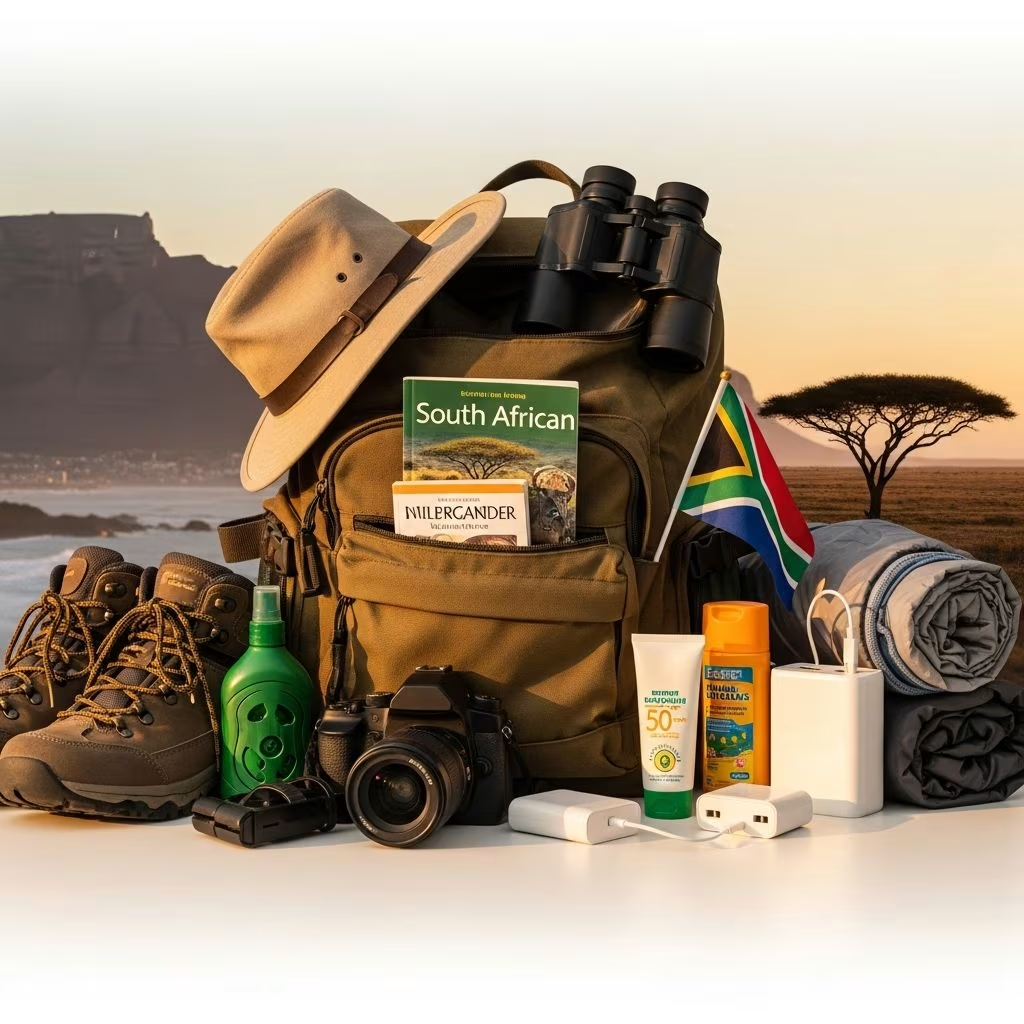
Layer for microclimates: light layers, rain jacket, sturdy hiking boots, binoculars, high-SPF sunscreen.

  • Essentials: Universal adapter (Type D/M), reusable water bottle, power bank.
  • Safari gear: Neutral colors, hat, malaria meds.
  • Beach: Swimsuit, quick-dry towel for Indian Ocean dips.

Pack light for flights; laundromats available.

Frequently Asked Questions

Is South Africa safe for solo travelers?

Yes, with precautions—stick to populated areas, use reputable transport, and join group tours for safaris.

What’s the currency and cost of living?

South African Rand (ZAR); affordable—mid-range trip ~$100/day.

Do I need vaccinations for South Africa?

Hep A/B routine; malaria pills for northeast lowveld.

Best time for Kruger safari?

Dry season June-August for optimal animal viewing.

Can I drink the tap water?

Generally safe in cities; stick to bottled in rural spots.

Top Experiences to Book Ahead

Secure spots for Robben Island (daily limit), Table Mountain (weather-dependent), and Kruger game drives. Ethical township tours via registered operators enhance understanding.

South Africa’s blend of adventure, history, and hospitality awaits—plan thoughtfully for magic.

References

  1. South Africa Travel Guide (Updated 2026) — Nomadic Matt. 2026. https://www.nomadicmatt.com/travel-guides/south-africa-travel-guide/
  2. South Africa for the First-Time Visitor — Audley Travel. Accessed 2026. https://www.audleytravel.com/south-africa/country-guides/south-africa-for-the-first-time-visitor
  3. Complete Guide to South Africa — Lonely Planet. Accessed 2026. https://www.lonelyplanet.com/destinations/south-africa
  4. Everything You Need to Know to Travel to South Africa — SouthAfrica.net (Official Tourism). Accessed 2026. https://www.southafrica.net
ME
medha deb
Medha Deb is an editor with…

Medha Deb is an editor with a master's degree in Applied Linguistics from the University of Hyderabad. She believes that her qualification has helped her develop a deep understanding of language and its application in various contexts. Medha specializes in the areas of beauty, health, sports, and wellness and is committed to ensuring that the content on the website is of the highest quality.Medha's passion for writing and editing began early in life when she joined a book writer's club with her mother. It was there that she discovered her love for the written word and the power it holds to inform, inspire, and transform lives. Since then, she has honed her skills as a writer and editor, working with a variety of clients and publications to produce compelling and informative content. Currently, she writes and edits for CultureTreker.She is also an ardent animal lover and dedicates her time and resources to the foster care of neonatal kittens, providing them with the love and attention they need to thrive. Her commitment to animal welfare is a testament to her compassion and empathy, and it underscores her belief in the importance of caring for the most vulnerable members of our society.

← Previous
3-Day Tokyo Itinerary: Top Sights, Food & Local Experiences
‹›
