

 Travel Essentials
 Travel Essentials

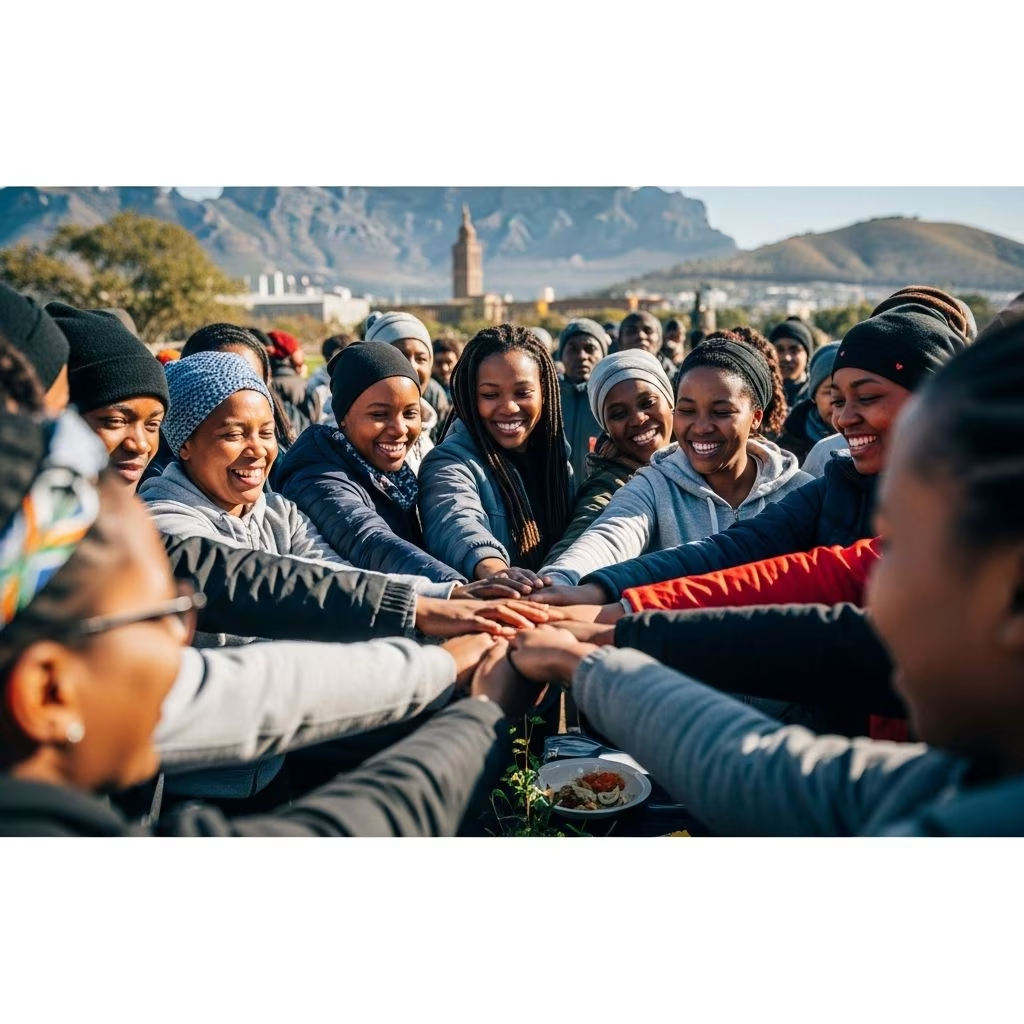
Explore the Day of Reconciliation on December 16, a public holiday promoting unity in South Africa with events like cultural parades, speeches, and memorials in Pretoria, KwaZulu-Natal, and beyond.
 Travel Essentials
South Africa’s Day of Reconciliation, observed annually on December 16, stands as a powerful public holiday dedicated to promoting national unity and healing the wounds of the past. Established in 1995 following the end of apartheid, this day transforms a historically divisive date into a celebration of shared progress and forgiveness.
The significance of December 16 traces back to two pivotal events that once divided communities but now symbolize reconciliation. In 1838, the Battle of Blood River saw Voortrekkers—Dutch, German, and Huguenot descendants—clash with Zulu forces, resulting in a victory commemorated by Afrikaners as the Day of the Vow. This event was formalized as a religious holiday under apartheid, banning activities like sports to emphasize its solemnity.
Conversely, on December 16, 1961, the African National Congress (ANC) launched Umkhonto we Sizwe, its armed wing, marking the start of armed resistance against apartheid oppression. This dual history prompted the post-1994 democratic government to rename the day, acknowledging both Afrikaner heritage and the liberation struggle to foster racial harmony and social cohesion.
By retaining the date as a public holiday, South Africa symbolically bridges these narratives, encouraging citizens to reflect on past injustices while committing to a non-racist society.
Pretoria hosts the flagship national event, often at iconic sites like the Union Buildings and Freedom Park. In past years, such as 2013, commemorations began with interfaith prayers at 08:00, followed by cultural programs, political messages, and keynote addresses from leaders like former President Jacob Zuma. That year highlighted the Union Buildings’ centenary and the unveiling of Nelson Mandela’s statue, declared a Grade 1 national heritage site.
These gatherings feature parades, veteran tributes, and communal walks, blending tradition with forward-looking themes like ‘Nation Building and Social Cohesion.’ Commemorative items, including coins from the South African Mint and stamps from the Post Office, underscore the day’s enduring legacy.
Beyond the capital, provinces host tailored commemorations that resonate with regional histories. In KwaZulu-Natal, the Ncome Museum—site of the Blood River Battle—draws crowds for speeches, including keynotes by President Cyril Ramaphosa, emphasizing healing at this charged location.
These decentralized events ensure broad participation, turning reconciliation into a nationwide dialogue.
A hallmark of the day is vibrant cultural parades where groups showcase dances, music, and attire representing South Africa’s diversity. From Zulu regiments to Afrikaner folk ensembles, these displays promote mutual respect. Festivities also include interfaith services, art exhibitions, and youth programs aimed at ‘bridging divides’.
| Province | Key Cultural Activity | Historical Tie-In |
|---|---|---|
| Pretoria (Gauteng) | Interfaith prayers & Mandela statue unveilings | Union Buildings heritage |
| KwaZulu-Natal | Blood River commemorations | 1838 Battle site |
| National | Parades & veteran tributes | Umkhonto we Sizwe launch |
Each year features a unique theme to address contemporary challenges. Past examples include ‘The Year of Nelson Mandela and Albertina Sisulu: Liberators for Reconciliation,’ ‘Bridging the Divide Towards a Non-Racist Society,’ and ‘Building a Common South African Nationhood.’ These guide speeches, workshops, and media campaigns, keeping the focus on equality and cohesion.
In 2009, President Zuma inscribed names of forgotten heroes on Freedom Park’s Wall of Names. Other years honored victims like Maki Skosana, the first ‘necklacing’ casualty, with tombstones and memorials.
Today, the Day of Reconciliation confronts apartheid’s legacy, promoting forgiveness and equality. Events encourage reflection on progress and ongoing needs, like economic justice. Community service, educational talks, and family gatherings amplify its message, with schools teaching its history to youth.
Global parallels exist, but South Africa’s observance uniquely blends opposing histories into unity. Participation involves attending events, volunteering, or personal reflections on harmony.
Travelers can immerse in this holiday by checking government sites for schedules. Pretoria’s Union Buildings offer accessible venues with free entry to main programs. In KwaZulu-Natal, Ncome Museum provides guided tours. Book accommodations early, as provinces buzz with activity. Respect local customs during parades and prayers.
A public holiday on December 16 promoting unity post-apartheid, redefining historical events for harmony.
It marks the 1838 Battle of Blood River and 1961 Umkhonto we Sizwe founding, symbolizing reconciliation.
Primarily Pretoria’s Union Buildings, Ncome Museum in KZN, and provincial venues.
Join parades, services, or community service; educate on history.
Yes, with cultural shows, walks, and educational elements suitable for all ages.
As South Africa evolves, the Day of Reconciliation remains vital for addressing inequalities. Future events will likely emphasize youth involvement and digital outreach, ensuring its message endures. Visitors and locals alike contribute by embracing its call for a united rainbow nation.
