


 Food & Culture
Food & Culture
South Indian Filter Coffee: History, Brewing Guide & Cultural Significance
Explore the origins, unique brewing process, perfect blends, and global rise of South Indian filter coffee, a beloved ritual blending robust flavors with deep cultural roots.
 Food & Culture
South Indian filter coffee, often called filter kaapi, stands as a cornerstone of daily life in Tamil Nadu, Karnataka, Kerala, and Andhra Pradesh. This strong, frothy brew combines finely ground coffee with chicory, brewed slowly through a traditional metal filter, then mixed with hot milk and sugar. Far beyond a mere beverage, it embodies hospitality, family bonds, and mornings filled with warmth.
The Journey from Yemen to South Indian Hills
The story of South Indian filter coffee begins in the 17th century. Legend credits Baba Budan, a Sufi saint, with smuggling seven coffee seeds from Yemen and planting them in Karnataka’s Chikmagalur hills. These seeds thrived in the region’s misty, elevated estates, marking India’s entry into coffee cultivation.
By the 19th century, under British influence, coffee spread to Tamil Nadu and Kerala plantations. Initially a luxury for elites due to high costs and caste barriers, it became accessible after the 1940s when the Coffee Board of India regulated production and prices. This shift transformed filter coffee into a household staple, evolving from colonial imports into a uniquely local tradition.
Mastering the Blend: Beans, Roast, and Chicory Magic
Authentic filter kaapi relies on a precise blend. It typically mixes Arabica (like Plantation A, a washed variety for smoothness) and Robusta (for bold intensity), with 10-20% chicory root added. Chicory imparts a caramel-like depth and woody notes, stretching the coffee while enhancing flavor.
Beans are roasted to a medium-dark level, then ground extra-fine—almost powder-like—to maximize extraction during brewing. Regional variations exist: Karnataka favors peaberry Arabica for its nutty profile, while Tamil Nadu blends emphasize chicory’s sweetness.
| Component | Role | Typical Ratio |
|---|---|---|
| Arabica Beans | Smooth, floral notes | 60-70% |
| Robusta Beans | Strong body, crema | 20-30% |
| Chicory | Caramel depth, affordability | 10-20% |
The Iconic Brewing Apparatus
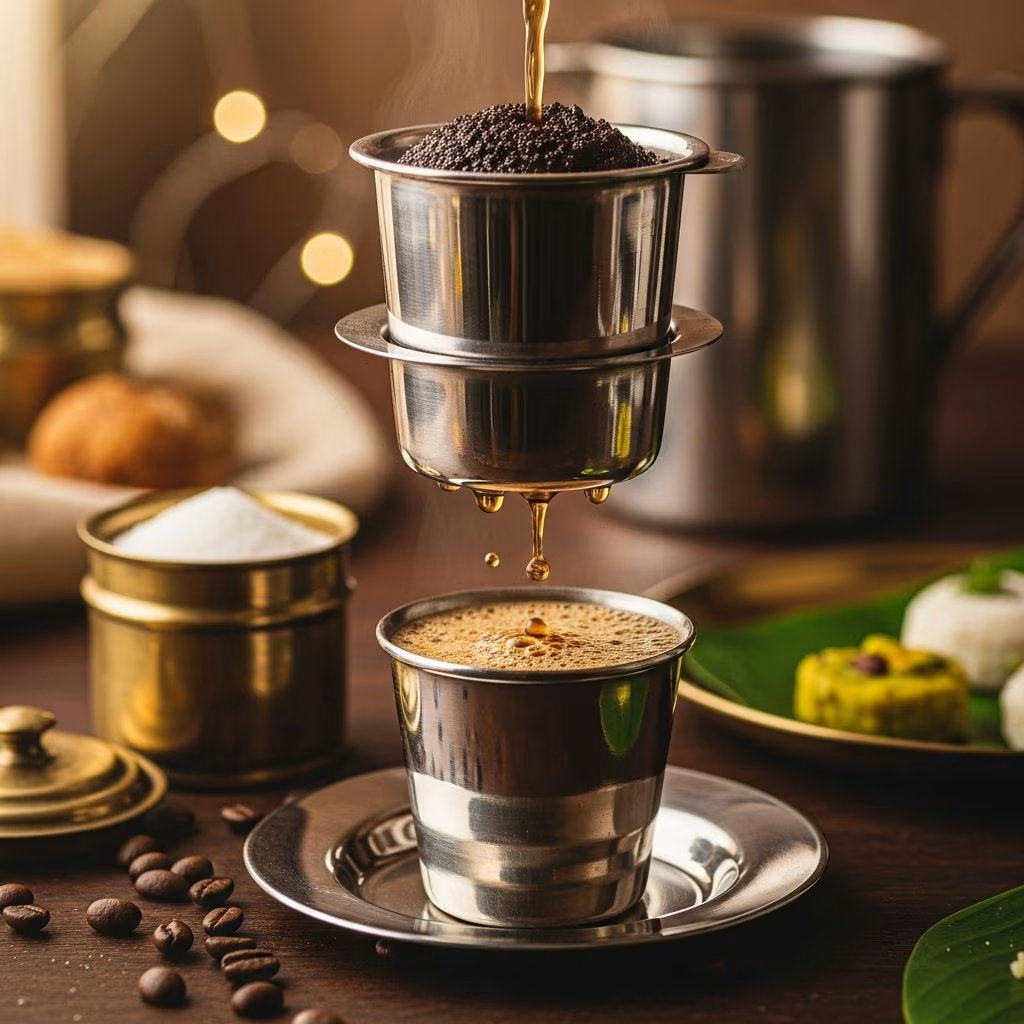
At the heart of the process is the South Indian coffee filter, a two-chambered stainless steel or brass device. The upper chamber, pierced with tiny holes, holds the coffee powder. A plunger tampers it lightly, and boiling water drips through slowly into the lower chamber, yielding a thick decoction—a concentrated essence that takes 10-20 minutes.
This percolation method extracts maximum flavor without bitterness, unlike faster Western drips. No paper filters or machines needed; it’s sustainable and ritualistic. Families often own multiple filters for guests, passing them down generations.
Step-by-Step Guide to Brewing at Home
Recreate this tradition with these steps:
- Gather tools: Traditional filter (or improvise with a French press), 3 tbsp fine-ground blend (with chicory), 1 cup water, 1 cup milk, 1-2 tsp sugar.
- Prepare decoction: Fill upper chamber with grounds, tamp lightly. Pour ½ cup boiling water slowly. Cover and wait 10-15 minutes for drip.
- Heat milk: Boil milk separately until frothy.
- Mix and froth: In a tumbler, combine 2-3 tbsp decoction, hot milk, and sugar. Pour between tumbler and davara (wide bowl) from height to create foam.
- Serve: Enjoy piping hot in the davara, sipping the froth first.
Pro tip: Use fresh grounds daily for peak aroma. Adjust chicory for milder or bolder tastes.
Cultural Soul: More Than a Morning Cup
Filter kaapi fuels South India’s social fabric. In bustling udupi restaurants or home verandas, it’s poured with flourish into a davara-tumbler set, the rhythmic pouring building iconic froth. Mornings start with its aroma wafting through neighborhoods, signaling conversations over breakfast dosas or idlis.
It symbolizes egalitarianism too—once elite, now democratic. Weddings feature massive filters; cafes serve ‘degree coffee’ (strongest grade). Nostalgia ties diaspora communities, evoking childhood memories.
Regional Twists Across South India
- Tamil Nadu: Heavy chicory, sweetest brews; ‘Madras filter’ famous.
- Karnataka: Peaberry dominance; ‘Mysore coffee’ milder, nuttier.
- Kerala: Robust blends with local Arabica; served stronger.
- Andhra Pradesh: Spicier pairings with spicier meals.
Names vary: ‘meter coffee’ nods to froth height, ‘degree kaapi’ to strength.
Global Awakening: Filter Kaapi Goes Worldwide
Once confined to South Indian homes, filter coffee surges globally. U.S. cities like San Francisco, New York, and Chicago host kaapi pop-ups and cafes. Specialty roasters import blends, while diaspora spots blend tradition with modern twists like oat milk versions.
Social media amplifies it—#FilterKaapi trends with home brews. Sustainability appeals: reusable filters, local beans. Yet purists insist on steel filters and full-fat milk for authenticity.
Health Notes and Variations
Moderate consumption offers antioxidants from coffee and inulin from chicory (aids digestion). Sweet versions pack calories, so customize sugar. Vegan adaptations use plant milks, though froth differs.
Alternatives: Instant mixes for travel, but nothing matches fresh decoction.
Frequently Asked Questions (FAQs)
What makes South Indian filter coffee unique?
The chicory blend, slow percolation, and frothy milk pour create unmatched boldness and texture.
Can I brew it without a traditional filter?
Yes, a French press or AeroPress mimics the drip; focus on fine grind and patience.
Why add chicory?
It adds depth, reduces acidity, and historically made coffee affordable.
How strong is ‘degree coffee’?
‘One degree’ is standard strong; ‘two degrees’ doubles decoction for intense flavor.
Is it served differently in homes vs. cafes?
Homes use davara-tumbler pour; cafes mimic with flair, often taller froth.
Preserving the Legacy
In a world of pods and espressos, South Indian filter coffee endures as a mindful pause. Its hands-on process fosters appreciation for simple pleasures. Whether in Chennai lanes or Brooklyn counters, it brews connections across generations and borders.
References
- The Essence of South Indian Filter Coffee: A Warm Tradition — Byramudi Coffee. 2023-05-15. https://byramudicoffee.com/blogs/news/the-essence-of-south-indian-filter-coffee-a-warm-tradition
- A Love Letter to South Indian Filter Coffee: History, Taste, and How to Brew It — Indigo Fire Coffee. 2024-02-10. https://indigofirecoffee.com/blogs/news/a-love-letter-to-south-indian-filter-coffee-history-taste-and-how-to-brew-it
- South Indian filter coffee is like no coffee you’ve had before — Salon.com. 2020-12-24. https://www.salon.com/2020/12/24/south-indian-filter-coffee-is-like-no-coffee-youve-had-before_partner/
- The unassuming South Indian Filter Coffee — Kaveri Coffee. 2023-08-20. https://www.kavericoffee.com/blogs/culture/south-indian-filter-coffee
- Indian filter coffee — Wikipedia. 2026-04-01. https://en.wikipedia.org/wiki/Indian_filter_coffee
- South Indian Filter Coffee Gains Steam — India Currents. 2023-11-12. https://indiacurrents.com/south-indian-filter-coffee-gains-steam/
On This Page
The Journey from Yemen to South Indian Hills Mastering the Blend: Beans, Roast, and Chicory Magic The Iconic Brewing Apparatus Step-by-Step Guide to Brewing at Home Cultural Soul: More Than a Morning Cup Regional Twists Across South India Global Awakening: Filter Kaapi Goes Worldwide Health Notes and Variations Frequently Asked Questions (FAQs) Preserving the Legacy← Previous
Southeast Turkey Travel Guide: Ancient Sites, Food & Itineraries
Next →
Germany Travel Guide: Customs, Transport, and Practical Tips
Related Reading
More in Food & Culture
Food & Culture Food & Culture
 Food & Culture
Best Places to Eat in Rome: Neighborhood Dining Guide
 Food & Culture
 Food & Culture