

 Travel Essentials
 Travel Essentials

Discover key tips on visas, transport, culture, food, safety, and more for seamless travel to South Korea, from Seoul's palaces to Busan's beaches.
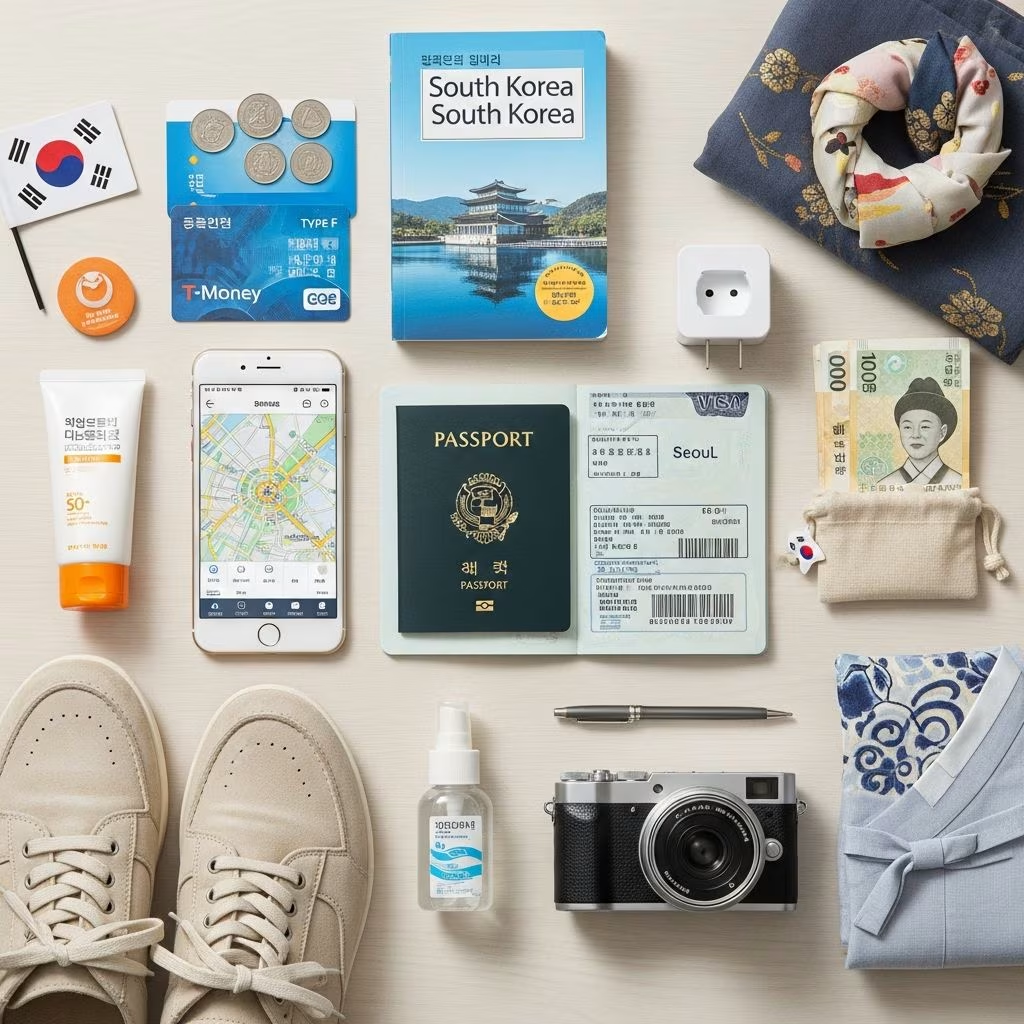 Travel Essentials
Planning a trip to South Korea reveals a land where futuristic skylines meet timeless traditions, offering endless adventures for every traveler. From the bustling streets of Seoul to serene coastal escapes, understanding local nuances ensures a smooth experience. This guide covers planning basics, cultural immersion, practical logistics, and insider recommendations drawn from reliable travel insights.
Most visitors enjoy visa-free entry for up to 90 days for tourism or business purposes, but changes loom on the horizon. An exemption to the Korean Electronic Travel Authorization (K-ETA) applies through December 31, 2026; afterward, starting January 1, 2027, travelers must obtain a K-ETA prior to arrival. Check official requirements based on your nationality to avoid surprises.
South Korea’s climate varies dramatically, influencing your ideal visit timing. Summers bring heat and humidity with a rainy spell from June to July, perfect for beachgoers seeking chilled noodles and seafood. Winters offer crisp air ideal for indoor cultural pursuits, while spring cherry blossoms and autumn foliage draw crowds. Avoid peak summer heat if sensitive to humidity, and monitor air quality, which can dip in urban areas.
Upon landing at Incheon International Airport near Seoul, seamless connectivity awaits. Public Wi-Fi blankets streets and attractions, a boon for navigation. For reliable data, opt for e-SIMs or pocket Wi-Fi rentals available at the airport. Google Translate proves invaluable, supporting offline Korean Hangul script for menus and signs.
South Korea boasts exemplary infrastructure, making movement effortless and affordable. High-speed KTX bullet trains link Seoul to Busan in under three hours, while subways and buses in cities like Seoul are punctual, clean, and English-signed. T-money cards simplify fares across all transport modes—purchase one at convenience stores and top up as needed.
| Route | Best Option | Travel Time | Cost (KRW) |
|---|---|---|---|
| Seoul to Busan | KTX Train | 2.5 hours | 60,000-70,000 |
| Within Seoul | Subway/Bus | Varies | 1,250 base |
| Airport to City | AREX Train | 43 min | 9,000 |
Walking thrives in pedestrian-friendly Seoul and Busan. Caution: roads are paved but traffic fatalities exceed U.S. rates due to speeding and aggressive driving. Pedestrians, yield carefully at crosswalks, and watch for sidewalk-riding motorcyclists.
Dive into South Korea’s dual soul through its landmarks. Seoul’s five grand palaces, like the majestic Gyeongbokgung from the Joseon era, host changing-of-the-guard ceremonies twice daily—vibrant reenactments with colorful attire and drums. Entry fees are modest at 1,000-3,000 KRW.
Venture to Gyeongju, the ‘museum without walls,’ a UNESCO site brimming with Silla Kingdom tombs and temples. These ancient mounds house royal artifacts, offering glimpses into opulent history. Busan’s seaside vibe shines at Jagalchi Fish Market for fresh seafood and the towering Busan Tower for panoramic views, complete with robot baristas.
Don’t miss the Korean Demilitarized Zone (DMZ), a stark border buffer with North Korea. Tours visit infiltration tunnels, the Bridge of Freedom, and Dora Observatory for rare glimpses across the divide— a sobering history lesson.
Food defines South Korea, from steaming street stalls to innovative eateries. Markets like Seoul’s Gwangjang offer bindae-tteok pancakes and hotteok sweets; Busan’s Jagalchi buzzes with live seafood. Must-tries: bibimbap rice bowls, samgyeopsal grilled pork, and naengmyeon cold noodles. No tipping culture exists—service is baked in.
Water caution: Tap isn’t potable; stick to bottled. Trash scarcity means carrying bags for separation—mandatory for recycling. Socks matter indoors; clean pairs show respect at homes or temples.
South Koreans value harmony and hierarchy. Bow slightly when greeting, use two hands for exchanges, and remove shoes indoors. Public affection is rare; keep voices moderate in quiet downtowns. Friendliness warms with smiles—locals assist lost travelers eagerly.
Currency: Korean Won (KRW, pronounced ‘wuhn’). ATMs abound but carry passport for some; exchange at banks for best rates. Outlets are Type C/F (220V); bring adapters. No tipping—it’s unwelcome.
Seoul offers hanok stays in Bukchon Village for tradition or sleek hotels in Gangnam. Busan favors beachfront guesthouses. Book via apps for deals. Shop duty-free at Lotte or markets for ginseng, cosmetics (K-beauty), and hanbok attire.
South Korea ranks highly safe, with low crime, but vigilance pays. Carry passport for checkpoints, especially near DMZ. Air quality apps help; masks advised on poor days. COVID protocols may linger—check updates.
Medical facilities excel in cities; travel insurance covers all. Earthquakes rare, but typhoons possible in late summer.
| Days | Focus | Highlights |
|---|---|---|
| 5-7 | Seoul-Centric | Palaces, DMZ, markets, Myeongdong shopping. |
| 10-14 | Full Loop | Seoul, Gyeongju history, Busan beaches, KTX rides. |
| 3 | Weekend Escape | Seoul palaces, Namsan Tower, street food. |
Visa-free for 90 days until 2026; K-ETA required from 2027.
Yes—English signs, apps, and T-money cards make it simple.
Street food at Gwangjang Market: try kimbap or tteokbokki.
Affordable transport/food; mid-range hotels $100/night.
Late March to early April in Seoul.
With 15 sites including Gyeongju and Changdeokgung Palace, South Korea packs cultural punch. Extend to Jeju Island for volcanic hikes or Jeonju for bibimbap origins.
