

 Travel Essentials
 Travel Essentials

Explore Southern California by rail with comprehensive guides to major train systems, routes, and travel tips for discovering beaches, cities, and attractions.
 Travel Essentials
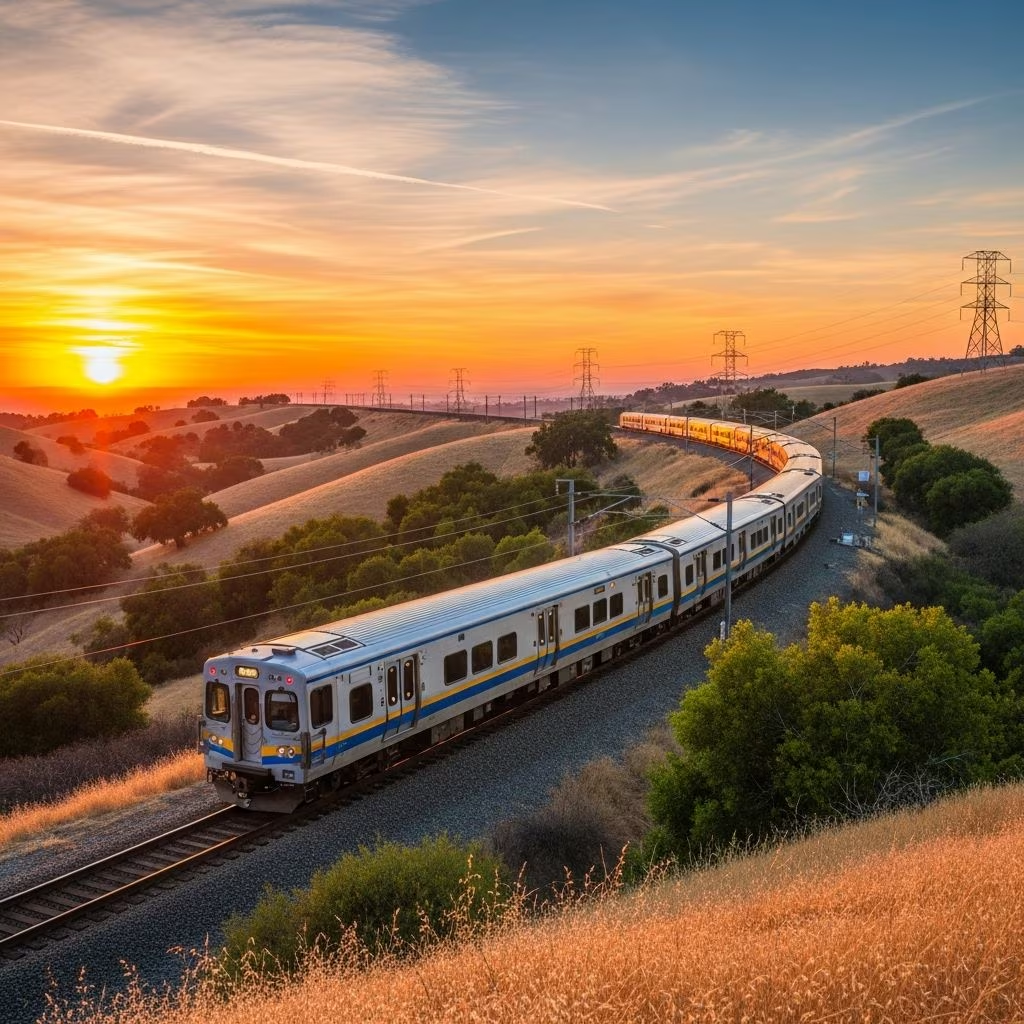
Southern California has transformed into a rail-friendly destination over recent years. As traffic congestion continues to challenge commuters and travelers alike, the region’s expanding network of train systems offers an increasingly appealing alternative. Rather than sitting in gridlock on crowded freeways, visitors and residents can now experience the region’s diverse attractions while enjoying comfort, relaxation, and stunning views from their seats.
The Southern California rail landscape comprises several interconnected networks, each serving distinct purposes and geographic areas. This multi-system approach creates a comprehensive transportation web that connects major cities, coastal communities, and regional attractions.
The Pacific Surfliner represents one of Southern California’s most iconic rail experiences, traversing a 351-mile corridor that connects San Luis Obispo in the north with San Diego in the south. This route passes through six counties—San Luis Obispo, Santa Barbara, Ventura, Los Angeles, Orange, and San Diego—making it the primary carrier for intercity travel along the Pacific Coast. The service operates multiple daily round-trip options, with thirteen daily round-trip services between San Diego and Los Angeles, and five between Santa Barbara and San Diego.
What distinguishes the Pacific Surfliner from highway travel is its spectacular routing. Several segments, particularly those north of Santa Barbara and along the Oceanside shoreline, rank among the world’s most visually stunning train journeys. Passengers enjoy beachfront vistas, dramatic coastal cliffs, and charming town centers without the stress of driving.
For travelers navigating the Los Angeles metropolitan area, multiple rail options exist. Metro serves as the central hub, combining light rail and subway infrastructure that connects iconic destinations including Hollywood, Santa Monica, Pasadena, and Long Beach. Hotel accommodations cluster near Metro stations, particularly in Hollywood, downtown Los Angeles, along Wilshire Boulevard, and near Santa Monica’s beaches.
Metrolink operates as the region’s commuter rail system, extending in eight directions from the Los Angeles core. This network reaches major destinations such as Palmdale, Oxnard, Burbank, San Bernardino, Anaheim, and Oceanside. Metrolink coordinates with other transit systems, allowing seamless transfers and expanded access to regional attractions.
San Diego operates two dedicated rail systems. The Coaster provides coastal commuter service connecting Oceanside in the north with San Diego proper, sharing track infrastructure with Amtrak’s Surfliner service. The San Diego Trolley Light Rail system radiates from San Diego Depot, with the Blue Line extending south to San Ysidro, placing the Mexico border crossing just 500 feet from the station. This positioning enables convenient international travel without requiring a vehicle.
The San Diego to Los Angeles route represents the most frequently traveled segment within Southern California’s rail network. The journey spans approximately three hours and covers diverse landscapes, from urban centers to coastal communities. Multiple daily departures provide flexibility for various travel schedules, whether planning a day trip or longer stay.
This route functions as more than simple transportation—it offers genuine experiential travel. Rather than focusing solely on reaching a destination, passengers witness the transition from San Diego’s maritime atmosphere through Orange County’s suburban communities, arriving at Los Angeles’ vibrant basin. The journey passes through several notable stops including Oceanside, Solana Beach, and Santa Ana, each offering unique character and accessibility to local attractions.
Traveling north from Los Angeles, the Pacific Surfliner ascends into Santa Barbara County, renowned for its Mediterranean climate, wine country, and distinctive Spanish colonial architecture. The train route showcases dramatic scenery as the Pacific Ocean appears and disappears in rhythmic intervals, framed by coastal mountains and agricultural valleys.
Continuing toward San Luis Obispo, passengers traverse some of California’s least-developed coastline. This segment offers particular appeal for travelers seeking escape from urban density. The small communities along this route maintain authentic character and provide access to hiking, wine tasting, and agricultural experiences unavailable in major metropolitan areas.
For travelers seeking comprehensive Pacific Coast immersion, the Coast Starlight extends travel possibilities significantly. This route operates between Seattle and Los Angeles, covering nearly 1,400 miles through some of North America’s most compelling scenery. Within California, the Coast Starlight stops at numerous destinations including Sacramento, San Luis Obispo, Santa Barbara, and Oxnard. The extended journey allows passengers to experience dramatic transitions from the Cascade Mountains to Pacific coastal views to urban landscapes.
One of rail travel’s most compelling advantages involves economics. Train fares range dramatically based on service type and distance, from a modest $1.75 for Metro light rail transit to approximately $35 for an Amtrak Surfliner journey between Los Angeles and San Diego. This affordability enables travelers to preserve vacation budgets for experiences rather than transportation costs.
The financial advantage extends beyond direct ticket prices. Travelers avoid parking fees, fuel consumption, and vehicle maintenance costs associated with automobile travel. Over multiple-day trips, the cumulative savings often prove substantial.
Strategic station placement throughout Southern California maximizes traveler convenience. Many stations situate within walking distance of major attractions, eliminating the need for additional ground transportation. Additionally, numerous transit providers offer complimentary bus connections for Pacific Surfliner passengers, extending accessible destinations well beyond immediate station areas.
This last-mile connectivity proves particularly valuable at major hubs. For instance, travelers arriving at Anaheim Station can access Disneyland Resort via a twenty-minute complimentary bus transfer. Similarly, downtown San Diego stations connect seamlessly to trolley services, enabling border crossing access.
Train availability has expanded significantly in recent years. The Pacific Surfliner now offers increased daily frequencies and reduced wait times between consecutive trips. This enhancement particularly benefits spontaneous travelers and those with flexible schedules who can adjust plans based on real-time availability.
Southern California’s most famous attraction, Disneyland Resort, benefits from convenient rail access despite not directly abutting theme park grounds. Both Amtrak Surfliner and Metrolink services stop at the Anaheim station, from which complimentary transfers provide direct connections to Disneyland’s main entrance. This arrangement eliminates parking hassles and enables visitors to experience the park arrival experience distinctly.
San Juan Capistrano, renowned for its historic mission and charming downtown, sits just two hours from Los Angeles via rail. The Amtrak Surfliner and Metrolink services both serve this destination, providing access to Spanish colonial architecture, cultural attractions, and authentic Southern California coastal atmosphere.
San Diego’s Santa Fe Depot serves as the primary rail arrival point for passengers from Los Angeles, with the journey requiring approximately three hours. From this historic station, the entire San Diego region becomes accessible via connecting transit services. Downtown San Diego, the Gaslamp Quarter, waterfront attractions, and beach communities all connect through integrated transportation networks.
Train travel inherently provides advantages that automobile travel cannot replicate. Passengers enjoy unobstructed views without driving responsibilities, enabling genuine landscape appreciation. The ability to stand, move within rail cars, and capture photographs without safety concerns distinguishes rail from automobile travel. Sunset viewing, coastal observation, and mountain appreciation all benefit from the stability and vantage points rail travel provides.
Choosing rail over automobile travel produces measurable environmental advantages. Individual vehicle elimination from roadways reduces aggregate emissions, fuel consumption, and traffic congestion. For environmentally conscious travelers, rail selection represents a tangible contribution to sustainability goals while maintaining vacation quality.
Train travel eliminates stress associated with navigation, parking, and traffic interaction. Travelers with mobility challenges, vision limitations, or anxiety around driving find rail particularly accommodating. Companions can engage in conversation and shared experience rather than rotating driving responsibilities.
The Pacific Surfliner’s extended route enables multi-day journeys incorporating diverse experiences. A sample itinerary might include San Diego beach exploration, Los Angeles urban attractions, Santa Barbara wine country, and San Luis Obispo agricultural tourism—all accessible via single rail system without vehicle rental.
Spontaneous day travelers benefit from frequent service and low fares. Residents of any major station can spontaneously explore alternative communities, returning the same day without significant expense. This accessibility democratizes travel beyond those planning months in advance.
Successful rail journeys incorporate local transit systems at destination cities. Understanding Metro, Metrolink, Coaster, and trolley connections enhances accessibility and expands reachable attractions substantially beyond immediate station vicinities.
The portions north of Santa Barbara and near Oceanside offer particularly compelling coastal vistas. These sections provide unobstructed ocean views framed against dramatic coastal topography and charming beach communities.
For itineraries focusing on major cities and established attractions, rail travel proves entirely adequate. However, exploration of remote natural areas, rural wine regions beyond immediate transit access, or adventurous backcountry travel may require supplemental transportation options.
Train fares prove substantially cheaper than daily automobile rental costs, particularly when incorporating parking fees, fuel, and potential toll expenses. Multi-day trips particularly favor rail economics.
Pet policies vary among transit systems. Generally, small pets in carriers access local transit systems, while Amtrak maintains specific pet transportation guidelines. Verification before travel proves essential for passengers traveling with animals.
Both Amtrak Surfliner and Metrolink serve Anaheim, from which complimentary transfers provide direct connections to Disneyland.
