

 Travel Essentials
 Travel Essentials

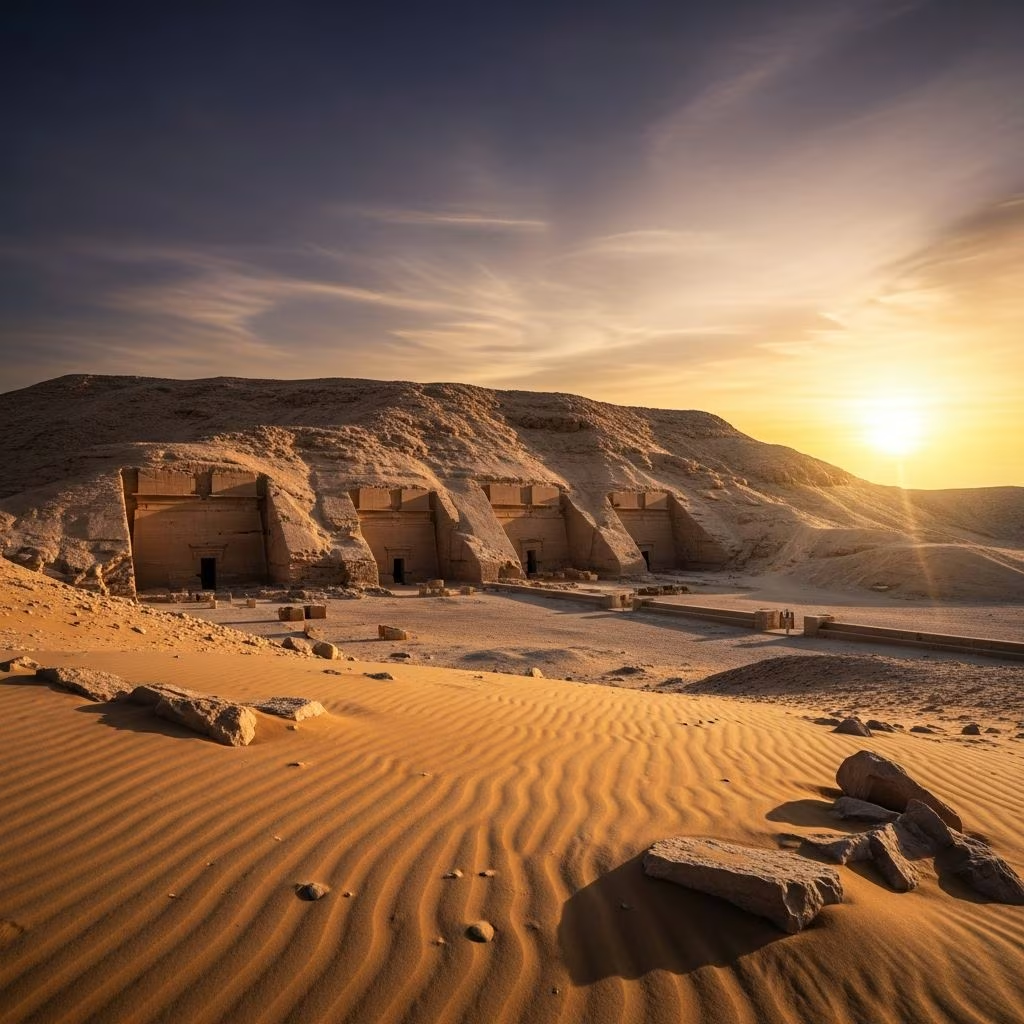
Explore the Valley of the Kings, Karnak's vast complex, Abu Simbel's colossi, and more hidden gems in southern Egypt, revealing secrets of pharaonic engineering and artistry.
 Travel Essentials
Southern Egypt stands as a treasure trove of pharaonic ingenuity, where cliffs conceal elaborate burial complexes and riverbanks host colossal temples dedicated to gods and kings. These sites, carved from limestone and sandstone, reveal advanced engineering, vibrant artistry, and spiritual beliefs that shaped one of history’s greatest civilizations. From the labyrinthine tombs west of Luxor to the sunlit facades at Abu Simbel, each location holds stories of power, divinity, and preservation against time’s erosion.
The region around Luxor boasts some of the most expansive religious complexes ever built. Dominating the east bank of the Nile, the Karnak Temple Complex sprawls across 200 acres, evolving over 2,000 years from the Middle Kingdom through Ptolemaic times. Its hypostyle hall, with 134 towering columns some reaching 70 feet high, represents the forest of papyrus symbolizing creation from primordial waters. Priests aligned structures with celestial events, ensuring the sun illuminated inner sanctuaries during key festivals.
Adjacent lies Luxor Temple, a more intimate yet equally profound site linked to Karnak via a 1.5-mile avenue of sphinxes. Constructed primarily by Amenhotep III and expanded by Ramses II, it served as the center for the Opet festival, where Amun’s barque journeyed to renew pharaonic power. Illuminated at night, its courtyards and obelisks evoke the divine kingship central to Egyptian theology.
Further south, the Temple of Khnum at Esna captivates with its Roman-era ceiling painted in vivid astronomical motifs. Buried under sediment until the 19th century, its 24 unique columns depict the ram-headed god crafting humans on his potter’s wheel, blending mythology with preserved polychrome brilliance.
Across the Nile, the west bank’s stark cliffs guard the Valley of the Kings, Egypt’s royal necropolis from the New Kingdom. Over 60 tombs pierce the secluded valley, designed to thwart robbers through hidden entrances and false passages. Architects oriented passages toward the setting sun, symbolizing the pharaoh’s afterlife journey.
Seti I’s tomb stands out for its unprecedented decoration: every surface of its 450-foot corridor gleams with paintings from the Book of the Dead, guiding the soul through the underworld. Discovered with minimal looting, it showcases the 19th Dynasty’s artistic peak, where artisans from Deir el-Medina village applied mineral pigments still vibrant today.
Many tombs feature concealed chambers accessible only via priestly rituals. These held sacred papyri, ushabti figures, and canopic jars, protected by curses and mechanical traps. The nearly intact tomb of Yuya and Tjuyu, nobility from the 18th Dynasty, yielded gold masks and chariots, illuminating elite burial practices beyond royals.
Nestled on a Nile bend near Aswan, Kom Ombo’s unique dual temple honors Sobek, the crocodile-headed fertility god, and Horus the Elder. Ptolemy VI initiated construction, with later Roman additions. Symmetrical courts mirror each deity’s domain: Sobek’s side features medical reliefs detailing surgeries and pharmacology, offering rare insights into ancient healing.
A small museum displays mummified crocodiles, sacred to Sobek, alongside surgical tools etched on walls. The calendar crypt shows lunar and solar systems dividing the year into 365 days across three seasons, blending religion with practical timekeeping.
Hewn into Nubian sandstone, Abu Simbel’s Great Temple features four 66-foot statues of Ramses II guarding the facade. Inside, the inner sanctum aligns so sunlight pierces twice yearly, illuminating Ramses as Osiris alongside Amun, Ra, and Ptah. Discovered in 1813 by Burckhardt after sand burial, it was relocated in the 1960s to save it from Lake Nasser’s rising waters—a UNESCO feat preserving its solar phenomenon.
The smaller Hathor Temple nearby, dedicated to Ramses’ wife Nefertari, boasts whimsical carvings of musicians and besotted baboons greeting the sun. Its six pillars portray Nefertari as divine consort, emphasizing queens’ elevated status.
Esna’s hypostyle hall hides a chamber with recipes for perfumes and elixirs, while Edfu’s massive pylon depicts Horus’ triumph over chaos serpent Apophis. Philae’s Isis temple, now on Agilika Island, preserves Nile flood rituals with delicate reliefs.
| Site | Main Deity/King | Unique Feature | Best Visited |
|---|---|---|---|
| Karnak | Amun | Hypostyle hall | Dawn light show |
| Valley of Kings | Various Pharaohs | Hidden chambers | Early morning |
| Kom Ombo | Sobek & Horus | Medical reliefs | Sunset Nile views |
| Abu Simbel | Ramses II | Solar alignment | Feb/Oct sun event |
Visit from October to April to avoid summer heat exceeding 100°F. Luxor offers hot air balloon rides over the west bank at dawn, revealing tomb layouts from above. Entry tickets are tiered: basic Valley access covers several tombs, with surcharges for Tutankhamun’s or Seti I’s. Hire licensed Egyptologists for context on hieroglyphs depicting afterlife judgments.
February 22 and October 22, when light reaches the inner statues.
Yes, ground-penetrating radar suggests more beneath the Valley.
Darkness and dry air prevented fading; pigments from minerals endure.
No, rotation limits access to 10-12; tickets rotate sites.
Absolutely, for its rare dual design and crocodile museum.
Modern efforts like the Aswan Dam relocation highlight global commitment to these sites. Laser scanning now maps undecorated tombs, promising new revelations. Visitors contribute by following no-flash photography rules, safeguarding pigments for future generations.
