

 Travel Essentials
 Travel Essentials

Explore Georgia's preserved Soviet architecture, including iconic brutalist structures, monuments, and coastal sculptures that offer a glimpse into its USSR past amid modern transformations.
 Travel Essentials
Georgia, nestled in the Caucasus region, carries a profound imprint from its seven decades within the Soviet Union, particularly evident in its architecture. From towering brutalist edifices to colorful mosaic-adorned monuments, these structures stand as testaments to an era of socialist realism and modernist experimentation. While the country has embraced independence and modernity since 1991, these relics invite travelers to delve into a layered past.
The Georgian Soviet Socialist Republic emerged in 1921 following Red Army occupation, integrating into the USSR by 1922 and remaining until its sovereignty declaration in 1989 and full independence in 1991. This period shaped urban landscapes, with architecture serving as a tool for ideological expression. Brutalism, Soviet modernism, and mosaic art flourished, reflecting both functionality and propaganda. Today, these sites attract visitors seeking authentic glimpses of 20th-century design amid Georgia’s evolving identity.
Post-Soviet Georgia has preserved many of these landmarks, balancing demolition, restoration, and repurposing. Tbilisi, the capital, boasts over 50 notable examples, from skybridges to housing complexes, accessible via public transport. This architectural bounty positions Georgia as a prime destination for Soviet heritage tourism.
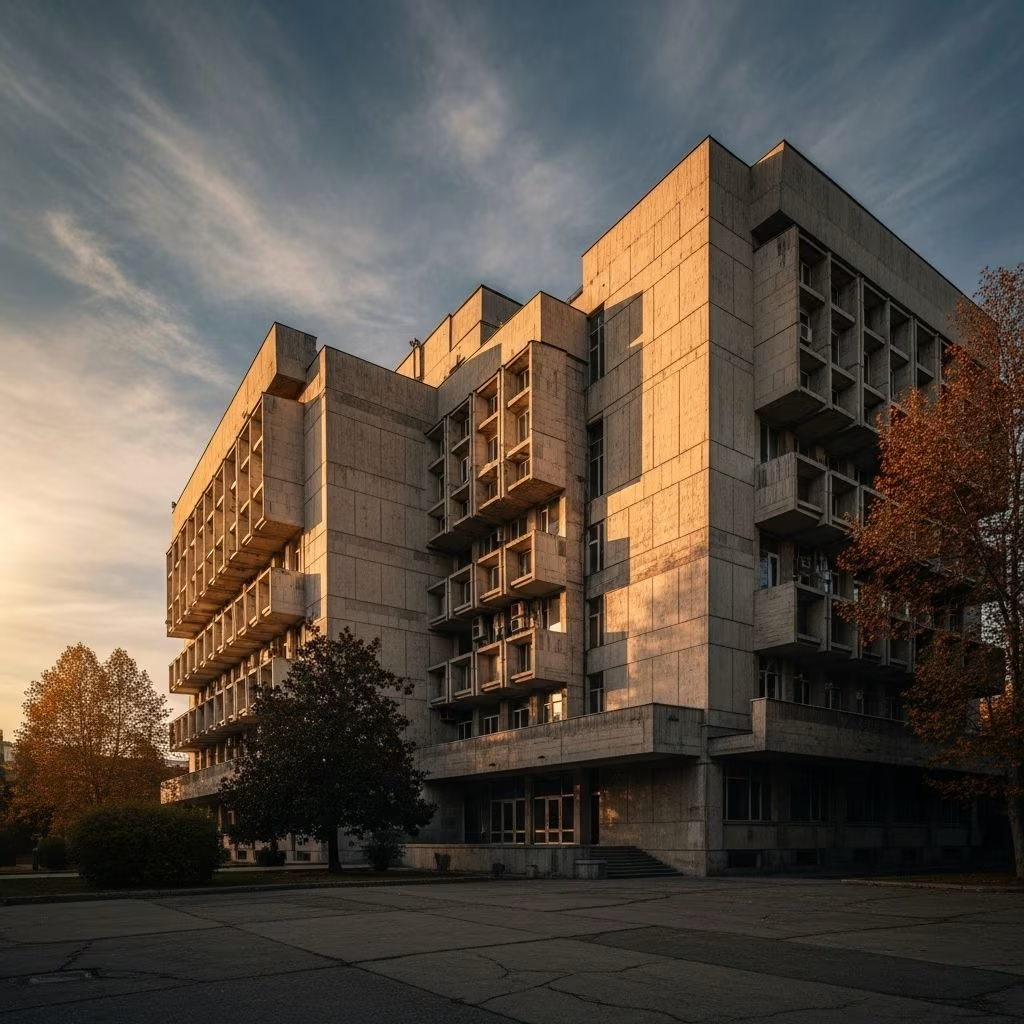
Tbilisi exemplifies Soviet architectural ambition. The former Ministry of Highways, now Bank of Georgia headquarters, completed in 1975, dominates the skyline with its geometric concrete forms and cantilevered volumes. This late Soviet modernist icon symbolizes engineering prowess and remains a focal point for urban exploration.
Adjacent highlights include the National Radio Building, a sculptural concrete tower, and the Industrial College with its raw, textured facades. The Georgia Expo, built in the 1960s, features eleven modernist pavilions in a park setting, originally designed to showcase industrial achievements. Visitors can wander these grounds, appreciating how expo structures blend utility with aesthetic flair.
Beyond the capital, the Georgian Military Highway reveals dramatic Soviet memorials. Perched on a ridge above Devil’s Valley, the 1983 Russian-Georgian Friendship Monument is a colossal concrete arch adorned with vivid murals chronicling shared history. These interior frescoes burst with socialist realism, depicting heroic figures and cultural motifs.
Nearby, the Chronicles of Georgia monument—giant stone pillars etched with biblical and national scenes—evokes ancient stelae reimagined in Soviet scale. Driving this route combines natural beauty with architectural intrigue, stopping at sites like the Zhinvali spaceship-like memorial.
Batumi on the Black Sea contrasts glitzy high-rises with playful Soviet seaside art. Along the boulevard, mosaic sculptures like the giant Octopus, Starfish, and Seahorse delight with vibrant tiles and whimsical forms. These 1970s-80s installations celebrate marine life in exuberant style, perfect for family outings.
The area’s Soviet bathhouses and pioneer camps add layers, though many await restoration. Batumi’s evolution from resort hub to modern city highlights adaptive reuse of heritage elements.
Tbilisi’s suburbs harbor underrated treasures: Nutsubidze Plateau’s residential brutalism, Gldani District’s expansive panels, and Dezerter Bazaar’s eclectic stalls amid concrete backdrops. The Wedding Palace, a UFO-shaped structure, and Vake Park’s pavilions offer intimate encounters with daily Soviet life echoes.
Mosaics adorn metro stations and facades, fusing Georgian folklore with proletarian themes. The Tbilisi Skybridge, a soaring pedestrian link, exemplifies functional modernism.
| Site | Location | Style | Key Feature |
|---|---|---|---|
| Bank of Georgia | Tbilisi | Brutalism | Cantilevered concrete |
| Friendship Monument | Military Highway | Modernism | Colorful murals |
| Batumi Octopus | Batumi Boulevard | Mosaic Sculpture | Playful marine design |
| Georgia Expo | Tbilisi | Soviet Modernism | Multiple pavilions |
Georgia grapples with maintaining these structures amid urbanization. Some face decay, others gentrification, yet initiatives like Tbilisi’s Soviet tours promote awareness. Museums, such as the Georgian National Museum, contextualize this era through exhibits on Soviet life.
Tourism has surged, with guided walks exploring brutalist districts and mosaics. This heritage fosters national pride while drawing global architecture aficionados.
The Bank of Georgia headquarters in Tbilisi, a brutalist icon from 1975.
Yes, major sites are public and stable; check local advisories for lesser-known spots.
3-5 days for Tbilisi and Batumi; add 2 for mountains.
Yes, Soviet-themed walks in Tbilisi and highway drives.
They blend local myths with socialist themes in vivid colors.
