

 Travel Essentials
 Travel Essentials

Compare Spain and Portugal on size, culture, costs, beaches, safety, and more. Learn which suits your travel style or how to visit both efficiently.
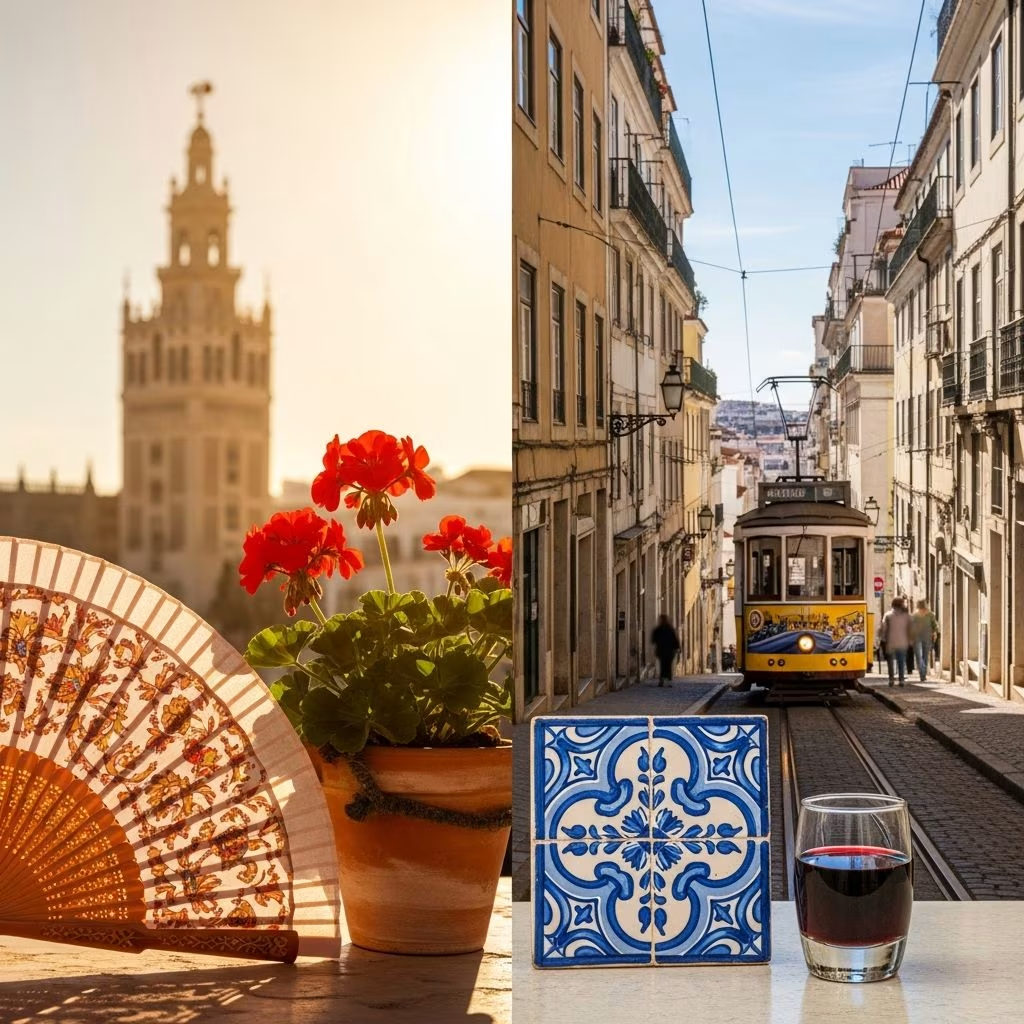 Travel Essentials
Choosing between Spain and Portugal depends on your travel preferences, time, and budget. Spain offers vast diversity across regions like Catalonia and Andalusia, ideal for longer, energetic trips, while Portugal’s compact size suits relaxed, affordable escapes with stunning Atlantic beaches.
Spain’s expansive landmass, covering over 500,000 square kilometers including islands, provides a mosaic of landscapes from snowy Pyrenees to sunny Mediterranean shores. This scale means trips often require 10-15 days to cover highlights like Barcelona, Madrid, and Seville without rushing.
Portugal, at about one-fifth Spain’s size, spans from Lisbon to Porto and the Algarve in a single week-long itinerary. Its narrower shape facilitates road trips or trains, making it beginner-friendly for first-time European explorers.
| Aspect | Spain | Portugal |
|---|---|---|
| Land Area | Large (505,990 km²) | Compact (92,090 km²) |
| Ideal Trip Length | 10-15 days | 7-10 days |
| Transport | High-speed AVE trains | Regional trains, car rentals |
Spain pulses with late-night energy: tapas bars buzz until 2 a.m., festivals like La Tomatina erupt in color, and flamenco shows ignite passion in Andalusia. This suits party-goers and culture enthusiasts seeking immersive, high-octane experiences.
Portugal embraces a gentler cadence, with fado music evoking melancholy in Lisbon’s alleys and leisurely café sessions overlooking the Douro River. It’s perfect for those craving authentic, unhurried interactions in quaint towns.
Spain’s Mediterranean coasts, like Costa Brava and Costa del Sol, deliver golden sands warmed by calmer waters, ideal for family swims and yacht spotting. Water temperatures often exceed 24°C in summer.
Portugal’s wild Atlantic fringe in the Algarve features dramatic cliffs, sea caves at Benagil, and surf-friendly waves. Cooler waters (around 18-22°C) attract adventurers, with spots like Sagres drawing world-class surfers.
Both nations claim Europe’s finest beaches, but Portugal edges for raw, photogenic drama, while Spain wins for accessibility and resort vibes.
Portugal generally undercuts Spain, especially outside Madrid or Barcelona. Expect €80-120/night for mid-range hotels in Lisbon versus €100-150 in Spanish capitals; meals average €12-18 in Portugal against €15-25 in Spain.
Transportation favors Portugal’s simplicity—€50 train from Lisbon to Porto—while Spain’s AVE shaves hours off long hauls but costs €60-100. Peak summer inflates both, but shoulder seasons yield 20-30% savings.
| Category | Spain (per day) | Portugal (per day) |
|---|---|---|
| Accommodation | €100-200 | €80-150 |
| Meals | €40-60 | €30-50 |
| Transport | €20-50 | €15-40 |
| Total (mid-range) | €180-350 | €140-280 |
Both rank among Europe’s safest, per Global Peace Index data. Portugal leads with lower petty crime, especially in rural Algarve villages, ideal for solo females or families.
Spain shines in tourist hubs but warrants vigilance against pickpockets in Barcelona’s Ramblas or Madrid metros. Violent crime remains rare peninsula-wide.
Mild 15-22°C weather blooms cherry orchards in the Douro Valley and fills Seville with orange blossoms. Fewer crowds mean cheaper stays and easier bookings.
Beach frenzy hits: Algarve parties rage, Ibiza clubs thump. Heat soars to 35°C inland—opt for coasts but brace for 50% price hikes.
Post-summer calm brings wine festivals in Rioja (Spain) and Douro (Portugal). Temps hover at 20°C with harvest feasts.
Mild coasts (10-18°C) suit off-season hikers; Christmas markets light Madrid and Lisbon. Northern rains call for indoor pursuits like museums.
Spain’s autonomous regions like Galicia offer Celtic flavors distinct from Castilian heartlands, amplifying variety.
Spain’s AVE network connects Madrid-Barcelona in 2.5 hours at 300 km/h, outpacing Portugal’s slower IC lines (Lisbon-Porto: 3 hours).
Airports abound: Madrid-Barajas and Lisbon handle internationals efficiently. Renting cars unlocks Portugal’s rural Douro or Spain’s Costa Blanca, though tolls add up.
Shared 1,200 km border enables seamless multi-country trips. Fly into Lisbon, train to Porto, cross to Salamanca, AVE to Madrid-Barcelona (12-14 days). Or start in Seville, bus to Algarve, north to Lisbon.
Benefits include doubled cuisine (paella vs. bacalhau), beaches, and history without jet lag hassles.
Spain reigns with jamón ibérico, paella, and 1.2 million hectares of vineyards (Rioja, Priorat). Tapas culture encourages sharing.
Portugal counters with seafood cataplana, port wines from Douro UNESCO terraces, and affordable vinho verde. Pastries like nata shine daily.
Yes, by 20-30% on average for lodging and food, per traveler reports.
Portugal for dramatic Atlantic scenery; Spain for warmer, resort-style sands.
Absolutely—10-15 days covers essentials via trains or flights.
Spring (April-May) or fall (September-October) in both.
Portugal slightly edges due to lower urban crime.
Whether chasing Spain’s fiesta spirit or Portugal’s serene shores, both deliver unforgettable memories. Tailor by pace: fast-paced diversity or chill compactness. Book shoulder-season flights for value, and consider Eurail for borders.
