

 Travel Essentials
 Travel Essentials

Explore Spain's record-breaking 2025 tourism with 97 million visitors and €135B spending. Discover regional hotspots, policy changes, and tips for 2026 travel.
 Travel Essentials
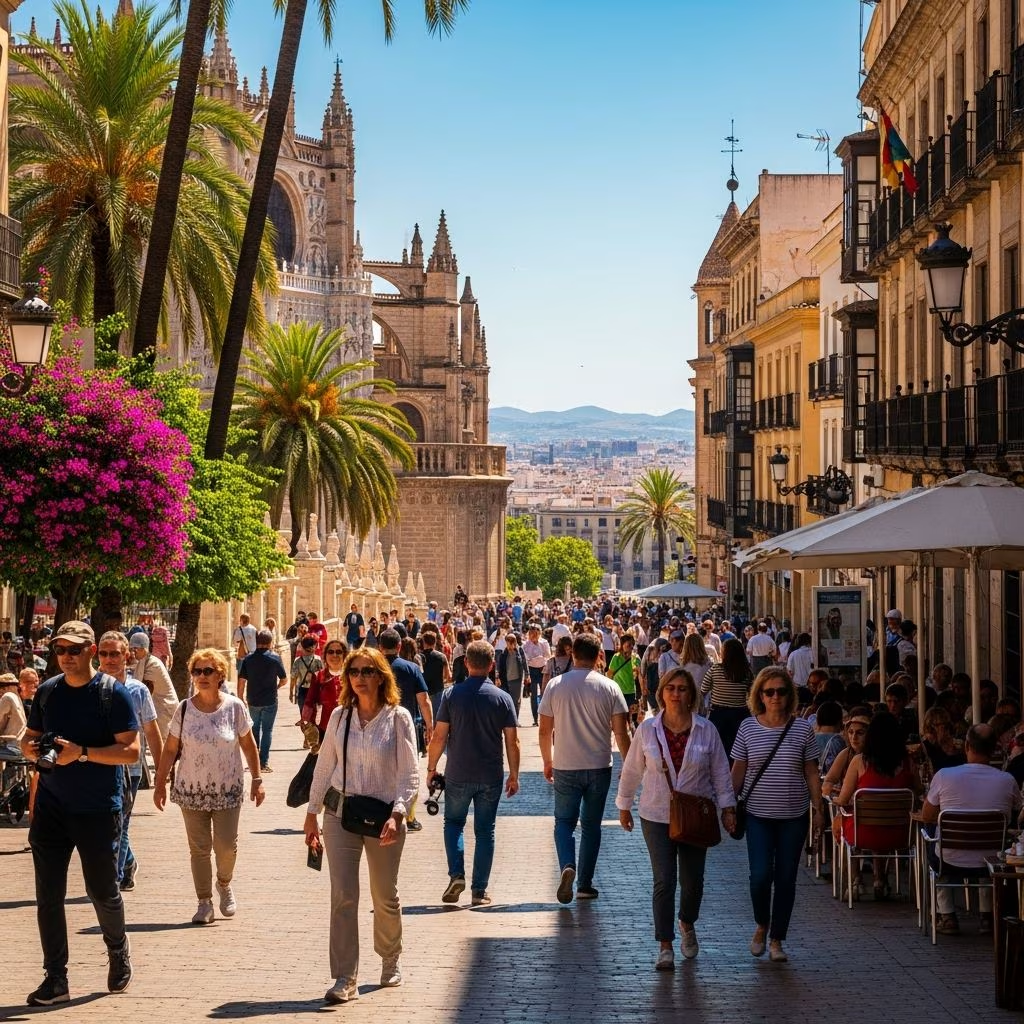
Spain’s tourism sector reached unprecedented heights in 2025, attracting nearly 100 million international visitors and generating substantial economic gains. This boom, driven by strong European demand, highlighted both opportunities and challenges as local authorities introduced measures to manage crowds and protect resources.
The year 2025 marked a milestone for Spain, with official data confirming 97 million international arrivals by year’s end, a 3.5% increase from 2024. Peak summer months led the charge: July saw 11.0 million visitors, while August set a new monthly record at 11.3 million. From January to August alone, 66.8 million people arrived, up 3.9% year-over-year, solidifying Spain’s position as Europe’s premier destination.
Projections earlier in the year suggested Spain might fall short of the symbolic 100 million mark, but the final tally came remarkably close, reflecting resilient demand despite global economic pressures. This growth was not uniform; early summer showed moderation, but late peaks and shoulder-season strength pushed totals higher.
European neighbors dominated inbound travel. The United Kingdom led with 13.2 million visitors from January to August, followed by France (9.2 million) and Germany (8.2 million). These three markets alone accounted for roughly half of all arrivals, underscoring strong continental ties.
Regionally, the Balearic Islands captured 23.3% of July arrivals, edging out Catalonia (21.3%) and Andalusia (14.0%). Over the first seven months, Catalonia topped the list with 11.6 million, trailed by the Canary Islands (9.1 million) and Balearic Islands (9.0 million). Emerging trends showed rural and interior areas growing by 60% since 2019, diversifying beyond coastal hubs.
| Region | Jan-Jul Arrivals (millions) | July Share (%) |
|---|---|---|
| Catalonia | 11.6 | 21.3 |
| Canary Islands | 9.1 | – |
| Balearic Islands | 9.0 | 23.3 |
| Andalusia | – | 14.0 |
Tourism’s value extended far beyond numbers, with visitors spending €135 billion in 2025—a 6.8% rise from the previous year. In July alone, expenditure hit €16.39 billion, up 6.7%, with average daily spend per traveler climbing to €198. This per capita increase signaled higher-quality trips, including longer stays and premium experiences.
Spending growth permeated beyond summer, with off-peak periods showing marked improvement over pre-pandemic levels. Domestic travel among Spaniards also rose 2.9% in Q2 to 46.4 million trips, favoring Andalusia, Catalonia, and the Valencian Community.
Visitors increasingly favored shoulder seasons, shifting from traditional August peaks into September and autumn. This redistribution eased summer pressures while boosting year-round activity. Airlines and hotels maintained high capacity and prices in key markets, supporting late-2025 momentum.
Facing saturation, Spanish regions implemented targeted policies. Tourist taxes expanded in cities like Barcelona and Mallorca, funding infrastructure and crowd control. Short-term rental regulations tightened significantly, reducing holiday apartment listings in high-demand zones to safeguard housing for locals.
Enforcement focused on saturated areas, promoting dispersal to less-visited spots. The EU’s Entry-Exit System (EES), launched in October 2025, introduced biometric tracking at borders, streamlining processes while enhancing security.
Entering 2026, demand remains robust, but expect elevated costs, capacity limits, and levies. Shoulder seasons offer respite with fewer crowds and competitive pricing. Prioritize sustainable options: book off-peak, explore interiors, and respect local guidelines.
No, the total reached 97 million, close but below the milestone.
Higher daily spends (€198 average) and extended stays fueled €135 billion in revenue.
Tighter rules reduced listings in popular areas to protect housing stock.
Balearics and Catalonia led peaks, while rural areas surged 60% long-term.
EES rollout from October 2025 uses biometrics for non-EU travelers.
Spain’s 2025 success underscores its allure—sun, culture, cuisine—but sustainability is key. With policies balancing growth and livability, travelers can contribute by spreading visits. Whether chasing beaches or villages, plan thoughtfully for rewarding journeys amid this enduring hotspot.
