

 Travel Essentials
 Travel Essentials

Explore Spain's protected natural treasures: 16 national parks showcasing diverse ecosystems, rare wildlife like Iberian lynx and brown bears, and prime spots for hiking, birdwatching, and eco-adventures.
 Travel Essentials
Spain protects nearly one-third of its territory, creating a network of 16 national parks that preserve extraordinary landscapes and support Europe’s most diverse wildlife. These areas range from towering peaks and lush forests to expansive wetlands and volcanic islands, offering habitats for species like brown bears, Iberian lynx, wolves, imperial eagles, and black vultures. Hikers, birdwatchers, and wildlife enthusiasts find endless opportunities amid these protected zones.
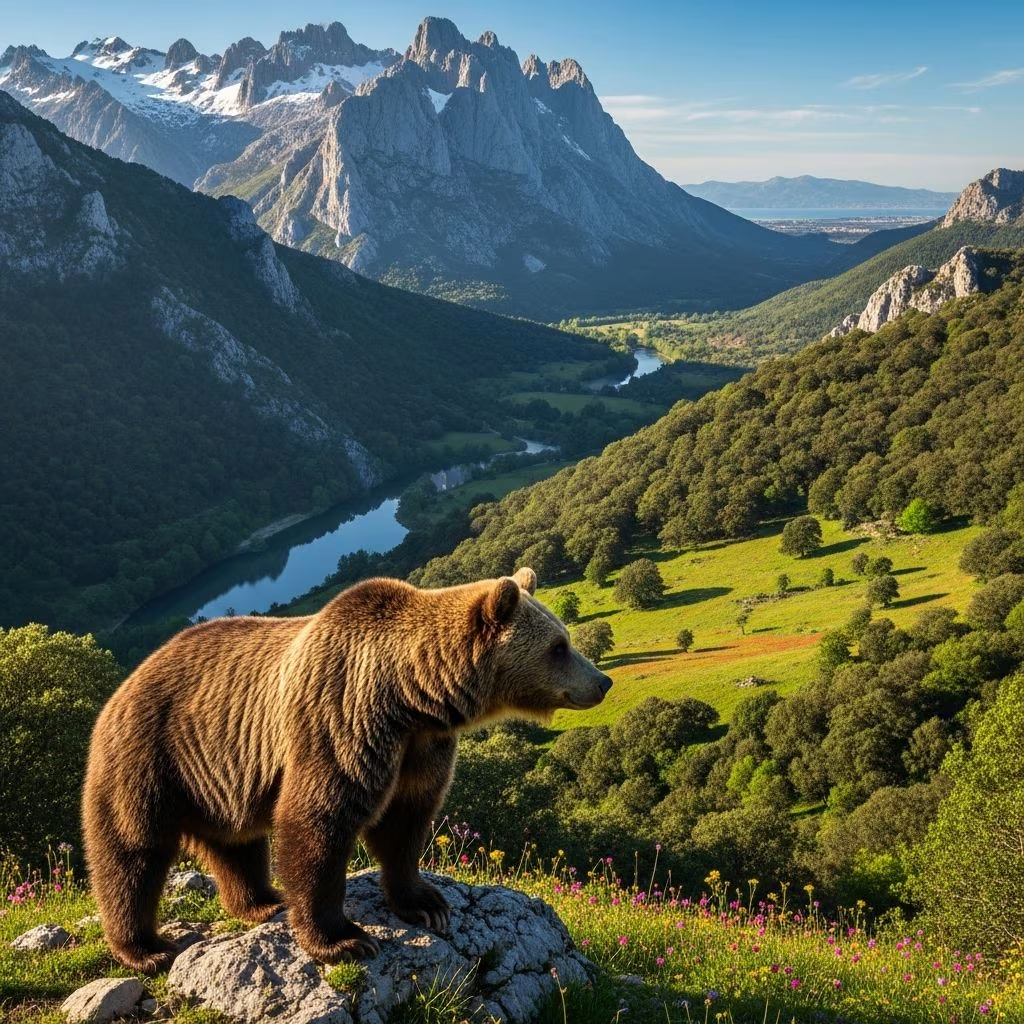
The northern regions of Spain boast some of the continent’s most striking mountain parks, where limestone crags, glacial lakes, and deep river valleys create awe-inspiring scenery. These areas are havens for chamois, capercaillie, and reclusive brown bears, drawing adventurers year-round.
Picos de Europa National Park, Spain’s inaugural national park established in 1918, spans 260 square miles across Asturias, Cantabria, and Castilla y León. Its three massifs—Macizo El Cornión, Macizo Ándara, and Macizo Central—feature peaks soaring over 8,000 feet, including Torre de Cerredo at 2,648 meters. Deep gorges like the Ruta del Cares, a 12-kilometer cliffside trail, offer thrilling hikes with vertigo-inducing drops. Ride the Fuente Dé cable car to 1,823 meters for panoramic views of oak forests, meadows, and lakes Enol and Ercina. Designated a UNESCO Biosphere Reserve in 2003, it shelters Cantabrian chamois and rare brown bears.
Near Madrid, Sierra de Guadarrama National Park covers 130 square miles of high Mediterranean mountains and forests. Iberian ibex, roe deer, and golden eagles thrive here, making it ideal for spotting raptors amid pine-covered slopes.
Inland parks reveal Spain’s grassland expanses and rare aquatic ecosystems, often called mini-Serengetis for their open savannas and wildlife concentrations.
Cabañeros National Park, dubbed ‘Spain’s Serengeti,’ spans 150 square miles in Castilla-La Mancha with holm-oak and cork-oak forests, mountains, and vast plains. Roe deer, wildcats, and various raptors roam freely, providing excellent safari-like sightings.
The compact Tablas de Daimiel National Park, at just 8 square miles, safeguards one of Spain’s last floodplains. Boardwalks and hides allow close views of ducks, geese, kingfishers, flamingos, and herons—key stopover for migrating birds.
Andalusia’s parks blend coastal marshes, ancient fir groves, and alpine heights, supporting endangered icons like the Iberian lynx.
Doñana National Park, a 230-square-mile UNESCO World Heritage site, features wetlands, dunes, lagoons, pine forests, and 30 kilometers of beaches across Seville, Huelva, and Cádiz provinces. Over 200 bird species flock here, including flamingos, spoonbills, and purple herons in spring. Otters and the critically endangered Iberian lynx—fewer than 1,000 remain—hide in the undergrowth, alongside Spanish imperial eagles.
Sierra de las Nieves National Park, designated in 2021, protects 140 square miles of pinsapo fir forests—Spain’s only surviving stands of these ancient trees. Diverse trails cater to hikers, birdwatchers, and photographers amid endangered species refuges.
The vast Sierra Nevada National Park covers 330 square miles of precipitous peaks, luring trekkers to Europe’s southernmost ski area in winter and wildflower meadows in summer.
Spain hosts Europe’s largest and most varied bird population, with 25 raptor species and hotspots in every park. Monfragüe National Park in Extremadura stands out, with 280 species amid canyons and cliffs. Spot golden eagles, griffon vultures, Egyptian vultures, and Europe’s sole breeding black storks—a UNESCO Biosphere Reserve and Special Protection Area.
| Park | Key Birds | Best Season |
|---|---|---|
| Monfragüe | Golden eagle, griffon vulture, black stork | Spring |
| Doñana | Flamingo, imperial eagle, purple heron | Spring/Summer |
| Tablas de Daimiel | Kingfisher, heron, geese | Migration periods |
| Picos de Europa | Capercaillie, raptors | Summer |
Spain’s ‘big five’ Iberian fauna—brown bear, Iberian lynx, wolf, imperial eagle, black vulture—define its wild heart. Somiedo Nature Reserve in the Cantabrian mountains hosts one of Europe’s largest brown bear populations, visible in spring and late summer amid beech forests and glacial lakes. Wolves prowl Sierra de la Culebra, while lynx persist in remote Andalusian spots like Sierra de Andújar.
These parks cater to all levels: strenuous hikes like Ruta del Cares, cable car ascents, boardwalk bird hides, and horseback rides through plains.
Spain’s efforts have boosted lynx from near-extinction and stabilized bear populations. UNESCO sites like Doñana and Picos underscore global importance. Challenges persist with climate change and tourism, but strict protections ensure longevity.
Spain has 16 national parks, covering diverse biomes from Pyrenees to Canaries.
Somiedo and Picos de Europa offer prime brown bear views in spring/summer.
Yes, with easy boardwalks, hides, and beaches; guided tours enhance safety.
Most parks yes, but check weather—winter in Sierra Nevada for snow.
Some trails/cable cars require advance booking; no general entry fees.
