


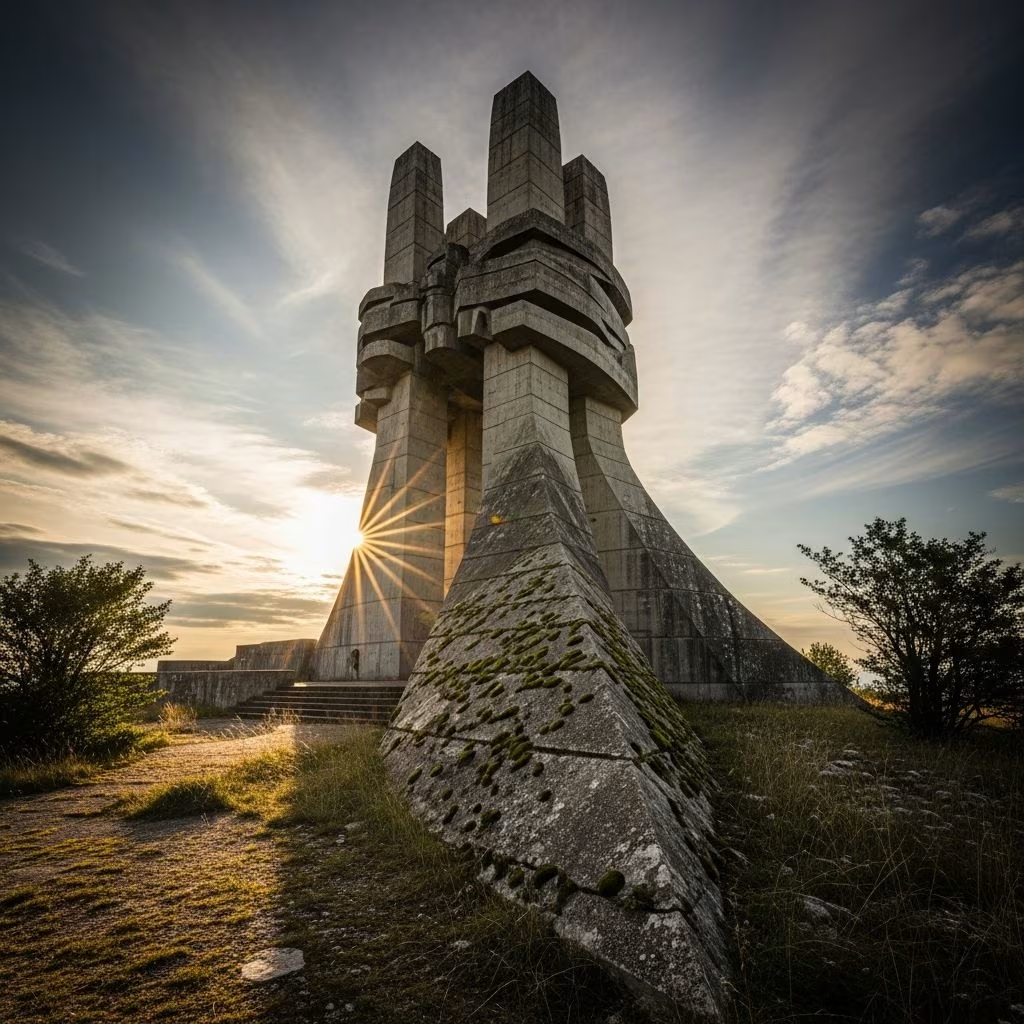
Scattered across the landscape of the former Yugoslavia, towering concrete structures rise from mountainsides, valleys, and remote locations—silent witnesses to a complex historical period. These are the spomeniks, extraordinary monuments constructed during the socialist era to commemorate World War II resistance, revolutionary struggle, and the unified vision of a multiethnic state. Built between the 1960s and 1980s, these architectural marvels represent a unique intersection of artistic ambition, historical memory, and political ideology that continues to captivate visitors and scholars alike.
Unlike traditional war memorials adorned with figurative bronze statues and classical designs, the spomeniks embody a radically different aesthetic philosophy. Yugoslav architects and sculptors embraced modernist and brutalist principles, creating abstract forms from raw concrete that appear almost alien to conventional monuments. These structures—some resembling angular flames, others evoking cosmic forms, and still others suggesting revolutionary dynamism—transformed how societies could memorialize tragedy and celebrate collective struggle. Today, they stand as testaments to an ambitious artistic vision that sought to transcend national boundaries and create monuments capable of fostering unity among Yugoslavia’s diverse populations.
The Historical Context Behind Monumental Commemoration
The construction of spomeniks emerged from Yugoslavia’s particular historical circumstances and Josip Broz Tito’s vision for national identity. Following World War II, Tito’s government sought to forge a cohesive identity among Yugoslavia’s various ethnic groups—Serbs, Croats, Bosnians, Macedonians, Slovenes, and Montenegrins—by emphasizing shared resistance against Nazi occupation and commitment to socialist ideals. The monuments became instruments of state policy, designed to transcend regional and ethnic divisions by celebrating collective heroism and revolutionary sacrifice.
Each spomenik typically commemorated specific historical events: partisan victories against Nazi forces, heroic stands by armed workers defending communities, or liberation struggles that saved civilian populations from genocide. The government intentionally selected renowned architects and sculptors from across the federation to design these monuments, ensuring that the projects carried international artistic credibility and represented Yugoslavia’s cultural sophistication on the global stage. This approach transformed war commemoration into high art, elevating memorial sites into destinations for architectural pilgrimage.
Architectural Innovation and Modernist Aesthetics
The artistic approach underlying the spomeniks represented a deliberate rejection of historical monument conventions. Rather than employing recognizable figurative imagery—soldiers, leaders, or symbolic representations of victory—Yugoslav architects embraced abstract forms that demanded interpretive engagement from viewers. The use of raw concrete, then a symbol of modernity and progress, became central to these designs. Concrete offered practical advantages for construction across Yugoslavia’s challenging terrain, but it also communicated ideological messages about progress, permanence, and the triumph of socialist vision.
The aesthetic vocabulary of the spomeniks drew inspiration from international modernism, brutalism, and futurism. Structures were often geometric and angular, with sweeping curves or sharp protrusions that created dramatic silhouettes against sky and landscape. Some monuments featured forms resembling piercing weapons, crystalline structures, or architectural impossibilities that seemed to defy conventional engineering logic. This experimental approach attracted international architectural recognition and positioned Yugoslavia, despite its socialist classification and relative isolation from Western Europe, as an innovator in contemporary design.
The integration of these monuments into their natural and historical environments demonstrated sophisticated site-specific thinking. Architects typically located monuments at actual battle sites, concentration camps, or locations holding direct historical significance. This grounding of abstract forms in specific geographical and historical contexts created profound resonances for visitors familiar with the events being commemorated. The scale of the monuments—many reaching heights of 10 to 20 meters or more—ensured their visibility from considerable distances, making them dominating features of the landscape and impossible to overlook or forget.
Notable Examples Across the Balkans Region
Several spomeniks achieved particular prominence within Yugoslavia’s memorial landscape. The Kadinjaca monument, featuring an iconic “bullet hole” design, became visible from dozens of kilometers away and served as a powerful symbol of partisan resistance in its region. The Kosmaj, Kozara, and Sutjeska monuments attracted hundreds of children and schoolchildren for educational pilgrimages, transforming sites of tragedy into spaces of youth civic engagement and historical consciousness.
The Ustaše death camp memorial honored victims of one of Europe’s most brutal concentration camps, sometimes referred to as “the Auschwitz of the Balkans,” where primarily Serbian victims, along with Roma and Jewish people, suffered systematic genocide. These memorials served dual purposes: they honored specific victims and ensured that younger generations could not remain ignorant of atrocities committed during the war.
In Podgaric, Croatia, a monument dedicated to the World War II revolution in Moslavina was constructed in 1967, exemplifying how the spomenik movement spread across Yugoslavia’s diverse regions and commemorated local histories within the framework of national revolutionary narrative.
The Dual Purpose of Political and Artistic Expression
The spomeniks functioned simultaneously as artistic expressions and as instruments of political communication. Tito’s government understood that monuments shape collective memory and national consciousness. By commissioning world-class artists and architects to create these structures, the regime accomplished multiple objectives: it demonstrated Yugoslavia’s cultural sophistication and modern credentials to the international community, it created national narrative spaces where diverse ethnic populations could gather, and it translated abstract political ideology into concrete forms that citizens encountered in their physical landscapes.
The deliberate abstraction of the designs served political purposes as well. By avoiding explicit figurative representations, abstract designs could theoretically accommodate multiple interpretations, allowing different ethnic and regional communities to project their own historical narratives onto the monuments. The aesthetic complexity demanded that viewers engage actively with the monuments rather than passively receive simplified historical messages. This approach reflected modernist confidence in abstraction as a universal language transcending cultural and national particularities.
The Decline and Contemporary State of the Monuments
The dissolution of Yugoslavia during the 1990s triggered a catastrophic period for these monuments. As ethnic conflicts erupted and communities turned against one another, the monuments that had been designed to forge unity became targets for destruction. Many spomeniks stood directly on front lines of the wars that fractured the former federation. Military forces and civilian groups systematically destroyed structures that no longer represented shared national identity but instead symbolized an outdated political regime and forced multi-ethnic coexistence.
The Makljen monument exemplifies this tragic trajectory. Originally constructed as a celebrated achievement of Yugoslav artistic culture, it faced destruction during the ethnically charged fighting of the 1990s. By winter 2000, an unidentified group had systematically destroyed the structure, leaving behind only “a tangle of concrete and rebar.” Similar fates befell other monuments as communities attempted to erase physical reminders of the federal state that had collapsed.
Today, many spomeniks remain in states of advanced decay, their concrete crumbling and forms barely recognizable as intentional artistic creations. Some have been abandoned entirely, their sites becoming overgrown and inaccessible. Others have been partially restored by heritage organizations or local communities seeking to preserve them as historically significant artworks rather than as political symbols. This transformation from active commemoration to archaeological curiosity represents a poignant shift in how post-Yugoslav societies relate to their socialist-era heritage.
Contemporary Heritage Preservation and Tourism
In recent years, a growing international interest in the spomeniks has emerged, particularly among architects, historians, photographers, and travelers seeking to document and preserve these unique structures. Various heritage organizations, including tourism initiatives focused on the Balkans, have created maps and guides identifying important spomenik locations and providing historical context for visitors. Photography projects and documentaries have introduced these monuments to global audiences unfamiliar with Yugoslav history and modernist architecture.
This renewed attention reflects broader trends in heritage preservation that value 20th-century architectural innovation and recognize political monuments as important historical documents deserving conservation regardless of ideological associations. Contemporary preservationists argue that these structures merit protection as exemplary works of modernist design and as crucial artifacts for understanding Yugoslav society, World War II history, and Cold War cultural production.
Tourism based on the spomeniks presents complex opportunities and challenges for post-Yugoslav communities. International visitors arrive specifically to photograph and study these monuments, generating economic activity and cultural capital for regions that have struggled economically since the 1990s wars. Yet this tourism can feel uncomfortable to local populations who may associate the monuments with specific traumatic historical events or contested political narratives. Balancing commemoration, artistic preservation, and community healing remains an ongoing challenge.
Frequently Asked Questions
What does “spomenik” mean?
Spomenik is the South Slavic word for monument or memorial. The term specifically refers to the commemorative structures built throughout socialist Yugoslavia.
When were the majority of spomeniks constructed?
Most spomeniks were built during the 1960s and 1970s, though the movement continued into the 1980s. This period coincided with Yugoslavia’s relative stability and economic expansion under Tito’s leadership.
How have the spomeniks survived the wars of the 1990s?
Survival has been uneven. Some monuments were destroyed, others were damaged but remain standing, and some have been intentionally preserved and restored. The fate of specific monuments often depended on their location, local community attitudes, and whether organized preservation efforts were undertaken.
Can visitors see the szentiks today?
Yes, though many require effort to access. Some remain visible and relatively accessible along roadsides or in rural locations, while others require knowledge of their locations and potentially difficult hiking through remote terrain.
What is the architectural style of the szentiks?
The monuments primarily employ brutalist and modernist aesthetics, characterized by raw concrete forms, geometric abstraction, and monumental scale. The designs prioritize conceptual and artistic innovation over representational clarity.

