

 Travel Essentials
 Travel Essentials

Explore square waves, also known as cross seas, their formation, global hotspots, and why they pose extreme risks to boats and beachgoers.
 Travel Essentials
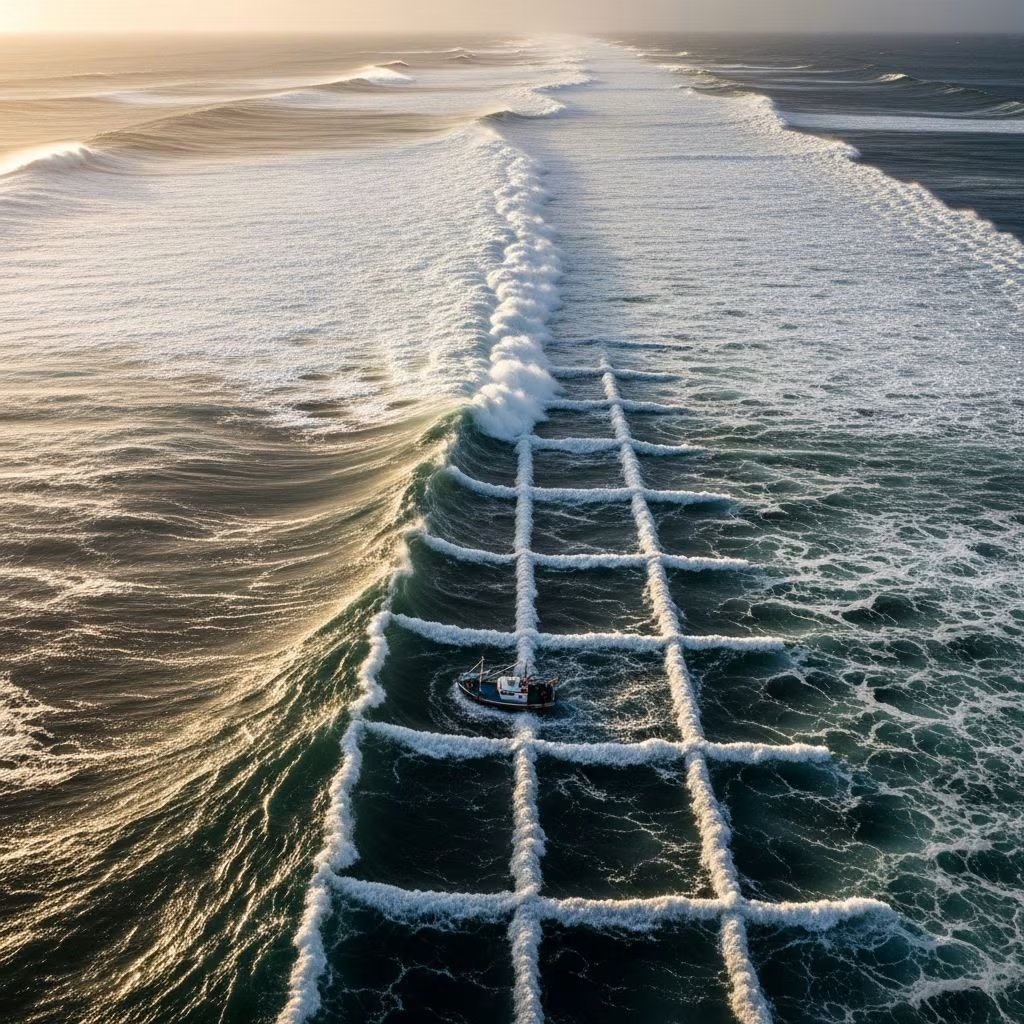
Square waves, often called cross seas, create a striking grid-like pattern on the ocean surface where two wave systems intersect at sharp angles. This rare phenomenon results from waves generated by separate weather events colliding, forming a hazardous chessboard of water that endangers swimmers, surfers, and vessels alike.
At their core, square waves emerge when wind-driven waves from distant storms or shifting weather patterns meet at perpendicular angles. Typically, ocean waves travel in aligned directions, but when two independent systems converge—such as swells from a northwesterly gale crossing southerly winds—their interference produces a squared-off appearance. This isn’t just visually captivating; the overlapping crests amplify wave heights and generate powerful subsurface turbulence.
Understanding wave interference is key: constructive interference occurs where crests align, boosting wave energy, while destructive zones create steep, unpredictable breaks. In cross seas, this happens across multiple axes, leading to a complex, ever-shifting seascape. Unlike uniform swells, these patterns persist until one wave train dissipates, which can take hours or days depending on swell period and distance from origin.
While square waves appear worldwide, certain coastal areas serve as natural stages due to their geography at wave crossroads. Île de Ré off France’s Atlantic coast stands out, where the English Channel and Bay of Biscay swells frequently clash, creating reliable displays. Visitors flock here for safe vantage points from beaches or cliffs.
Portugal’s coastline, particularly around Nazaré and the Azores region, also hosts these formations, amplified by powerful North Atlantic currents. In the Southern Hemisphere, New Zealand’s rugged shores, such as those near Dunedin, offer dramatic views where Tasman Sea and Pacific swells intersect.
| Location | Why Ideal | Best Viewing Season |
|---|---|---|
| Île de Ré, France | Intersection of two major seas | Summer to Fall |
| Portugal (Nazaré) | Strong Atlantic swells | Winter |
| New Zealand (South Island) | Tasman-Pacific convergence | Spring |
Other sightings include southern Sweden’s beaches and parts of the Mediterranean, though less predictably. Always observe from shore—never enter the water.
The allure of square waves masks lethal risks, primarily from intensified rip currents. Where wave grids form, water converges downward and outward in multiple directions, creating channels stronger than typical rips. Standard rip escape—swimming parallel to shore—fails here, as the multi-directional flow traps victims in a hydraulic maze.
For mariners, the threat escalates: ships struggle in cross seas because they can’t align perpendicular to both wave sets simultaneously. Historical records link this state to a significant portion of maritime accidents, including shipwrecks from capsizing or structural failure. Small boats face immediate overturning, while larger vessels risk broaching—rolling sideways into breaking crests.
Cross seas have claimed numerous vessels over centuries. Notable cases include cargo ships off European coasts splintered by conflicting swells, and fishing boats vanishing in what appeared calm conditions. A large percentage of sea accidents correlate with this wave state, underscoring its role in maritime peril.
Modern examples from YouTube footage in Sweden highlight how even mild-looking grids harbor scary currents, advising against all water entry. These events reinforce that square waves aren’t mere novelties—they’re evolutionary traps set by ocean dynamics.
Spotting square waves is straightforward: look for a rectilinear pattern resembling tiles or a checkerboard, often 1-2 meters high. If observed, immediate action is essential.
Boaters should alter course to skirt grid zones, prioritizing windward positioning. Lifeguards worldwide flag these conditions, banning swimming.
Despite dangers, square waves draw adventurers for their rarity and beauty. Capturing drone shots from Île de Ré yields viral imagery, blending art with science. Ethical tourism emphasizes land-based viewing, supporting local economies without risking lives.
Combine visits with nearby attractions: cycle Île de Ré’s trails or surf Portugal’s safer breaks. Apps like Magicseaweed predict formations, turning peril into planned spectacle.
Not all grid-like waters are square waves. Clapotis—small, choppy interferences from reflections—lack the scale and danger. Wind chop appears random, sans sharp angles. True cross seas demand distinct swell origins, verifiable via buoy data.
Shifting storm patterns may increase cross sea frequency, as intensified hurricanes spawn far-traveling swells. Coastal erosion accelerates in prone areas, heightening beach risks. Proactive monitoring via satellite tech will aid predictions.
No—powerful, multi-directional rip currents make them deadly, even for strong swimmers.
Île de Ré (France), Portugal’s coast, and New Zealand shores—from dry land only.
Vessels can’t perpendicularly face both wave sets, leading to broaching and capsizing.
Until one swell system dissipates, often hours to days.
Absolutely not; the unpredictable grid and rips override skill.
Square waves exemplify ocean power—admire from afar, respect the peril.
